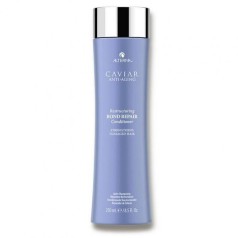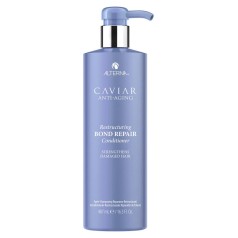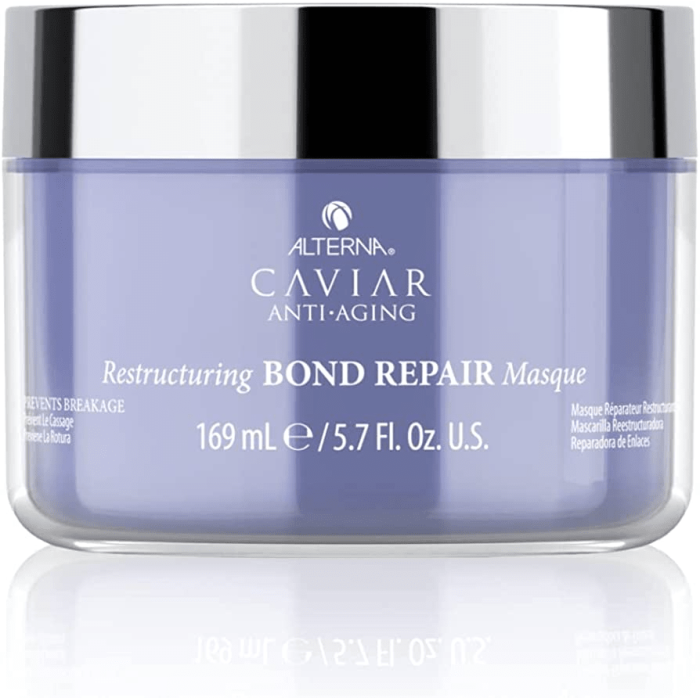
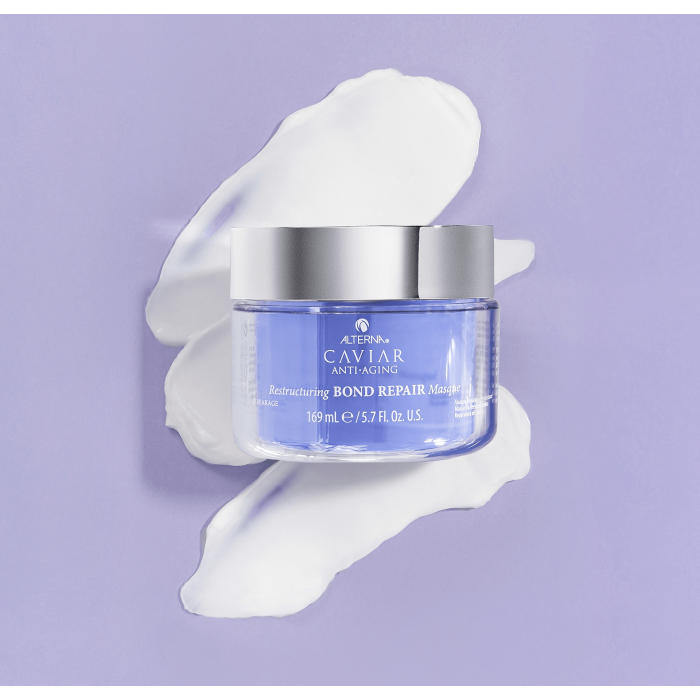


Caviar Anti-Aging Restructuring Bond Repair Masque
-
Delivery
-
Click & Collect
Free Click and collect is available at checkout. Orders are ready within 1 hour during opening hours. Store Address: 56 Parer Rd, Airport West, VIC Australia 3042 Phone (03) 9999 5902

Valued at $19.95!

A deep repair masque that nourishes and strengthens, improves manageability and leaves hair soft, shiny and restored. Ideal for severely damaged hair.
Reset your hair to its virgin-like look and feel, turning back the clock on years of damage from chemical, physical and environmental aggressors. Formulated with our new and exclusive Caviar Bond Enforcing Technology, the CAVIAR Anti-Aging Restructuring Bond Repair Collection helps re-bond, rebuild and seal the cuticle for up to 10 washes. Clinically proven to reduce breakage and split ends by up to 99%.*
How To Use Alterna Caviar Anti-Aging Restructuring Bond Repair Masque
After cleansing hair, remove excess water and apply to clean, damp hair. Leave on for 3 minutes. Rinse well. For best results, use 1-2 times per week.
Alterna Caviar Anti-Aging Restructuring Bond Repair Masque Ingredients
Water/Aqua/Eau, Cetyl Alcohol, Stearyl Alcohol, Brassicamidopropyl Dimethylamine, Cetyl Esters, Neopentyl Glycol Diheptanoate, Behentrimonium Methosulfate, Cetearyl Alcohol, Glycerin, Cetrimonium Chloride, Dimethicone, Hydrogenated Castor Oil/Sebacic Acid Copolymer, Isododecane, Fragrance (Parfum), Silicone Quaternium-16, Benzyl Alcohol, Behentrimonium Chloride, Guar Hydroxypropyltrimonium Chloride, Citric Acid, PEG-7 Amodimethicone, Glyceryl Stearate, Polyquaternium-55, Butyloctanol, Undeceth-11, Undeceth-5, Dehydroacetic Acid, Ascorbic Acid, Helianthus Annuus (Sunflower) Seed Oil, Panthenol, Polysilicone-15, Retinyl Palmitate, Superoxide Dismutase, Tocopheryl Acetate, Alaria Esculenta Extract, Caprylic/Capric Triglyceride, Caviar Extract, Potassium Benzoate, Propylene Glycol, Sodium Sorbate, Leuconostoc/Radish Root Ferment Filtrate, Saccharomyces/Copper Ferment, Saccharomyces/Iron Ferment, Saccharomyces/Magnesium Ferment, Saccharomyces/Silicon Ferment, Saccharomyces/Zinc Ferment, Phospholipids, Hexyl Cinnamal, Linalool, Limonene, Geraniol, Coumarin, Citral, Amyl Cinnamal, Benzyl Benzoate, Benzyl Alcohol, Citronellol.
-
Cetyl Alcohol Conditioning agentsEmollient and texture enhancer
Cetyl Alcohol helps soften the hair and gives products a smooth, creamy texture.
May suitThose looking for conditioning, slip, or richer textures in their haircare products.
Worth knowingDespite the name, fatty alcohols like cetyl alcohol are non‑drying and are commonly used to add emollience and stability to formulations.
-
Stearyl Alcohol Conditioning agentsEmollient and thickener
A fatty alcohol that helps soften the hair and give products a smooth, creamy texture.
May suitPeople looking for conditioners or treatments that provide slip, softness and richer textures.
Worth knowingAlthough called an alcohol, it is a waxy, non‑drying fatty alcohol commonly used to enhance conditioning performance and product stability.
-
Brassicamidopropyl Dimethylamine Conditioning agentsConditioning agent
A plant-derived conditioning agent that helps smooth and soften the hair.
May suitThose looking for improved manageability, slip and reduced frizz.
Worth knowingIt is often used as an alternative to traditional conditioning amines and can effectively condition without leaving heavy residue. It is commonly paired with fatty acids for optimal performance.
-
Cetyl Esters Conditioning agentsEmollient / slip enhancer
Provides slip and softness while helping to smooth the hair’s surface.
May suitPeople looking for smoother, more manageable hair textures.
Worth knowingCetyl esters are wax‑like emollients that improve product spreadability and give a soft, conditioned feel. They are commonly used to enhance texture without heaviness.
-
Neopentyl Glycol Diheptanoate Conditioning agentsEmollient conditioner
A lightweight emollient ester that adds softness, slip and a smooth feel to hair.
May suitThose looking for light conditioning without heaviness or build-up.
Worth knowingIt is often used to improve spreadability and enhance the texture of hair products. Its lightweight nature makes it suitable for both fine and thick hair types.
-
Behentrimonium Methosulfate Conditioning agentsConditioning agent
A cationic conditioning ingredient that helps soften and detangle hair.
May suitPeople looking for smoother, easier-to-comb hair, especially in conditioners and leave-in products.
Worth knowingDespite the name, it is not a strong sulphate cleanser but a gentle, oil-loving conditioning compound derived from fatty alcohols.
-
Cetearyl Alcohol Conditioning agentsFatty alcohol conditioner
A fatty alcohol that helps soften hair and improve the texture of formulations.
May suitPeople looking for smoother, more manageable hair or richer, creamier product textures.
Worth knowingDespite the name, fatty alcohols are moisturising and conditioning rather than drying. They also help stabilise and thicken many haircare formulas.
-
Glycerin HumectantsHumectant
Attracts and holds water to help hair feel hydrated and soft.
May suitDry or dehydrated hair, and many curl and moisture routines.
Worth knowingA very common, well-tolerated humectant used across countless products.
-
Cetrimonium Chloride Conditioning agentsConditioning agent
A conditioning agent that helps smooth and soften the hair while reducing static and tangles.
May suitPeople looking for improved manageability, detangling and smoother-feeling hair.
Worth knowingIt is a commonly used quaternary ammonium compound that helps conditioners spread easily through the hair. It is effective even at low levels, which is why it appears frequently in rinse-off products.
-
Dimethicone SiliconesSlip and shine agent
Smooths the hair surface, adds slip and shine and helps reduce frizz.
May suitFrizz-prone, coarse or dry hair wanting a smooth, glossy finish.
Worth knowingSome people prefer silicone-free formulas, especially for certain curl routines. It is widely used and helpful in many smoothing products.
-
Hydrogenated Castor Oil/Sebacic Acid Copolymer Conditioning agentsFilm-forming conditioning polymer
A film-forming polymer that helps provide light conditioning and hold in hair products.
May suitThose looking for gentle styling support or smoother-feeling hair without heavy build-up.
Worth knowingIt is commonly used in styling creams, gels and conditioners to improve texture and spreadability. It can also enhance shine and help control frizz.
-
Isododecane SolventsLightweight solvent
Isododecane helps dissolve other ingredients and gives hair products a lightweight, non-greasy feel.
May suitPeople who prefer lightweight styling or smoothing products that don’t weigh the hair down.
Worth knowingIt evaporates quickly, which can help products spread easily without residue. It is commonly used to enhance slip and smoothness in styling formulas.
-
Parfum Fragrance ingredientsFragrance
Gives the product its scent.
May suitPeople who enjoy a scented product.
Worth knowingFragrance preference is personal. Some people prefer fragrance-free formulas by choice.
-
Silicone Quaternium-16 SiliconesConditioning silicone
A silicone-based conditioning agent that helps smooth and soften the hair.
May suitThose looking for added slip, reduced frizz, or easier detangling.
Worth knowingIt forms a lightweight conditioning layer that enhances shine without heavy build-up for most hair types. It is commonly used in both rinse-off and leave-in formulas.
-
Benzyl Alcohol PreservativesPreservative
Helps preserve formulations and can also act as a solvent or light fragrance component.
May suitThose interested in understanding preservative systems or identifying potential fragrance allergens.
Worth knowingBenzyl Alcohol is commonly used in professional haircare to support product stability and texture. It can also naturally occur in some essential oils.
-
Behentrimonium Chloride Conditioning agentsConditioning agent
A conditioning agent that helps detangle and soften, reducing static and roughness.
May suitMost hair types, especially tangle-prone or coarse hair.
Worth knowingA common conditioner ingredient despite the chloride name, which simply describes its chemistry.
-
Guar Hydroxypropyltrimonium Chloride Conditioning agentsConditioning polymer
A conditioning polymer that helps smooth hair and improve slip.
May suitThose looking for softer, easier-to-detangle hair.
Worth knowingIt is derived from guar gum and is commonly used to enhance conditioning in shampoos and conditioners. It can also reduce static and improve manageability.
-
Citric Acid pH adjusterspH adjuster
Fine-tunes the product pH, which can help the hair surface feel smooth.
May suitMost hair types as part of a balanced formula.
Worth knowingUsually present in small amounts to balance the formula.
-
Glyceryl Stearate Thickeners and stabilisersEmulsifier and texture enhancer
Helps blend oil and water and gives haircare formulas a smooth, creamy texture.
May suitThose who like richer conditioners or masks that feel smooth and spread easily.
Worth knowingIt also offers light conditioning and can help soften the feel of hair. It is widely used in both skincare and haircare for its reliable stabilising properties.
-
Polyquaternium-55 Conditioning agentsConditioning polymer
A film-forming conditioning polymer used to improve softness, smoothness and manageability.
May suitThose looking for enhanced frizz control, curl definition or improved hold without stiffness.
Worth knowingIt forms a light, flexible film on the hair that helps maintain style while reducing flyaways. It is commonly used in styling and conditioning formulas for added performance.
-
Butyloctanol Conditioning agentsEmollient and texture enhancer
A lightweight emollient that helps smooth the hair and improve product texture.
May suitPeople looking for smoother-feeling hair or products with a silky, non-greasy finish.
Worth knowingIt is often used to enhance slip and spreadability in formulations. It can also support a softer, conditioned feel without heaviness.
-
Undeceth-11 Cleansers / surfactantsSolubiliser / surfactant
A nonionic surfactant that helps blend oil‑based and water‑based ingredients.
May suitUseful for those using products that need clear, stable blends such as serums, sprays or lightweight conditioners.
Worth knowingIt is commonly used in haircare as a mild solubiliser to evenly disperse fragrance or lightweight oils. Its gentle action makes it suitable for leave‑in and rinse‑off formulas.
-
Undeceth-5 Cleansers / surfactantsNon-ionic surfactant / solubiliser
A non-ionic surfactant that helps cleanse and solubilise oily ingredients in haircare formulas.
May suitThose looking for gentle, low-foaming cleansing or products that blend oils into water-based formulas.
Worth knowingIt is commonly used to help create stable, uniform formulations and to boost the spreadability of products. Non-ionic surfactants like this are typically mild compared to stronger cleansing agents.
-
Dehydroacetic Acid PreservativesPreservative
Helps keep haircare formulas stable by preventing product spoilage.
May suitThose who want products to stay fresh for longer, including people who use products slowly or store them in humid bathrooms.
Worth knowingIt is often used at low levels and works well alongside other preservative systems to support formula longevity. It is commonly included in both rinse-off and leave-in products.
-
Ascorbic Acid pH adjusterspH adjuster / antioxidant
Ascorbic Acid is a form of vitamin C used to help adjust pH and support formula stability.
May suitPeople using clarifying or colour-care products may appreciate its ability to support brightness and maintain product performance.
Worth knowingIt can also function as an antioxidant, helping protect formulas from oxidation. Its presence does not typically affect how a product feels or performs on the hair.
-
Helianthus Annuus (Sunflower) Seed Oil Oils and buttersEmollient oil
A plant-derived oil that helps soften and condition the hair and scalp.
May suitThose seeking lightweight natural oils for moisture, shine or scalp comfort.
Worth knowingIt is rich in fatty acids that support hair softness without feeling overly heavy. Often used as a carrier oil in both rinse-off and leave-in formulas.
-
Panthenol Conditioning agentsConditioning agent
Helps condition, soften and add a smooth, healthy feel to the hair.
May suitMost hair types, especially dry or dull hair.
Worth knowingA versatile, well-tolerated conditioning ingredient.
-
Polysilicone-15 UV filtersUV filter
A silicone-based UV filter that helps protect hair from UVB exposure.
May suitThose who spend time outdoors or wish to help reduce UV-related colour fade.
Worth knowingIt is commonly used in haircare to support UV defence without adding a heavy feel. Often combined with other conditioning agents for smoother application.
-
Retinyl Palmitate Conditioning agentsVitamin-derived conditioning agent
A vitamin A ester used to support conditioning and overall hair and scalp care.
May suitThose looking for formulations enriched with vitamin-derived ingredients for scalp comfort or hair vitality.
Worth knowingIt is commonly included in small amounts to help support the conditioning profile of a formula. Its role in haircare is typically supportive rather than transformative.
-
Superoxide Dismutase Conditioning agentsAntioxidant enzyme
An antioxidant enzyme that helps protect hair and scalp from oxidative stress.
May suitPeople interested in supportive scalp care or antioxidant-rich formulas.
Worth knowingIt is often included in advanced formulations to help maintain the stability of the product and support the scalp’s natural resilience. Its role is typically complementary rather than a primary performance driver.
-
Tocopheryl Acetate Conditioning agentsAntioxidant and conditioning support
A stable form of vitamin E used to help condition hair and support product stability.
May suitThose looking for added conditioning support or antioxidant benefits in their haircare.
Worth knowingIt is commonly used because it is more stable than pure vitamin E while still offering similar benefits. It appears in many leave-in and rinse-off formulations.
-
Alaria Esculenta Extract Botanical extractsBotanical conditioning extract
A seaweed-derived extract used to help condition and support moisture balance in hair and scalp.
May suitThose looking for plant-based ingredients that support softness and hydration.
Worth knowingThis extract is rich in natural polysaccharides and minerals often valued in haircare for their conditioning feel. It is commonly included in modern formulations for added botanical benefits.
-
Caprylic/Capric Triglyceride Oils and buttersLightweight emollient
A lightweight emollient that helps soften and smooth the hair without heaviness.
May suitThose wanting conditioning benefits that do not weigh hair down, including fine or easily-greasy hair types.
Worth knowingIt is commonly derived from coconut oil and glycerin and is valued for its silky, non-greasy feel. It is widely used in both skincare and haircare for its gentle, versatile performance.
-
Caviar Extract Botanical extractsNourishing marine extract
Provides a luxurious dose of conditioning nutrients to support smoother, healthier‑looking hair.
May suitThose seeking premium formulations aimed at softness, hydration and general hair vitality.
Worth knowingCaviar extract is rich in vitamins, amino acids and lipids that can help enhance the feel and appearance of hair. It is typically used in smaller amounts within high‑end treatments and masks.
-
Potassium Benzoate PreservativesPreservative
Helps preserve formulations by inhibiting the growth of microbes.
May suitThose interested in product freshness and longer shelf life.
Worth knowingIt is commonly used alongside other preservatives to maintain formula stability. It is typically used at low levels and is well established in personal care products.
-
Propylene Glycol HumectantsHumectant
Helps hold moisture and carry other ingredients through the formula.
May suitMost hair types as part of a moisturising formula.
Worth knowingA widely used humectant and carrier ingredient.
-
Leuconostoc/Radish Root Ferment Filtrate PreservativesNatural preservative
A fermented radish root filtrate used to help keep formulations fresh and stable.
May suitThose interested in products that use fermentation-derived preservation systems.
Worth knowingIt provides mild antimicrobial activity and is commonly used in modern, gentle preservation blends. Its use does not change how the product performs on the hair.
-
Saccharomyces/Copper Ferment Conditioning agentsHair conditioning ferment
A mineral-rich ferment used to help condition and support the feel of stronger, healthier hair.
May suitThose looking for lightweight conditioning ingredients that may support hair strength and resilience.
Worth knowingFermented mineral ingredients are valued for providing trace elements in a form that is easy for formulations to incorporate. They are commonly included in premium haircare for their supportive, conditioning benefits.
-
Saccharomyces/Iron Ferment Conditioning agentsNourishing conditioner
A fermented mineral complex used to help condition and support the overall feel of the hair and scalp.
May suitPeople looking for formulas that include fermented ingredients or mineral-enriched conditioning agents.
Worth knowingFermentation can help make minerals more bioavailable, which is why these blends are sometimes included in premium haircare formulations. It is typically used in small amounts to complement other conditioning ingredients.
-
Saccharomyces/Magnesium Ferment Conditioning agentsMineral-rich conditioning ferment
A fermented blend that can help condition and support the scalp and hair with magnesium-derived nutrients.
May suitThose looking for gentle scalp-supporting or conditioning ingredients.
Worth knowingFermented mineral complexes are commonly used in haircare for their lightweight conditioning and scalp-refreshing benefits. They are typically well tolerated and add a subtle moisturising boost.
-
Saccharomyces/Silicon Ferment Conditioning agentsFermented conditioning ingredient
A fermented mineral-infused ingredient used to help condition and support hair feel and manageability.
May suitThose looking for lightweight conditioning or formulas featuring fermented actives.
Worth knowingFermented ingredients are often used to enhance absorption or provide a smoother sensory feel in haircare formulas. Silicon in ferment form is used for its supportive, conditioning benefits rather than as a silicone.
-
Unspecified Ingredient Thickeners and stabilisersFormulation aid
This entry represents a placeholder where no clear ingredient name was provided.
Worth knowingSometimes data exports or label scans include formatting characters rather than actual ingredient names. This placeholder can be updated once the correct INCI name is known.
-
Saccharomyces/Zinc Ferment Anti-dandruff / scalp careScalp-conditioning ferment
A fermented blend that delivers bioavailable zinc to help support a balanced, comfortable scalp.
May suitThose looking for gentle scalp-supporting ingredients or products aimed at maintaining scalp freshness.
Worth knowingFermented mineral complexes can enhance ingredient absorption and are commonly used in soothing or balancing scalp treatments. They are generally included at low levels to complement broader scalp-care formulas.
-
Phospholipids Conditioning agentsHair-conditioning ingredient
Phospholipids help condition the hair and support moisture retention.
May suitThose looking for softer-feeling hair or products that support moisture balance.
Worth knowingPhospholipids are naturally occurring lipid molecules that can help improve the feel and manageability of hair. They may also assist with the spreadability and overall performance of a formula.
-
Hexyl Cinnamal Fragrance ingredientsFragrance component
A fragrance ingredient used to give products a light, floral scent.
May suitThose who enjoy subtly scented haircare products.
Worth knowingIt is one of the fragrance components that must be listed separately when present above certain levels. People with known fragrance sensitivities may choose to monitor for it.
-
Linalool Fragrance ingredientsFragrance component
A fragrance component found naturally in many flowers and spices.
Worth knowingA fragrance component that must be listed separately on labels because a minority of people can be sensitive to it. Its presence is normal, required disclosure and is not a quality signal.
-
Limonene Fragrance ingredientsFragrance component
A fragrance component that also occurs naturally in many citrus and plant oils.
Worth knowingA fragrance component that must be listed separately on labels because a minority of people can be sensitive to it. Its presence is normal, required disclosure and is not a quality signal.
-
Geraniol Fragrance ingredientsFragrance component
Geraniol is a fragrant compound that adds a light floral note to haircare products.
May suitThose who enjoy floral-scented hair products or are checking for specific fragrance components.
Worth knowingIt is naturally found in essential oils such as rose and geranium and is commonly used to enhance scent profiles. It must be listed on labels when present above certain trace levels.
-
Coumarin Fragrance ingredientsFragrance component
Coumarin is a fragrance ingredient that adds a sweet, warm, slightly herbal note to scented formulations.
May suitThose who enjoy subtly sweet, complex fragrance profiles in their haircare products.
Worth knowingIt is one of the fragrance components that must be listed individually when present above certain levels, as some people may prefer to monitor specific scent materials. Its presence does not indicate the overall strength of a product's fragrance.
-
Citral Fragrance ingredientsFragrance component
Citral is a fragrance ingredient used to provide a fresh, citrus-like scent.
May suitThose who enjoy citrus-style fragrances or want products with a fresh aromatic profile.
Worth knowingCitral is naturally present in several essential oils and is listed on labels because it is a recognised fragrance allergen. Only small amounts are typically used to adjust or enhance a product’s scent.
-
Amyl Cinnamal Fragrance ingredientsFragrance component
A floral-scented fragrance ingredient used to enhance a product’s aroma.
May suitThose who enjoy lightly floral-scented haircare products.
Worth knowingIt is one of the fragrance allergens that must be listed on labels when present above certain thresholds. Its presence does not indicate product quality, but can help those monitoring specific fragrance components.
-
Benzyl Benzoate Fragrance ingredientsFragrance component
A fragrance component that is listed separately on labels by labelling convention.
Worth knowingA fragrance component that must be listed separately on labels because a minority of people can be sensitive to it. Its presence is normal, required disclosure and is not a quality signal.
-
Benzyl Alcohol PreservativesPreservative
Helps preserve formulations and can also act as a solvent or light fragrance component.
May suitThose interested in understanding preservative systems or identifying potential fragrance allergens.
Worth knowingBenzyl Alcohol is commonly used in professional haircare to support product stability and texture. It can also naturally occur in some essential oils.
-
Citronellol Fragrance ingredientsFragrance component
A fragrance component with a soft floral, rose-like character.
Worth knowingA fragrance component that must be listed separately on labels because a minority of people can be sensitive to it. Its presence is normal, required disclosure and is not a quality signal.