Bakuchiol vs Retinol: Is Bakuchiol a Good Alternative to Retinol?
Retinol is one of skincare’s best-known ingredients for targeting fine lines, uneven texture, pigmentation and other visible signs of ageing. But for some people, the dryness, flaking or irritation that can accompany retinol simply isn’t worth it.
That’s where bakuchiol comes in.
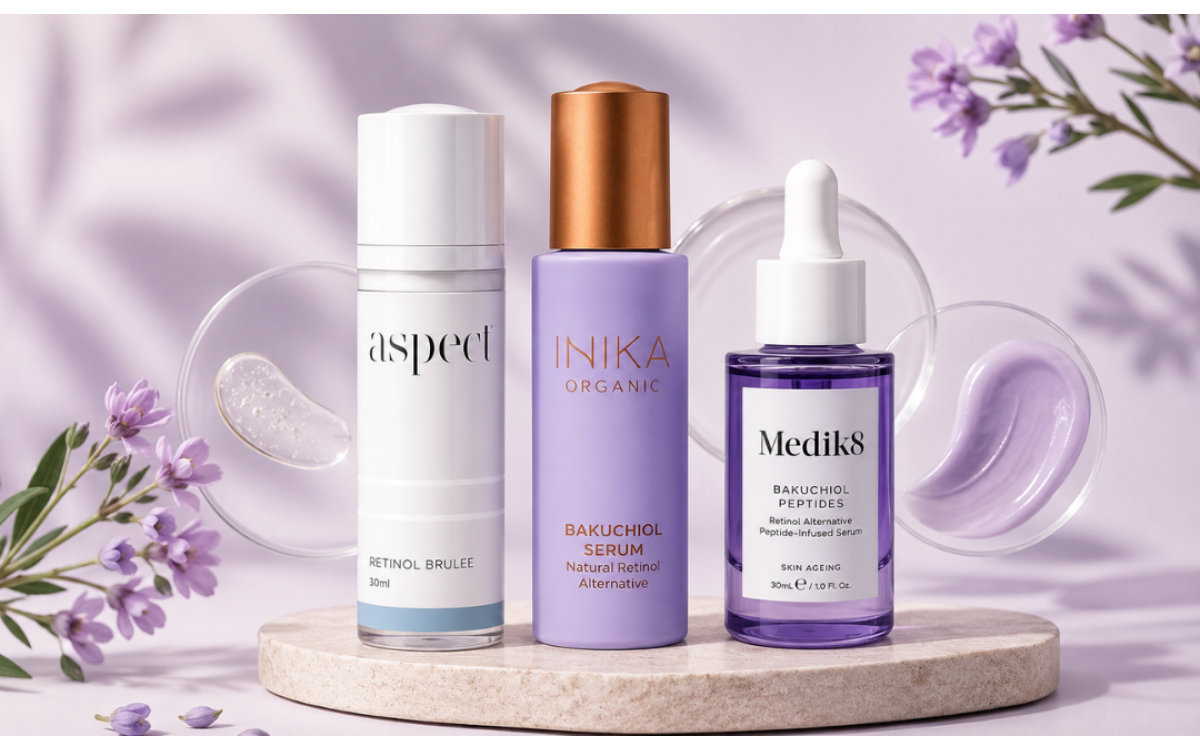
Bakuchiol is a plant-derived skincare ingredient that has gained attention as a gentler alternative to retinol. Although it is not a form of vitamin A and does not work in exactly the same way as retinol, research suggests it can produce some similar visible benefits, including improvements in wrinkles, pigmentation and overall skin texture.
For sensitive skin, retinol beginners or anyone simply looking for a plant-based approach to their anti-ageing routine, bakuchiol may be worth considering.
Quick Comparison: Bakuchiol vs Retinol
| Feature | Bakuchiol | Retinol |
|---|---|---|
| What is it? | Plant-derived skincare ingredient | Vitamin A derivative |
| Main benefits | Fine lines, pigmentation, texture and radiance | Fine lines, pigmentation, texture, acne and ageing |
| Irritation potential | Generally well tolerated | Can cause dryness, peeling and irritation |
| When to use | Morning and/or evening | Commonly used in the evening |
| Sensitive skin | Often a gentler option | May require gradual introduction |
| Evidence | Promising but relatively new | Extensive, long-established research |
| Pregnancy | Safety has not been adequately established | Retinoids should be avoided during pregnancy |
| Sunscreen | SPF still recommended daily | SPF particularly important during use |
What Is Bakuchiol?
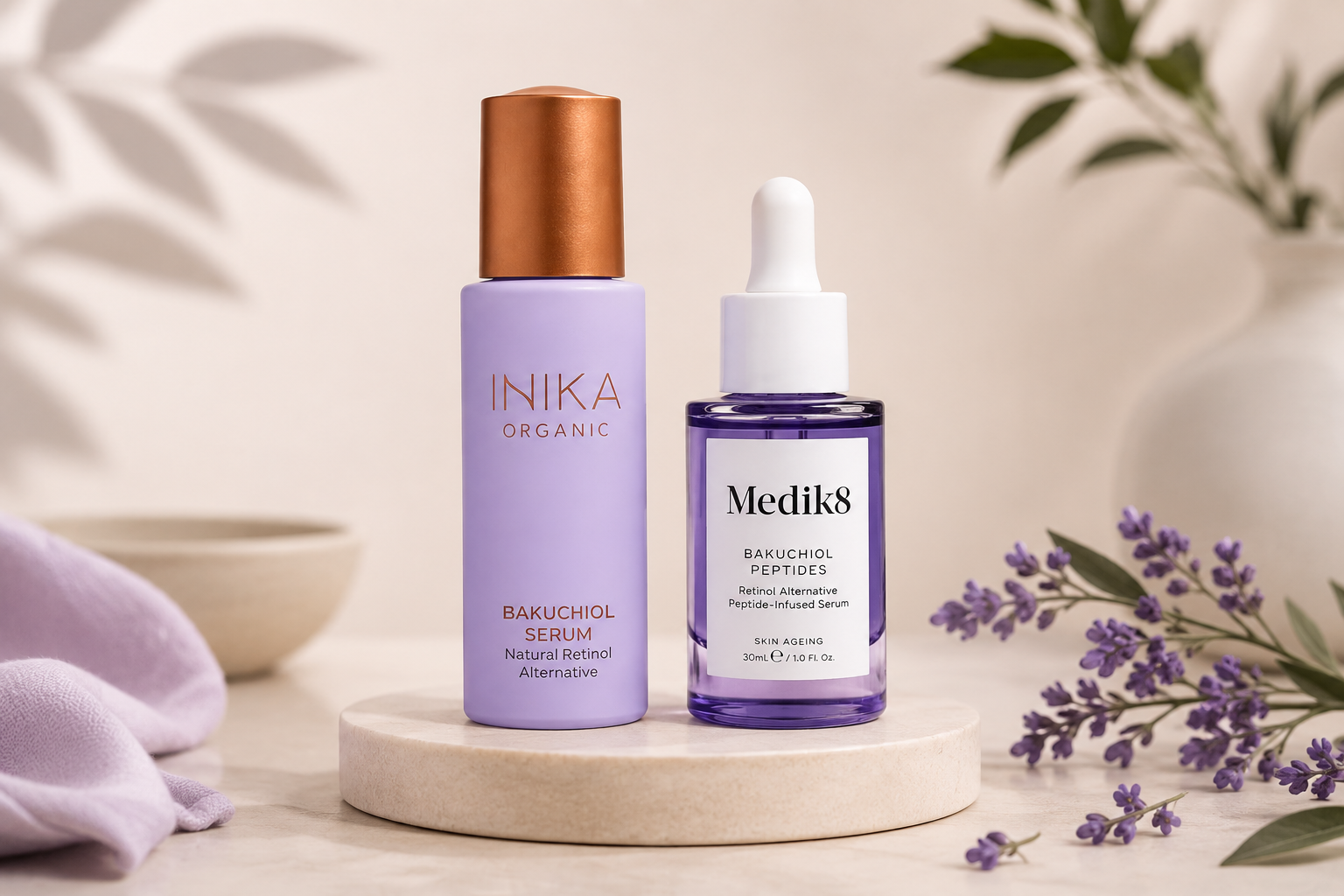
Bakuchiol is a plant-derived compound associated particularly with Psoralea corylifolia, commonly known as the babchi plant. Unlike retinol, bakuchiol is not a retinoid or vitamin A derivative. However, laboratory and clinical research suggests it can influence some of the same skin-ageing pathways associated with collagen production and skin renewal.
This is why it is often described as a “retinol alternative”.
Bakuchiol may help improve the appearance of:
- Fine lines and wrinkles
- Uneven skin texture
- Hyperpigmentation
- Dullness
- Loss of firmness
- Uneven skin tone
There is also emerging research into its anti-inflammatory and antimicrobial properties, although the evidence for using bakuchiol specifically as an acne treatment is much less established than it is for retinoids.
Bakuchiol vs Retinol: Which Is More Effective?
Retinol remains the more established ingredient. Retinoids have decades of clinical use and research behind them, particularly for photoageing and acne.
Bakuchiol has a smaller evidence base, but the research so far is promising.
One frequently cited 12-week, randomised double-blind study involved 44 participants. Researchers compared 0.5% bakuchiol applied twice daily with 0.5% retinol applied once daily. Both groups experienced significant reductions in wrinkle surface area and hyperpigmentation, with no statistically significant difference between the two treatments. Importantly, participants using retinol reported more scaling and stinging.
That does not mean bakuchiol has been proven to be universally “just as effective as retinol”. It means that, in this particular clinical trial, the two produced comparable improvements over 12 weeks. Retinol still has a considerably larger body of supporting evidence.
Is Bakuchiol Better for Sensitive Skin?
This is one area where bakuchiol can have a clear advantage.
Retinol and other retinoids can cause what is sometimes called retinoid dermatitis: redness, dryness, peeling, burning or irritation, particularly when first introduced. People with already dry, reactive or inflamed skin may find retinoids more challenging to tolerate.
Bakuchiol tends to be much better tolerated. In the clinical comparison above, participants using bakuchiol experienced fewer problems with scaling and stinging than those using retinol.
That makes it particularly appealing if you have previously tried retinol and stopped because your skin became uncomfortable.
Can You Use Bakuchiol During the Day?
Unlike retinol, bakuchiol is commonly formulated for both morning and evening use.
This makes it easy to incorporate into an existing skincare routine. You may use a bakuchiol serum or moisturiser in the morning before sunscreen and again at night if the individual product directions recommend twice-daily application.
Even though bakuchiol does not have the same reputation for photosensitivity as retinoids, sunscreen is still essential. Daily broad-spectrum SPF is one of the most important steps for preventing photoageing and protecting improvements achieved with any active skincare routine.
Is Bakuchiol Safe During Pregnancy?
You may have seen bakuchiol described online as a “pregnancy-safe retinol alternative”, but this claim needs some caution.
Topical retinoids should be avoided during pregnancy as a precaution. However, there is currently not enough high-quality pregnancy-specific safety research to say definitively that bakuchiol is proven safe during pregnancy.
If you are pregnant, breastfeeding or trying to conceive, it is best to discuss active skincare ingredients with your doctor or healthcare professional rather than assuming a plant-derived ingredient is automatically pregnancy-safe.
Can You Use Bakuchiol and Retinol Together?
For people who tolerate retinol well, choosing bakuchiol does not necessarily mean giving up retinol altogether.
Some skincare formulations combine the two ingredients, while other routines alternate them. Bakuchiol's relatively gentle profile can make it attractive as an additional antioxidant and skin-conditioning ingredient alongside a retinoid.
However, adding more active ingredients does not automatically produce better results. If your skin is sensitive, introducing one active product at a time makes it easier to determine how your skin responds.
Who Should Consider Bakuchiol Instead of Retinol?
Bakuchiol may be particularly appealing if you want to address visible signs of ageing but:
- Retinol leaves your skin dry, flaky or uncomfortable
- You have sensitive or easily irritated skin
- You're new to active anti-ageing skincare
- You prefer a plant-derived skincare ingredient
- You want an ingredient that can fit into a morning or evening routine
- You simply don't want to use retinol
If you already tolerate retinol well and want an ingredient backed by decades of research, there may be no reason to replace it.
The Verdict: Is Bakuchiol a Good Retinol Alternative?
Yes - for the right person.
Bakuchiol is one of the more promising alternatives for people who want some of the visible smoothing, brightening and anti-ageing benefits associated with retinol without the same likelihood of dryness and irritation.
Research has shown encouraging improvements in wrinkles and hyperpigmentation, and early clinical comparisons suggest bakuchiol can achieve meaningful results while being better tolerated. However, retinol remains the more extensively researched ingredient and should not be considered identical to bakuchiol.
Ultimately, the best choice isn't necessarily the strongest ingredient. It's the one that suits your skin, your routine and that you're comfortable using consistently.