


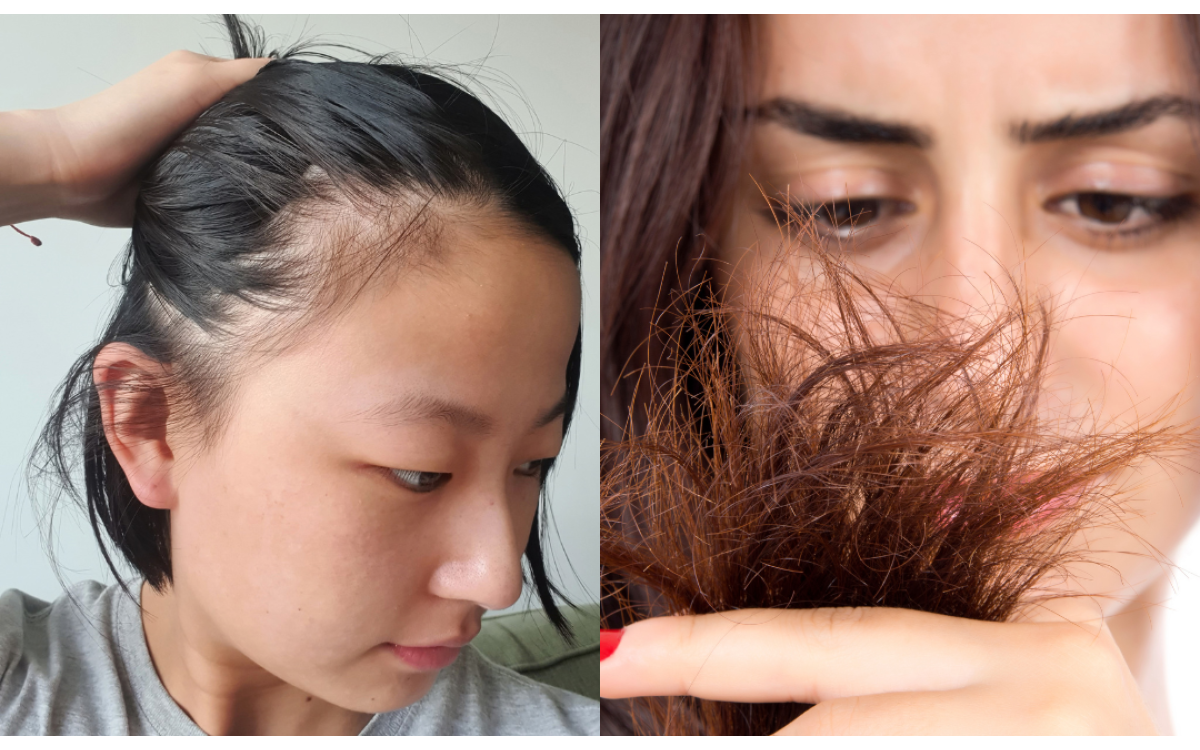
Noticing more hair in your brush, shower or around the bathroom can immediately make you think your hair is thinning. But what looks like hair loss isn't always coming from the scalp. Sometimes, the problem is hair breakage, where existing strands are snapping somewhere along their length.
Hair thinning, shedding and breakage can also occur at the same time, which can make working out what is happening even more confusing. Understanding where the hair is being lost - from the follicle or along the hair shaft - is one of the best places to start.
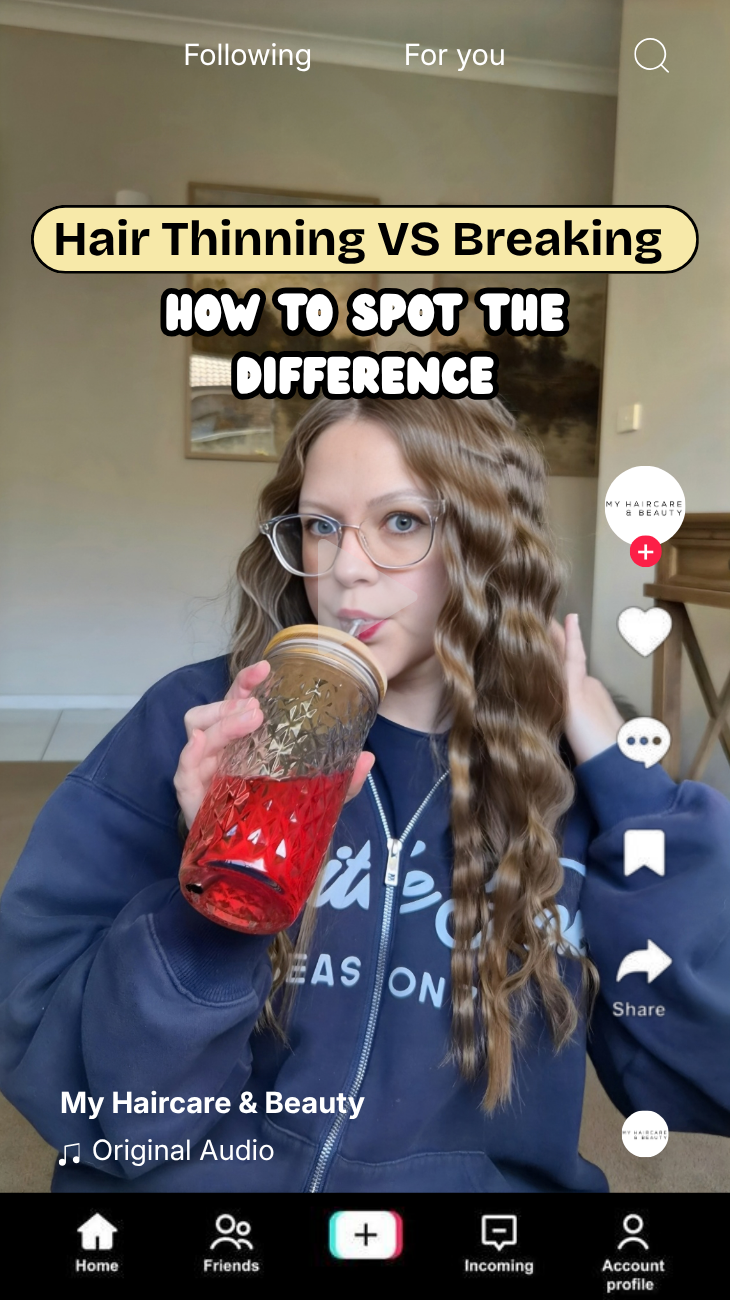 Click the image to watch our video explaining the difference
between hair thinning and breakage.
Quick Comparison: Hair Thinning vs Hair Breakage
| Feature | Hair Thinning / Shedding | Hair Breakage |
|---|---|---|
| Where it happens | At the follicle/scalp | Along the hair shaft |
| What you may notice | Reduced density or more visible scalp | Uneven lengths, frizz and thinner ends |
| Fallen hairs | Usually full-length strands | Often shorter pieces of different lengths |
| Root bulb | May have a small white club-shaped bulb | No root bulb |
| Common triggers | Genetics, hormonal changes, illness, stress, nutrition | Bleaching, colouring, heat, friction and mechanical damage |
| Main focus | Scalp health and identifying the cause | Strengthening and protecting damaged lengths |
| Products to consider | Nioxin, TYPEBEA | Joico K-PAK, K18, Redken Acidic Bonding Concentrate |
What Is Hair Thinning?
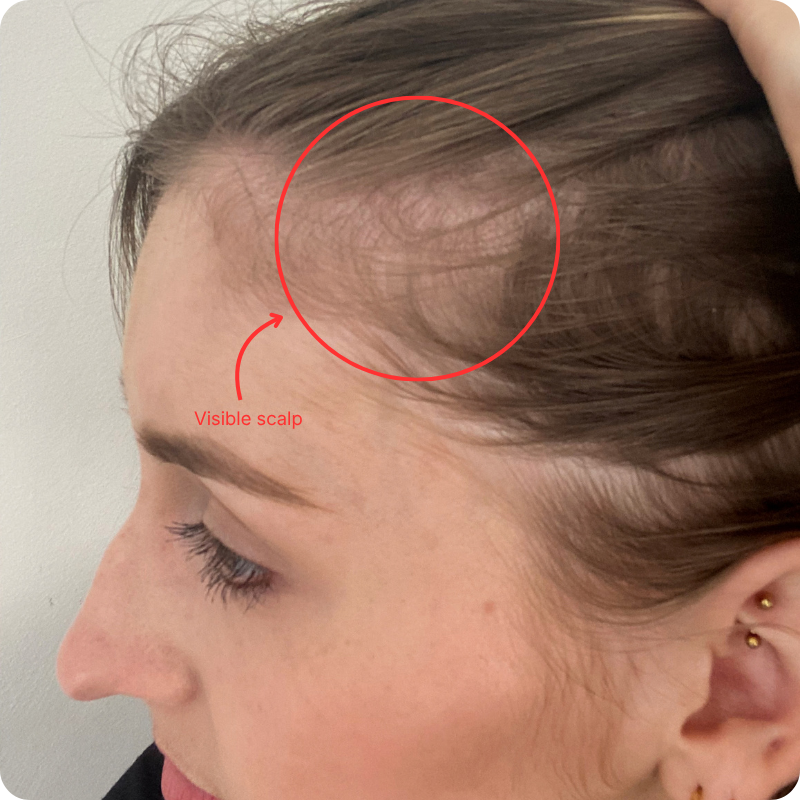
Hair thinning describes a reduction in the density or fullness of hair growing from the scalp. You might notice that your ponytail feels smaller, your part appears wider or more scalp is visible than previously.
Unlike breakage, the issue originates around the hair follicle and growth cycle, rather than simply being caused by the strand snapping.
There are many potential reasons for thinning or excessive shedding, including hereditary hair loss, hormonal changes, significant stress, illness and nutritional deficiencies. This is why persistent thinning shouldn't automatically be treated as a cosmetic haircare problem. Determining the underlying cause is important.
For hair that looks thinner or less dense, ranges such as Nioxin can be incorporated into a scalp and haircare routine. Nioxin offers different systems for varying degrees of thinning and different hair types, with products designed to create fuller, thicker-looking hair and strengthen fragile strands.
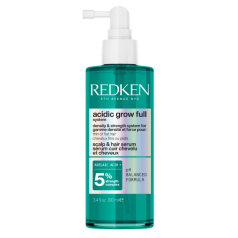
Another option is the Redken Acidic Grow Full System Scalp & Hair Serum, which is designed for thin, flat hair and supports thicker-looking hair while also strengthening hair prone to breakage.
Hair Shedding: How Much Is Normal?
Some hair coming out every day is completely normal. It's estimated that we naturally shed approximately 50–100 hairs each day as part of the normal hair growth cycle.
You may notice those hairs when shampooing, brushing or running your fingers through your hair. If you don't wash or brush your hair every day, several days' worth of naturally shed hair may also become noticeable at once.
What matters more than trying to count every strand is recognising changes from what is normal for you.
A sudden increase in shedding can occur after significant physical or emotional stress. Illness, high fever, surgery, childbirth, major weight loss and hormonal changes can trigger a temporary form of excessive shedding called telogen effluvium. Interestingly, the shedding often doesn't begin immediately: it may become noticeable two or three months after the triggering event.
Temporary excessive shedding often settles as the body recovers, but persistent shedding, obvious loss of density, a widening part or bald patches are good reasons to speak with a GP or dermatologist rather than relying solely on hair products.
Understanding the Hair Growth Cycle
To understand shedding, it helps to understand that every strand isn't growing continuously.
Hair moves through three major stages:
Anagen – the growth phase: This is when hair is actively produced by the follicle. Scalp hair can remain in anagen for several years.
Catagen – the transition phase: Growth stops and the follicle begins transitioning away from its active growth phase. This stage is relatively short, generally lasting a few weeks.
Telogen – the resting and shedding phase: The follicle becomes inactive and the existing hair is eventually released, allowing the cycle to begin again.
Because individual follicles are at different points in this cycle, you don't normally shed all your hair simultaneously.
Problems can arise when an unusually large number of follicles enter the resting/shedding phase at once. This is what happens with telogen effluvium and explains why significant shedding can appear some time after illness, stress or another physiological change.
What Is Hair Breakage?
Hair breakage is fundamentally different because the strand doesn't fall from the follicle - it snaps.
This usually happens because the hair shaft has become weakened by chemical, thermal or mechanical stress. Bleaching, frequent colouring, repeated straightening or curling, aggressive brushing and general wear can all leave the lengths more vulnerable.
Instead of predominantly finding full-length hairs, you may notice shorter pieces of hair in different lengths. Your ends might become increasingly thin or transparent, while the surface develops flyaways and short broken strands.
Breakage can be particularly noticeable around vulnerable areas such as the hairline and crown or through heavily lightened mid-lengths and ends.
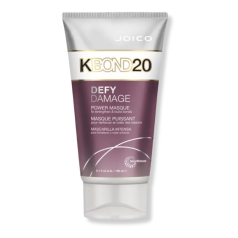
This is where strengthening and reconstructive haircare becomes particularly useful. Joico Defy Damage KBOND20 Power Masque, for example, is formulated for weak, fragile hair prone to breakage and replenishes amino acids while supporting strength and elasticity.
How to Tell Which One You're Dealing With
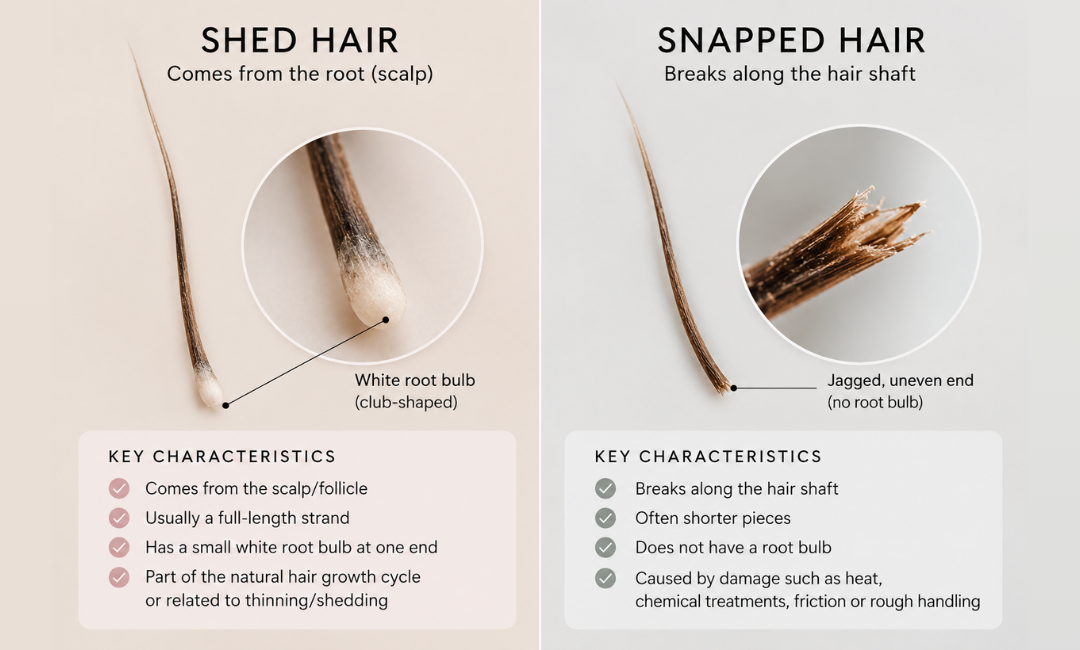
Take a close look at both the hairs you're losing and the overall appearance of your hair.
It is more likely to be shedding or thinning if:
- You're finding predominantly long, complete strands.
- Some shed hairs have a small white club-shaped bulb at one end.
- Your ponytail feels progressively smaller.
- Your part appears wider or your scalp has become more visible.
- You're losing noticeably more full-length hairs when washing or brushing.
- The change appears to be happening from the scalp rather than just the ends.
The white bulb doesn't mean the entire follicle has fallen out. A telogen hair develops a keratinised "club" at its root before being naturally released from the follicle.
It is more likely to be breakage if:
- You're finding lots of short pieces rather than complete hairs.
- The hairs don't have a root bulb.
- Your ends look increasingly sparse while scalp density appears relatively unchanged.
- You have numerous short, uneven hairs through the lengths.
- Your hair feels brittle, rough or weak.
- Breakage is concentrated in areas exposed to bleaching, heat or friction.
One important complication is that you can have both. Fine or thinning hair can be fragile and prone to snapping, while chemically damaged hair can experience breakage at the same time as natural or excessive shedding.
Products for Thinning Hair vs Products for Breakage
Choosing products according to the actual problem is important.
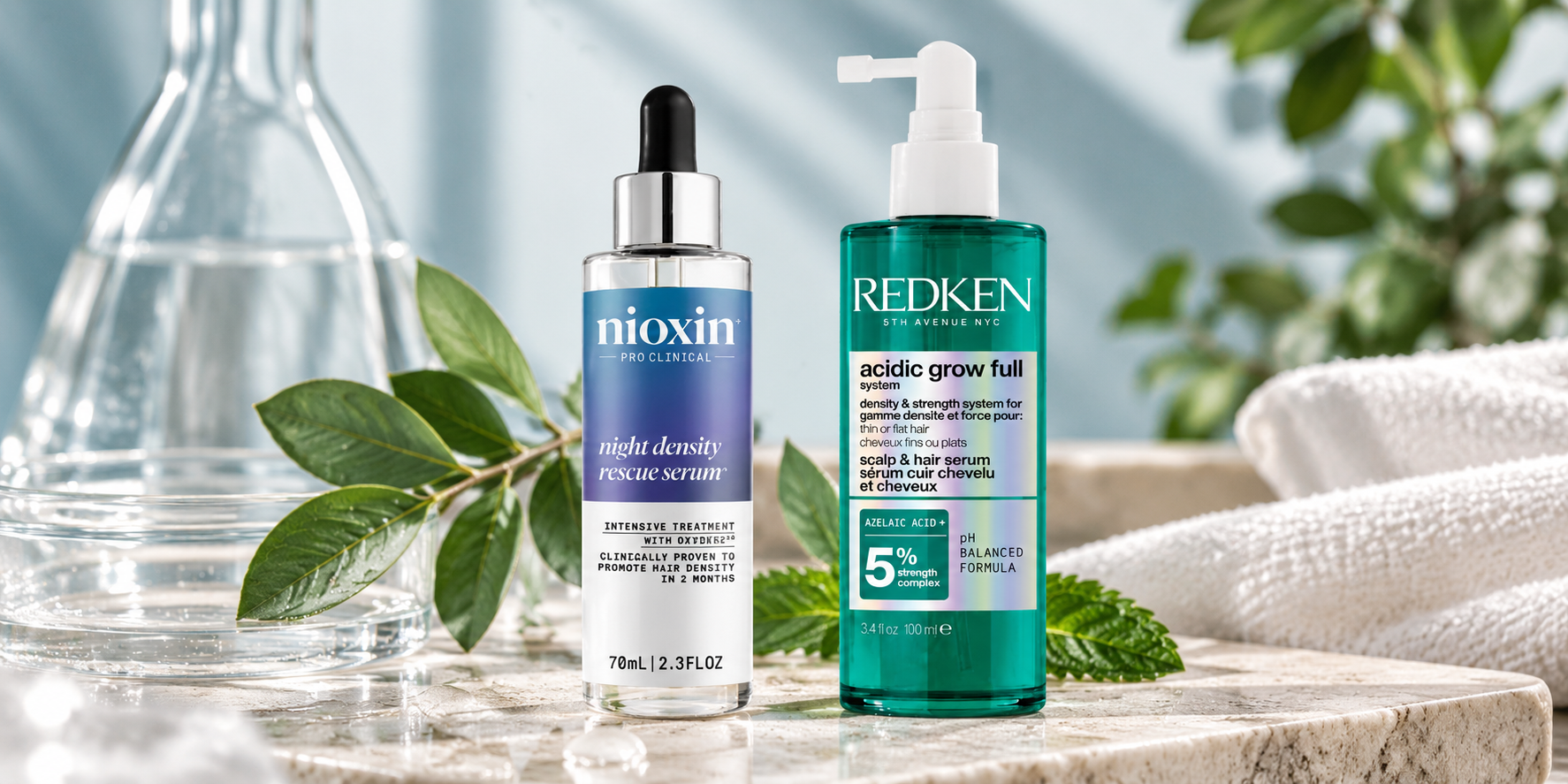
For thinning and reduced density, look towards scalp-focused and densifying products. The Nioxin Hair Booster Serum is designed specifically for areas of progressed thinning such as the hairline and crown, while the Nioxin Night Density Rescue Serum is an overnight treatment designed to support stronger, denser-looking hair.
For breakage, shift the emphasis towards reducing further damage and strengthening vulnerable lengths. Reconstructive treatments such as Joico K-PAK can support weak, fragile hair, while minimising excessive heat, aggressive brushing and repeated chemical processing can help prevent additional snapping.
If you have both thinning and breakage, a routine can address both areas. The Redken Acidic Grow Full System is particularly relevant here because it is designed to create denser, thicker-looking hair while also reducing breakage as part of the complete system.
It's worth remembering that cosmetic haircare can improve scalp condition, strengthen existing hair and make hair appear fuller, but it cannot diagnose or treat every underlying cause of hair loss.
When Should You Be Concerned About Hair Shedding?
An occasional period of slightly increased shedding isn't necessarily cause for alarm. What deserves more attention is a clear and persistent change.
Consider speaking with your GP or dermatologist if you notice sudden or severe shedding, bald patches, a rapidly widening part, significant loss of density, scalp symptoms, or shedding that continues without improvement. Medical assessment is also worthwhile if the change accompanies other symptoms or you suspect hormones, medication, illness or nutritional deficiency may be involved.
Identifying the cause matters because different types of hair loss require very different approaches.
Hair Thinning or Breakage: The Bottom Line
A simple way to remember the difference is:
Thinning and shedding happen from the scalp. Breakage happens to the strand.
If you're seeing full-length hairs coming away from the root and noticing less density at the scalp, investigate shedding or thinning. If you're seeing short snapped pieces, increasingly wispy ends and uneven lengths while your scalp density remains relatively stable, breakage is the more likely culprit.
And if you're seeing signs of both, don't feel that you have to choose between a scalp-focused and strengthening routine. Supporting the scalp while protecting fragile lengths can address the hair from both directions.
Where to Buy Products for Thinning Hair and Breakage in Australia
My Haircare & Beauty stocks a wide selection of professional haircare for thinning, fragile and damaged hair, including Nioxin, Redken and Joico.
Whether your goal is to create fuller, denser-looking hair, care for the scalp or strengthen lengths prone to snapping, choosing products according to why your hair is losing fullness is the best place to start.