


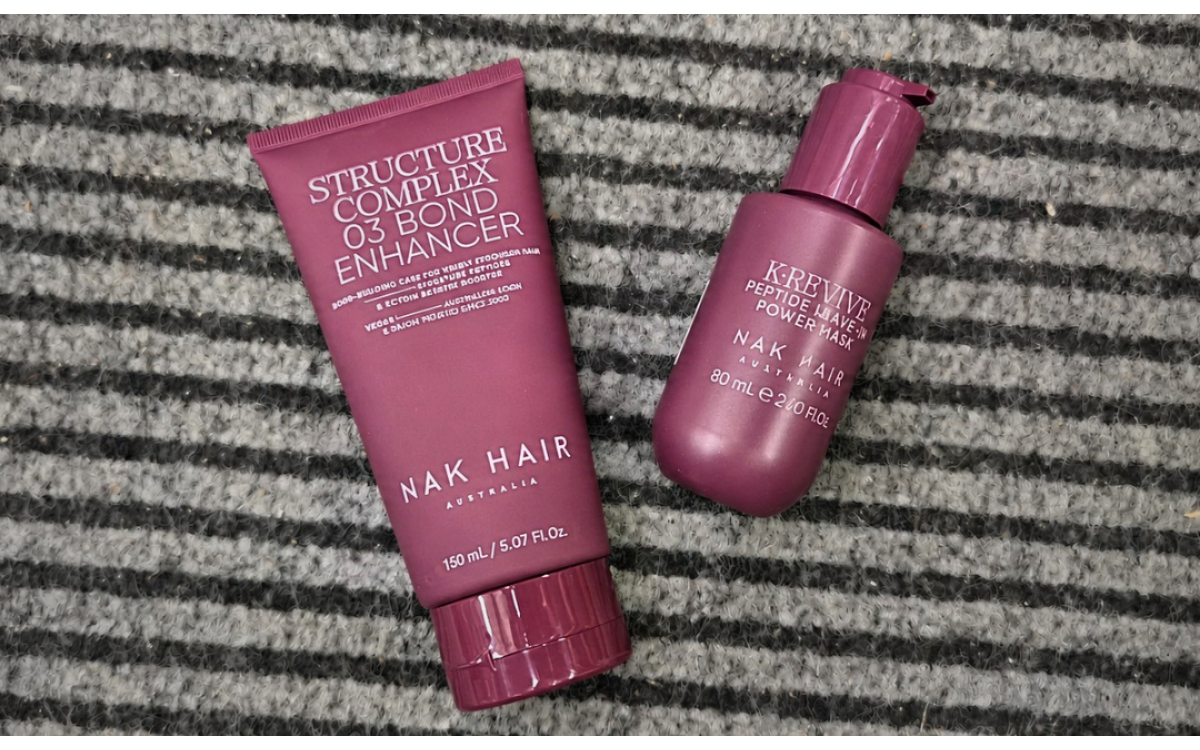
Damaged hair doesn't always need the same type of repair treatment. While some products focus on strengthening weakened hair bonds, others use advanced peptide technology to help rebuild and reinforce the hair's internal structure.
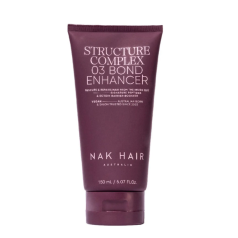
Two treatments that take slightly different approaches are NAK Structure Complex No. 3 Bond Enhancer and NAK K.REVIVE Peptide Leave-In Power Mask.
Both are designed to help repair hair affected by bleaching, colouring, heat styling and chemical treatments. However, the biggest difference is how they work and how they're used.
Structure Complex No. 3 is a rinse-out bond-building treatment designed to strengthen damaged hair during your washing routine. K.REVIVE, on the other hand, is a concentrated leave-in peptide treatment that works in just two minutes without needing to be rinsed away.
So, which NAK treatment is better for your hair? Here's how they compare.
NAK Structure Complex No. 3 vs K.REVIVE: Quick Comparison
| Feature | NAK Structure Complex No. 3 | NAK K.REVIVE |
|---|---|---|
| Product type | Rinse-out bond-building treatment | Leave-in peptide repair mask |
| Main focus | Strengthening and reinforcing weakened hair bonds | Repairing and reinforcing the hair's keratin structure |
| Key technology | Signature peptides, ectoin and botanical extracts | Trichopeptide Science with biomimetic peptides |
| Key ingredients | Watermelon seed extract, hazel seed extract, peptides and ectoin | Biomimetic peptides, hydrolysed vegetable proteins and amino acids |
| Best for | Weak, brittle and chemically treated hair | Damaged, stressed and breakage-prone hair |
| Application | Clean, wet hair | Clean, towel-dried hair |
| Processing time | 3–5 minutes | 2 minutes |
| Rinse out? | Yes | No |
| Conditioner required? | Follow your usual conditioning routine as needed | Skip conditioner before applying |
| How often? | Weekly or 1–2 times per week | 1–2 times per week or as needed |
| Main advantage | Targeted bond reinforcement during washing | Fast, convenient leave-in repair |
What Is NAK Structure Complex No. 3 Bond Enhancer?
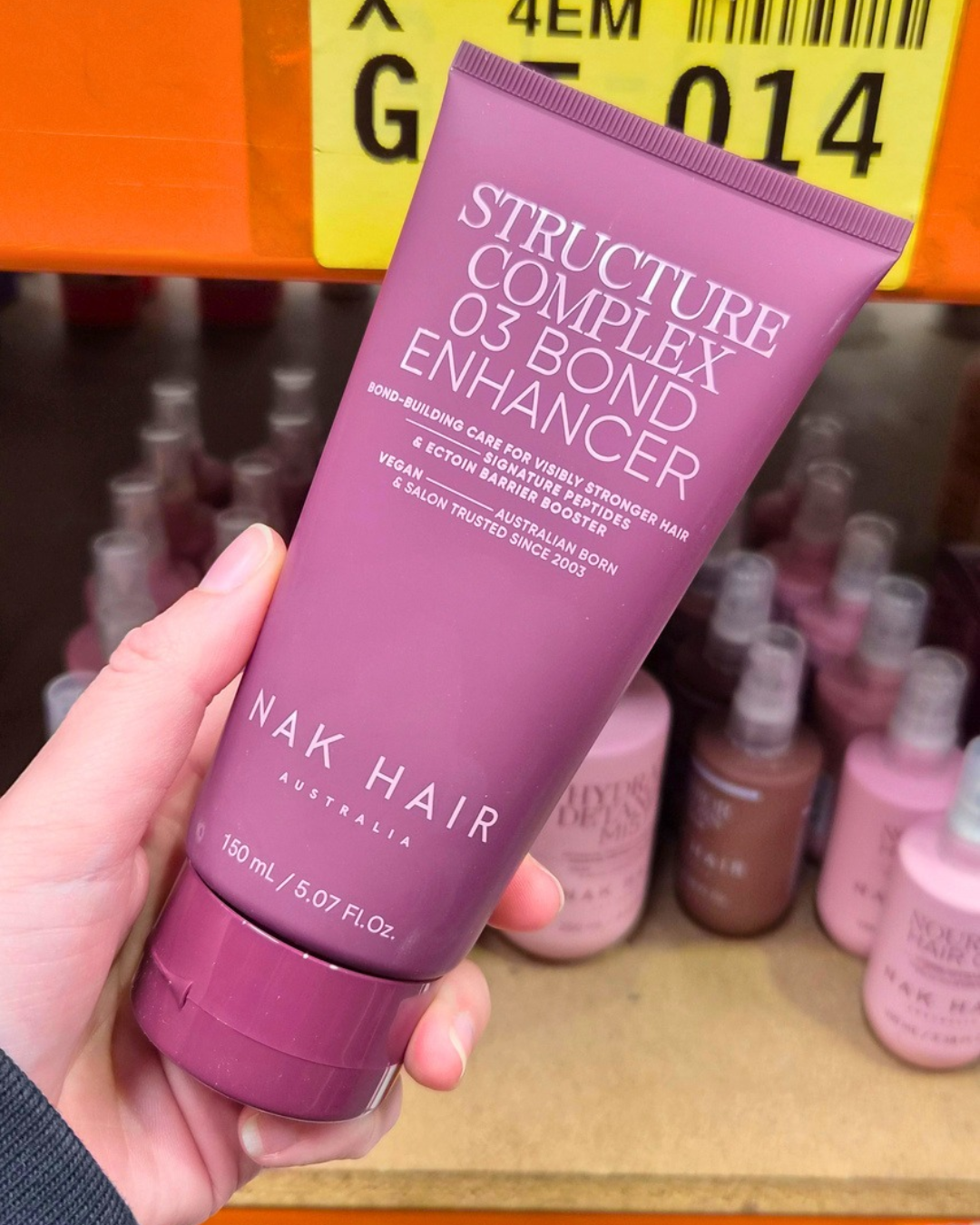
NAK Structure Complex No. 3 Bond Enhancer is a rinse-out treatment designed to strengthen and reinforce hair that has become weakened through chemical processing, heat styling or everyday damage.
When hair is repeatedly bleached, coloured or exposed to high temperatures, its internal structure can become compromised. This can leave strands feeling brittle, rough, weak and increasingly prone to snapping.
Structure Complex No. 3 focuses on helping reinforce this weakened structure through a combination of signature peptides, ectoin and botanical extracts.
Unlike a traditional moisturising mask that primarily softens the hair's surface, Structure Complex No. 3 is formulated as a targeted strengthening treatment.
How Does NAK Structure Complex No. 3 Work?
The formula combines several ingredients designed to support damaged hair.
Signature Peptides: Help reinforce and strengthen weakened hair, supporting improved resilience and reducing the likelihood of further breakage.
Ectoin: A protective ingredient known for its ability to help defend against environmental stress and support moisture retention.
Watermelon Seed Extract: Provides conditioning and antioxidant support, helping maintain softness and improve the feel of dry, stressed hair.
Hazel Seed Extract: Helps nourish and condition the hair, supporting a smoother, more manageable finish.
Together, these ingredients help strengthen hair that has become vulnerable through chemical or mechanical stress.
Who Should Use NAK Structure Complex No. 3?
Structure Complex No. 3 is particularly well suited to hair that needs strengthening as part of its regular washing routine.
It's a good option for:
- Bleached or highlighted hair
- Chemically treated or coloured hair
- Weak, brittle strands
- Hair prone to snapping during brushing
- Hair that feels fragile after chemical services
- Anyone wanting a weekly bond-strengthening treatment
If your hair feels increasingly fragile and you're looking for a treatment that can be incorporated into your existing shampoo and conditioning routine, Structure Complex No. 3 is a practical choice.
What Is NAK K.REVIVE Peptide Leave-In Power Mask?
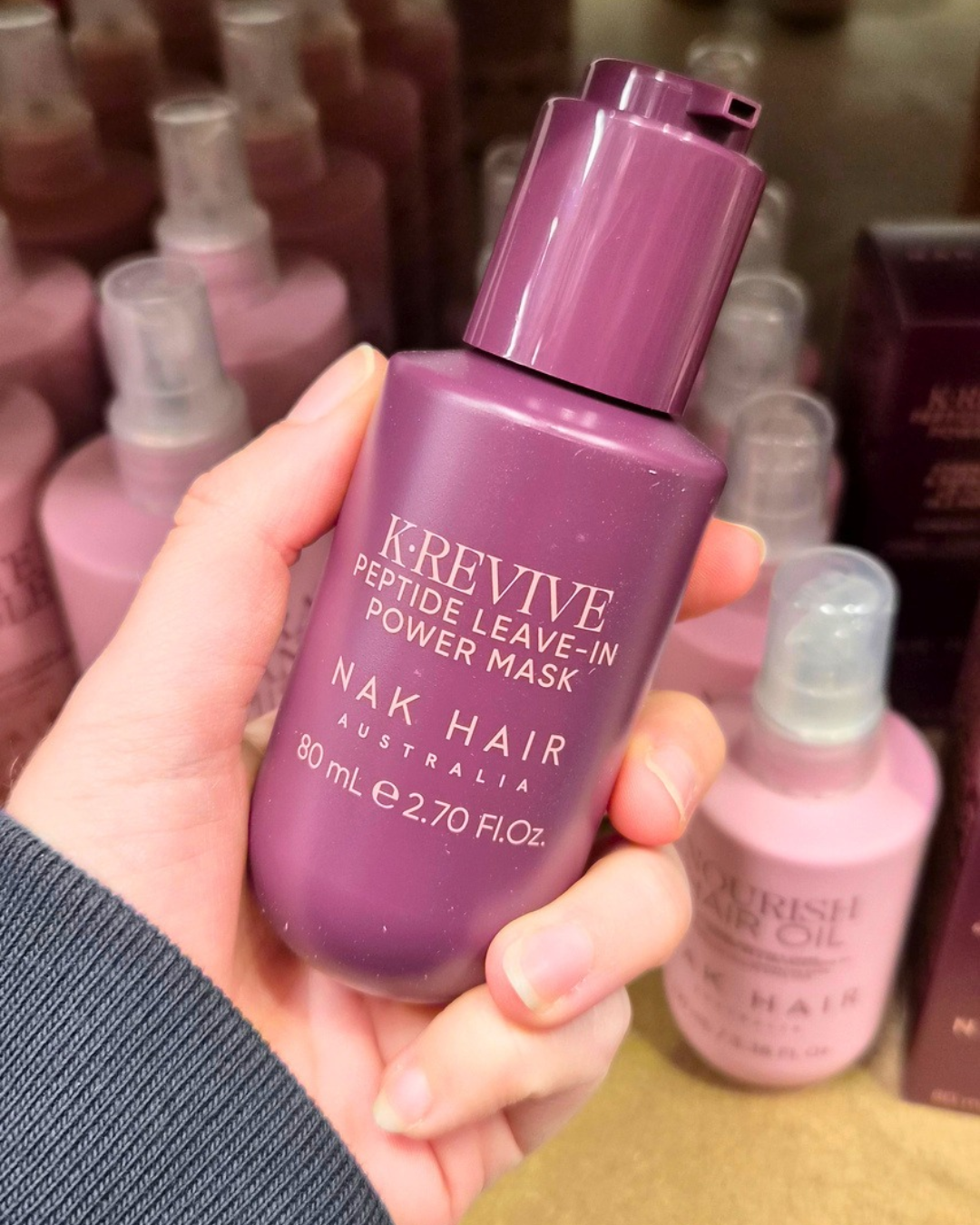
NAK K.REVIVE Peptide Leave-In Power Mask takes a different approach to repairing damaged hair.
Rather than being rinsed out after a few minutes, K.REVIVE is a concentrated leave-in treatment designed to work within the hair's structure using advanced biomimetic peptide technology.
Its formula features NAK's Trichopeptide Science, which combines peptides, proteins and amino acids to help reinforce weakened hair fibres.
The treatment is designed to address damage caused by bleaching, colouring, chemical processing and repeated heat styling.
One of its most notable features is its speed. K.REVIVE is marketed as helping repair and strengthen hair structure by up to 97% in just two minutes, making it an appealing option for anyone wanting intensive repair without a lengthy treatment process.
How Does NAK K.REVIVE Work?
K.REVIVE uses a combination of ingredients that support the hair's protein structure.
Biomimetic Peptides: Designed to mimic aspects of the hair's natural protein structure, helping reinforce damaged areas and improve overall strength.
Trichopeptide Science: NAK's advanced peptide technology targets weakened hair fibres to support structural repair and resilience.
Hydrolysed Vegetable Proteins: Help condition and reinforce the hair, improving its strength and overall feel.
Amino Acids, Including Arginine and Lysine: These are important components of proteins and help support the hair's structural integrity.
The formula also helps smooth the cuticle, improving softness, shine and manageability.
Unlike traditional rinse-out masks, K.REVIVE remains in the hair after application, allowing it to become part of your post-wash styling routine.
Who Should Use NAK K.REVIVE?
K.REVIVE is particularly appealing for hair that has experienced significant damage and needs a concentrated repair treatment.
It's a good option for:
- Hair weakened by bleaching or highlighting
- Chemically processed hair
- Hair experiencing frequent breakage
- Strands damaged by straighteners or curling irons
- Hair that feels rough, weak or compromised
- Anyone wanting a quick, leave-in repair treatment
- Those who prefer to avoid additional rinse-out steps
Its lightweight leave-in format also makes it convenient for people who want to strengthen their hair without using a traditional conditioning mask.
What's the Main Difference Between Structure Complex No. 3 and K.REVIVE?
The most important difference is their primary repair technology and treatment format.
NAK Structure Complex No. 3 focuses on bond reinforcement. It's designed to strengthen hair that has become weakened through chemical processing and everyday damage, using peptides, ectoin and botanical extracts.
NAK K.REVIVE focuses on peptide-based structural repair. Its Trichopeptide Science is designed to reinforce the hair's keratin-based structure, helping improve strength and resilience while smoothing the cuticle.
Both aim to improve damaged hair, but they approach that goal differently.
Structure Complex No. 3 works as a treatment during washing, while K.REVIVE is applied afterwards and left in the hair.
This distinction is particularly useful when deciding which product will best suit your routine.
Is NAK K.REVIVE Better Than Structure Complex No. 3 for Damaged Hair?

Not necessarily. Although K.REVIVE uses more advanced peptide-focused technology, that doesn't automatically make it the better choice for everyone.
The right treatment depends on the type of damage you're experiencing and how you prefer to care for your hair.
If your hair is weak, brittle and chemically stressed, Structure Complex No. 3 offers a targeted strengthening treatment that fits into your regular washing routine.
If your hair is significantly compromised, prone to snapping or in need of concentrated structural repair, K.REVIVE may be the more appealing option.
Its two-minute leave-in format also makes it particularly convenient.
The important point is that both products are designed to improve hair strength, but K.REVIVE places greater emphasis on peptide-based molecular repair, while Structure Complex No. 3 focuses on bond reinforcement.
Which NAK Treatment Is Better for Bleached Hair?
Bleaching is one of the most common causes of structural hair damage.
During the lightening process, chemical reactions alter the hair's natural pigment but can also affect the proteins and bonds responsible for maintaining strength and elasticity.
This is why heavily lightened hair can become increasingly fragile, stretchy or prone to breakage.
Both NAK treatments can be useful for bleached hair.
Structure Complex No. 3 is a good choice if you're looking to maintain strength and reinforce hair that has been weakened by colouring or highlighting.
K.REVIVE may be more appropriate if your hair has become particularly compromised and you're looking for a concentrated peptide treatment to help reinforce its structure.
For hair that is extremely damaged, it's also important to minimise additional bleaching and excessive heat styling while allowing the hair to recover.
No cosmetic treatment can completely reverse every form of structural damage, particularly where the hair shaft has already split or broken.
Which Is Better for Hair Breakage?
Both treatments aim to improve hair strength, making them relevant for breakage-prone hair.
However, it's worth distinguishing between hair that is breaking because it is structurally weakened and hair that is simply dry or difficult to detangle.
If your hair is snapping through the mid-lengths and ends after bleaching, colouring or heat styling, a strengthening treatment such as Structure Complex No. 3 or K.REVIVE can be beneficial.
If your hair is primarily dry, rough and tangled but not significantly damaged, a moisturising treatment may be more appropriate.
You could consider products from the wider NAK Hair range that focus on hydration and softness rather than intensive structural repair.
This distinction matters because dryness and damage aren't always the same thing, even though they can occur together.
How Do You Use NAK Structure Complex No. 3?
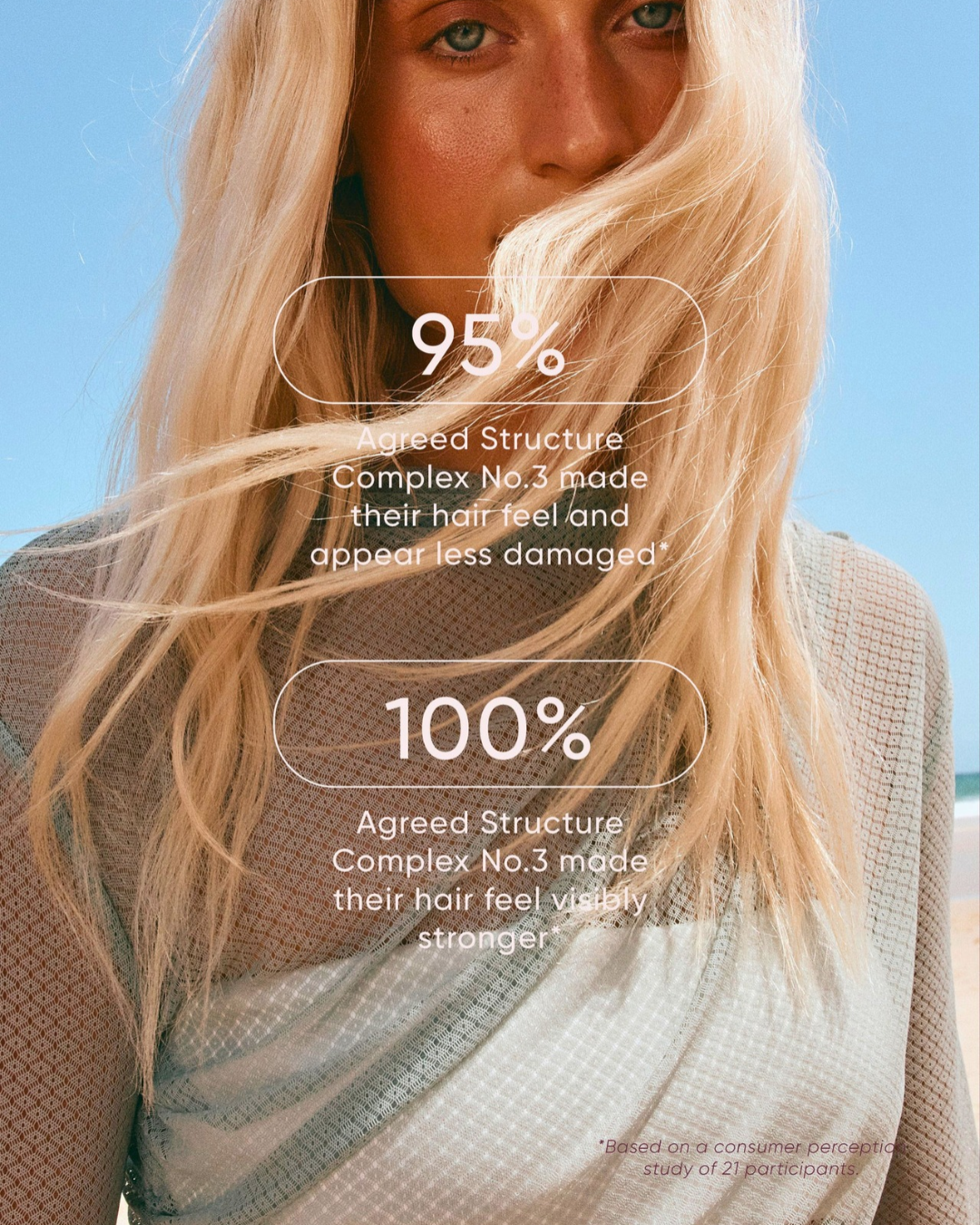
Structure Complex No. 3 is designed to be used during your regular washing routine.
- Shampoo your hair thoroughly.
- Apply Structure Complex No. 3 to clean, wet hair, distributing it evenly from roots to ends.
- Leave the treatment on for 3–5 minutes.
- Rinse thoroughly.
- Continue with your usual conditioning routine as needed.
For most people, using the treatment once or twice per week is a practical starting point, adjusting frequency according to the condition of your hair.
Because it's a rinse-out treatment, there's no need to leave it in overnight or use it as a styling product.
How Do You Use NAK K.REVIVE Peptide Leave-In Power Mask?
K.REVIVE has a slightly different application method.
- Shampoo your hair as usual.
- Skip your regular conditioner.
- Gently towel-dry your hair to remove excess water.
- Apply K.REVIVE evenly through the mid-lengths and ends.
- Leave the treatment to work for 2 minutes.
- Do not rinse. Style your hair as usual.
Skipping conditioner before application allows the treatment to be applied directly to freshly cleansed hair.
K.REVIVE can generally be incorporated into your routine once or twice per week, depending on your hair's condition and the manufacturer's directions.
The biggest advantage is that the treatment doesn't require additional time in the shower.
Can You Use NAK Structure Complex No. 3 and K.REVIVE Together?
Yes, the two treatments can potentially be incorporated into the same haircare routine, although you don't necessarily need to use both every time you wash your hair.
Because they use different technologies and application methods, they can complement one another.
For example, you might use Structure Complex No. 3 once a week as a rinse-out strengthening treatment, then incorporate K.REVIVE during another wash as your leave-in peptide repair treatment.
This gives your hair access to both approaches without unnecessarily complicating every wash.
If you do want to use them during the same wash, Structure Complex No. 3 would be applied and rinsed out first, followed by K.REVIVE on towel-dried hair.
However, because K.REVIVE is designed to be applied after shampooing without conditioner, it's worth following the manufacturer's recommended application instructions when combining treatments.
For most people, alternating between the two will be a straightforward way to incorporate both products.
NAK Structure Complex No. 3 vs K.REVIVE: Which Should You Choose?
The decision ultimately comes down to your hair's condition and the type of treatment you prefer.
Choose NAK Structure Complex No. 3 Bond Enhancer if you want a rinse-out strengthening treatment that helps reinforce weak, brittle or chemically treated hair. It's particularly suited to anyone looking for a weekly bond-building step during their regular washing routine.
Choose NAK K.REVIVE Peptide Leave-In Power Mask if you're looking for a concentrated peptide treatment that helps repair and reinforce damaged hair without requiring an additional rinse-out step.
K.REVIVE is especially appealing if your hair is significantly compromised by bleaching, colouring or heat styling and you want a quick, convenient repair treatment.
The simplest way to remember the difference is:
Structure Complex No. 3 = rinse-out bond reinforcement for weakened hair.
K.REVIVE = leave-in peptide repair for damaged hair in just two minutes.
Both are designed to improve hair strength, but their different technologies and application methods mean one may fit your haircare needs better than the other.
Where to Buy NAK Structure Complex No. 3 and K.REVIVE in Australia
My Haircare & Beauty stocks the full range of NAK Hair products, including strengthening treatments, shampoos, conditioners and targeted hair repair products.
Whether you're looking for a bond-building treatment to reinforce weakened hair or an advanced leave-in peptide mask for more intensive repair, explore the NAK range at My Haircare & Beauty to find the right products for your hair type and concerns.