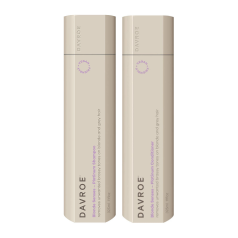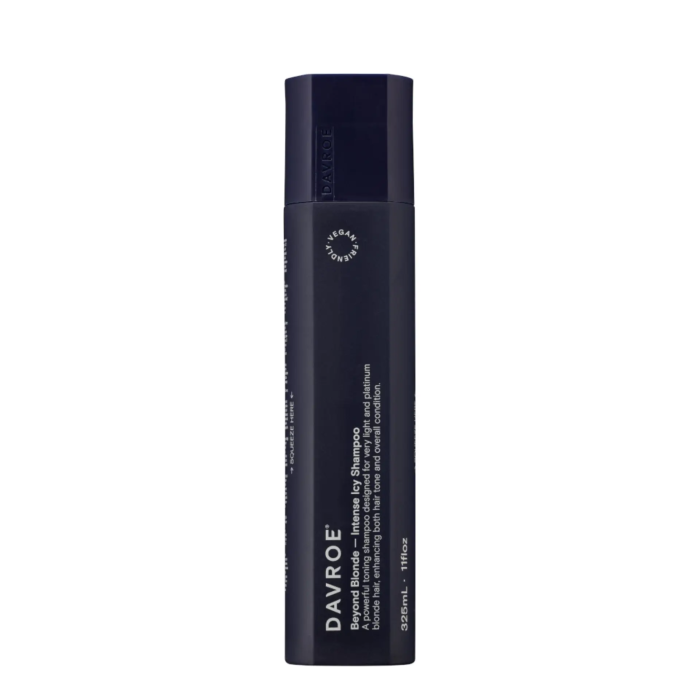
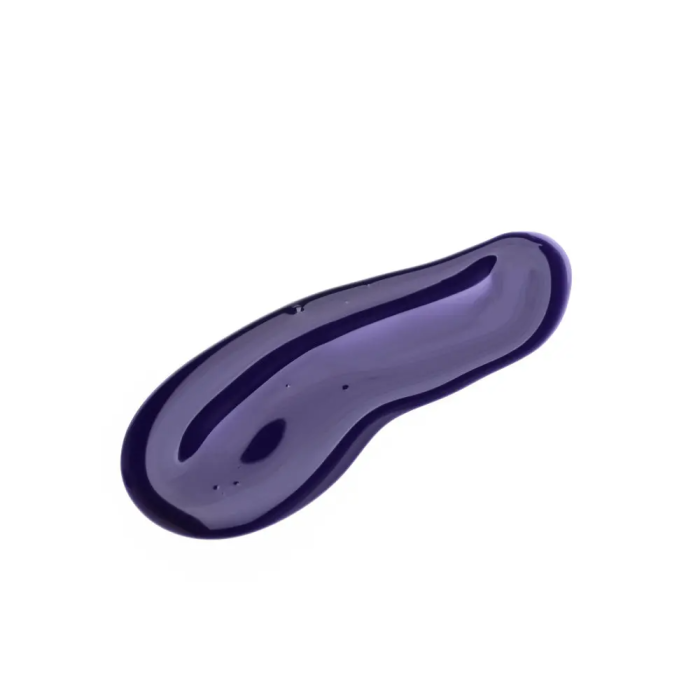
Davroe Davroe Beyond Blonde Intense Icy Shampoo
Davroe

Davroe Beyond Blonde Intense Icy Shampoo 325ml

$34.95
Only 4 remaining in stock!
  • Delivery
  • Click & Collect
In Stock - Free Shipping on orders $49.99 +
Estimated delivery: Mon, Aug 3rd - Sat, Aug 8th

Free Click and collect is available at checkout. Orders are ready within 1 hour during opening hours. Store Address: 56 Parer Rd, Airport West, VIC Australia 3042 Phone (03) 9999 5902

Sample Sachets x3
Receive 3 Davroe Samples Sachets
When you purchase 2+ Davroe items.
Min spend $45. 1 per customer. Sets are 1 item.
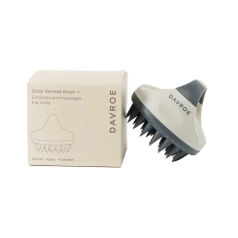
Artists & Models Oval Styling Brush Gift
FREE Brushworx Oval Styling Brush
Valued at $29.95, free with all orders over $129.
Promotion
Save 15% with code NEW15 off your first order!
Limit 1 use. Exclusions apply, including sale items.
Why You’ll love it
Blonde
Natural Origin
Recyclable
Alcohol Free
Artificial Fragrance Free
Creates icy, cool blonde results
Gentle, hydrating plant-based formula
Neutralises yellow and brassy tones
Suitable for blonde, grey, and highlighted hair
Description
Read more
Directions
Ingredients
  • Sodium Lauroyl Methyl Isethionate Cleansers / surfactants
    Gentle cleansing surfactant

    A mild, sulphate-free surfactant that helps cleanse hair and scalp while creating a soft, creamy lather.

    May suit

    People looking for a gentle, low-irritation cleansing option or those using sulphate-free shampoos.

    Worth knowing

    It is known for being milder than many traditional surfactants and is often used in formulas designed to maintain softness after washing.

  • Glycerin Humectants
    Humectant

    Attracts and holds water to help hair feel hydrated and soft.

    May suit

    Dry or dehydrated hair, and many curl and moisture routines.

    Worth knowing

    A very common, well-tolerated humectant used across countless products.

  • Cocamide MIPA Cleansers / surfactants
    Foaming surfactant

    A coconut-derived surfactant that helps boost foam and improve the cleansing performance of shampoos.

    May suit

    People who like a rich, stable lather in their cleansing products.

    Worth knowing

    It is often used alongside primary surfactants to enhance texture and mildness. Its viscosity‑boosting effect can also improve the feel of rinse‑off formulas.

  • Cocamidopropyl Betaine Cleansers / surfactants
    Cleanser / foam booster

    A milder co-surfactant that helps cleanse, boost foam and soften the feel of stronger cleansers.

    May suit

    Most hair types, including those wanting a gentler wash.

    Worth knowing

    Often paired with other surfactants to make a formula feel milder.

  • Sodium C14-16 Olefin Sulfonate Cleansers / surfactants
    Cleansing surfactant

    A strong, high‑foaming surfactant that helps lift away oil, dirt and product build-up.

    May suit

    Those who prefer a deep‑cleaning or clarifying effect, especially in shampoos.

    Worth knowing

    It is often used in clarifying formulas because it creates a rich lather and provides an effective cleanse. Its intensity can feel more cleansing than milder surfactants, depending on hair type and formulation.

  • Decyl Glucoside Cleansers / surfactants
    Gentle surfactant

    A mild, plant-derived surfactant that helps cleanse the hair and scalp.

    May suit

    People looking for gentle or low-foaming cleansing options.

    Worth knowing

    It is commonly used in sulphate-free formulas due to its mildness and compatibility with sensitive scalps. It can also help improve the spreadability of a formula.

  • Glycol Distearate Thickeners and stabilisers
    Opacifier and pearlising agent

    Adds a pearlescent look and helps thicken and stabilise shampoos and conditioners.

    May suit

    Those who like creamy, luxurious-feeling shampoo or conditioner textures.

    Worth knowing

    It also provides a mild conditioning feel, helping formulas spread smoothly through the hair. Its use is common in many everyday cleansing products.

  • Acrylates Copolymer Thickeners and stabilisers
    Film-forming polymer

    Acrylates Copolymer helps form a lightweight film that supports hold, texture and product stability.

    May suit

    People looking for enhanced styling hold or frizz control.

    Worth knowing

    It is widely used in styling products to help shape and set the hair without feeling heavy. It also contributes to product consistency and spreadability.

  • Laureth-4 Cleansers / surfactants
    Solubiliser / mild surfactant

    Laureth-4 helps dissolve oils and blend fragrance or active ingredients evenly through a formula.

    May suit

    Those looking for products with effective cleansing or evenly dispersed ingredients.

    Worth knowing

    It is commonly used at low levels to support texture and clarity in shampoos and styling products. Despite being a surfactant, it is often included for solubilising rather than strong cleansing.

  • PEG-7 Glyceryl Cocoate Cleansers / surfactants
    Mild surfactant and emollient

    A gentle, non-ionic surfactant that also adds light softness and slip to hair.

    May suit

    Those looking for mild cleansing with a smoother, less stripped feel.

    Worth knowing

    It is often included to make cleansing formulas feel more conditioning and to help solubilise oils or fragrances. It pairs well with stronger surfactants to create a more balanced wash.

  • Guar Hydroxypropyltrimonium Chloride Conditioning agents
    Conditioning polymer

    A conditioning polymer that helps smooth hair and improve slip.

    May suit

    Those looking for softer, easier-to-detangle hair.

    Worth knowing

    It is derived from guar gum and is commonly used to enhance conditioning in shampoos and conditioners. It can also reduce static and improve manageability.

  • Polyquaternium-7 Conditioning agents
    Conditioning polymer

    A conditioning polymer that helps smooth, soften and reduce static in the hair.

    May suit

    People looking for improved slip, reduced frizz or easier detangling.

    Worth knowing

    It is commonly used in shampoos, conditioners and styling products to enhance manageability and provide a light, non‑heavy feel. It is well known for offering conditioning benefits without weighing the hair down.

  • Hydrolysed Quinoa Proteins and amino acids
    Strengthening protein

    A plant-derived protein used to help support hair strength and improve softness.

    May suit

    Those looking to enhance manageability, reduce the feel of dryness, or support colour retention.

    Worth knowing

    Hydrolysed quinoa contains smaller protein fragments that can lightly film the hair, helping it feel smoother. It is often included in colour-care and strengthening formulas.

  • Hydrolyzed Vegetable Protein Proteins and amino acids
    Strengthening protein

    Helps reinforce the hair by depositing small protein fragments that can support softness and resilience.

    May suit

    People looking to improve the feel of weakened, damaged or chemically treated hair.

    Worth knowing

    Vegetable-derived proteins are commonly used because they are lightweight and can help reduce the appearance of breakage. They can be included in both rinse-off and leave-in formulas.

  • Persea Gratissima Oil Oils and butters
    Nourishing plant oil

    A rich plant oil that helps condition and soften the hair.

    May suit

    Dry, coarse or damaged hair types that benefit from added softness and smoothness.

    Worth knowing

    It is valued for its emollient properties and is often included to support a smoother feel and appearance. It can also help enhance suppleness without weighing hair down when used in balanced formulations.

  • Limnanthes Alba Seed Oil Oils and butters
    Nourishing plant oil

    A lightweight plant oil that helps soften and smooth the hair.

    May suit

    Those looking to boost shine, reduce frizz, or add light nourishment without heaviness.

    Worth knowing

    It is prized for its stability and ability to add a soft, conditioned feel to hair without a greasy finish.

  • Olea Europaea Leaf Extract Botanical extracts
    Botanical extract

    A plant-derived extract used to support conditioning and provide antioxidant benefits in haircare.

    May suit

    Those looking for plant-based ingredients that help maintain hair and scalp comfort.

    Worth knowing

    Olive leaf extract is commonly included in formulas for its soothing and antioxidant properties. It is typically used in small amounts to complement a product’s overall conditioning profile.

  • Terminalia Ferdinandiana Fruit Extract Botanical extracts
    Antioxidant botanical extract

    A plant extract used for its antioxidant content and supportive conditioning benefits.

    May suit

    Those looking for plant-based ingredients that help support hair and scalp vitality.

    Worth knowing

    Kakadu plum is known for its naturally high vitamin C content, which can help support overall hair and scalp care formulations. It is commonly included in modern botanical or antioxidant-focused products.

  • Vitis Vinifera Seed Extract Botanical extracts
    Botanical antioxidant

    A plant extract used to support hair and scalp with antioxidant and conditioning benefits.

    May suit

    Those looking for gentle botanical ingredients that may help protect hair from environmental stress.

    Worth knowing

    Grape-derived extracts are commonly used in haircare for their antioxidant polyphenols and lightweight conditioning properties. They are generally included to complement a formula rather than act as a primary active.

  • Sodium Lactate Humectants
    Moisture-binding humectant

    Helps attract and hold moisture in the hair and scalp.

    May suit

    Those seeking added hydration, improved manageability, or support for dry scalp.

    Worth knowing

    It is a salt of lactic acid often used to enhance moisture retention and support a balanced formula. It can also contribute mild pH-buffering benefits depending on the product.

  • Phenoxyethanol Preservatives
    Preservative

    Helps keep the product stable and pleasant to use after opening.

    May suit

    All products that need protecting from spoilage.

    Worth knowing

    A very common, well-studied preservative used at low levels.

  • Ethylhexylglycerin Preservatives
    Preservative booster

    Helps support the preservation system and can provide mild skin-conditioning benefits.

    May suit

    Those interested in gentle preservation systems or sensitive scalps may find it relevant.

    Worth knowing

    It is often paired with other preservatives to improve their effectiveness while allowing for lower usage levels. It also has light moisturising and conditioning properties.

  • Citric Acid pH adjusters
    pH adjuster

    Fine-tunes the product pH, which can help the hair surface feel smooth.

    May suit

    Most hair types as part of a balanced formula.

    Worth knowing

    Usually present in small amounts to balance the formula.

  • Lactic Acid pH adjusters
    pH adjuster

    Helps adjust and maintain the product’s pH for optimal performance.

    May suit

    Those looking for formulas that help smooth the cuticle or gently refine the scalp surface.

    Worth knowing

    Lactic Acid can also provide mild hydrating and smoothing benefits in haircare. Its pH-balancing role helps support product stability and performance.

  • Dehydroacetic Acid Preservatives
    Preservative

    Helps keep haircare formulas stable by preventing product spoilage.

    May suit

    Those who want products to stay fresh for longer, including people who use products slowly or store them in humid bathrooms.

    Worth knowing

    It is often used at low levels and works well alongside other preservative systems to support formula longevity. It is commonly included in both rinse-off and leave-in products.

  • Formic Acid pH adjusters
    pH adjuster

    Helps control and stabilise the pH of a haircare formula.

    May suit

    Those using products that require precise pH levels for performance, such as certain treatments or professional formulations.

    Worth knowing

    Formic Acid can also support product preservation by creating a less favourable environment for microbial growth. It is typically used in very small, carefully controlled amounts.

  • Benzoic Acid Preservatives
    Preservative

    Helps protect haircare products by supporting the preservation system and maintaining formula stability.

    May suit

    Those who want products that remain fresh and effective throughout their shelf life.

    Worth knowing

    Benzoic Acid is often used alongside other preservatives to create a broad-spectrum system. It also plays a minor role in helping maintain a product’s pH balance.

  • Sodium Benzoate Preservatives
    Preservative

    Helps protect water-based products from spoilage so they stay usable.

    May suit

    All products that need a preservative system.

    Worth knowing

    Often paired with other preservatives for broad protection.

  • Potassium Sorbate Preservatives
    Preservative

    Helps keep haircare formulas stable by preventing the growth of microbes.

    May suit

    Anyone who uses water-based products that benefit from reliable preservation.

    Worth knowing

    It is commonly used alongside other preservation systems to maintain product freshness and extend shelf life. It is generally well tolerated in rinse-off and leave-in products.

  • Sodium Hydroxide pH adjusters
    pH adjuster

    Helps control and stabilise the pH of haircare formulations.

    May suit

    Those interested in how product pH affects scalp comfort or hair cuticle behaviour.

    Worth knowing

    It is used in very small amounts to bring a formula to the desired pH range. Once adjusted, it does not act as a strong alkaline agent in the finished product.

  • Urea Humectants
    Moisture-binding humectant

    Urea helps attract and hold moisture in the hair and scalp.

    May suit

    Those with dry, coarse or dehydrated hair, or a dry, flaky scalp.

    Worth knowing

    It is often used to support hydration and maintain a comfortable scalp environment. In some formulas it can also help improve product absorption.

  • Benzyl Alcohol Preservatives
    Preservative

    Helps preserve formulations and can also act as a solvent or light fragrance component.

    May suit

    Those interested in understanding preservative systems or identifying potential fragrance allergens.

    Worth knowing

    Benzyl Alcohol is commonly used in professional haircare to support product stability and texture. It can also naturally occur in some essential oils.

  • Juniperus Virginiana Oil Fragrance ingredients
    Aromatic plant oil

    A cedarwood-derived essential oil used mainly to add a warm, woody scent to haircare products.

    May suit

    Those who enjoy natural essential oil fragrances or seek plant-derived scalp‑care ingredients.

    Worth knowing

    It can also be included for its traditional soothing and balancing properties on the scalp. Essential oils are typically used in low concentrations to provide aroma and complementary benefits.

  • Iso E Super Fragrance ingredients
    Fragrance ingredient

    A synthetic aroma molecule used to add a soft, woody, amber-like scent to formulations.

    May suit

    Those who enjoy refined, long-lasting fragrance notes in their hair products.

    Worth knowing

    Iso E Super is widely used in fine fragrance and haircare for its smooth, modern scent profile. It blends well with many other aroma materials and is known for its subtle diffusion.

  • Hexamethylindanopyran Fragrance ingredients
    Fragrance ingredient

    A synthetic musk used to add a soft, long‑lasting scent to haircare products.

    May suit

    Those who enjoy lingering, musky fragrance notes in their hair products.

    Worth knowing

    It is widely used in perfumery and personal care for its stability and staying power. It does not fall under the list of declarable fragrance allergens.

  • Acid Violet 43 Colourants
    Colourant

    A synthetic violet dye used to add colour or adjust tones in haircare products.

    May suit

    People using colour-depositing shampoos, conditioners or masks may find it relevant.

    Worth knowing

    It is commonly used in purple and violet toning formulas to help reduce the appearance of brassy or yellow tones in lightened hair. It is present in very small amounts to achieve precise colour effects.

  • CI 17200 Colourants
    Colourant

    A synthetic red colourant used to give haircare products a vibrant hue.

    May suit

    Those who prefer products with visually appealing colours.

    Worth knowing

    It is used at low levels to enhance the look of a formula without affecting hair performance. Colourants like this are common in shampoos, conditioners and styling products.

  • Basic Blue 99 Colourants
    Hair dye colourant

    A synthetic blue colourant used to create or adjust shade in hair dyes.

    May suit

    People using oxidative or direct hair dyes who want specific blue or cool-toned results.

    Worth knowing

    It is commonly used in professional and consumer hair-colouring formulas to provide stable, predictable colour results. Its performance depends on the overall dye system and hair condition.

  • Basic Red 51 Colourants
    Hair colourant

    A synthetic red dye used to add or enhance colour in hair products.

    May suit

    People using semi-permanent or temporary hair colour products.

    Worth knowing

    It is commonly used in toners and semi-permanent dyes to achieve vibrant red or warm tones. Its intensity can vary depending on the formula and hair condition.

  • Basic Brown 17 Colourants
    Hair colourant

    A cationic dye used to add or adjust brown tones in hair colour formulations.

    May suit

    Those using permanent or semi-permanent hair dyes seeking specific brown shades or tonal depth.

    Worth knowing

    It is commonly used in professional and at-home colouring systems to achieve consistent results. Its performance can vary depending on the formula and hair condition.

  • Basic Yellow 87 Colourants
    Hair colourant

    A synthetic yellow dye used to add or adjust colour in hair products.

    May suit

    People using semi-permanent or temporary hair colour products.

    Worth knowing

    It is typically used in small amounts to fine‑tune shade results or create vivid tones. Direct dyes like this deposit colour without the need for oxidative processing.

Questions and Answers

Questions and Answers

Write A Question
Name
E-mail
Your Question
Reviews
Write a review
Your evaluation
Name
E-mail
Your Review
Find your product in seconds!
Haircare
Skincare
Makeup