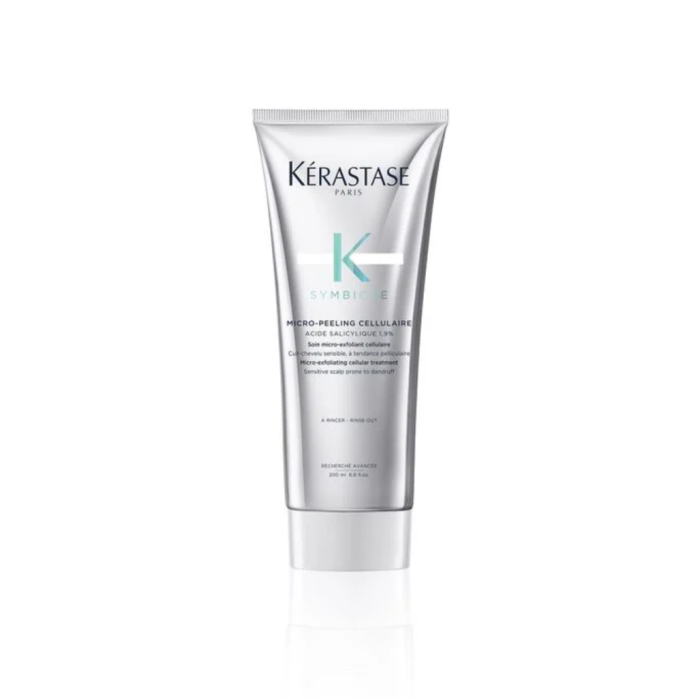
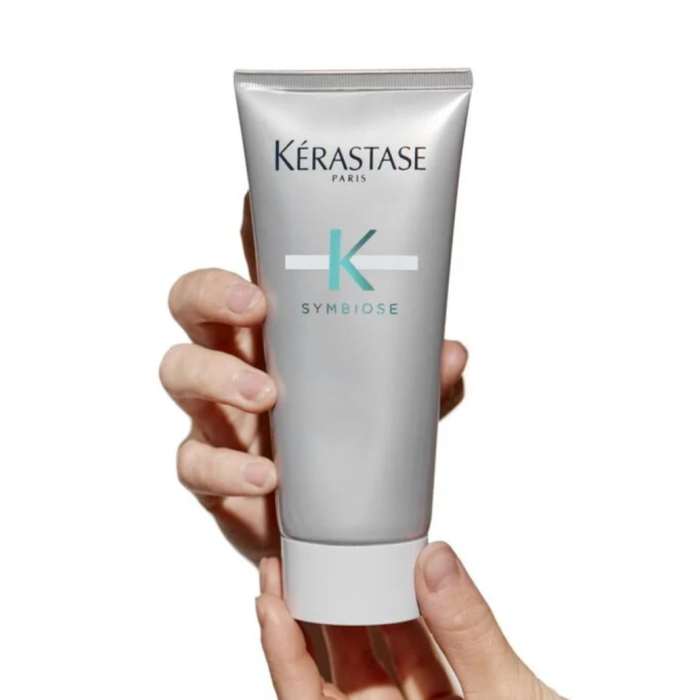
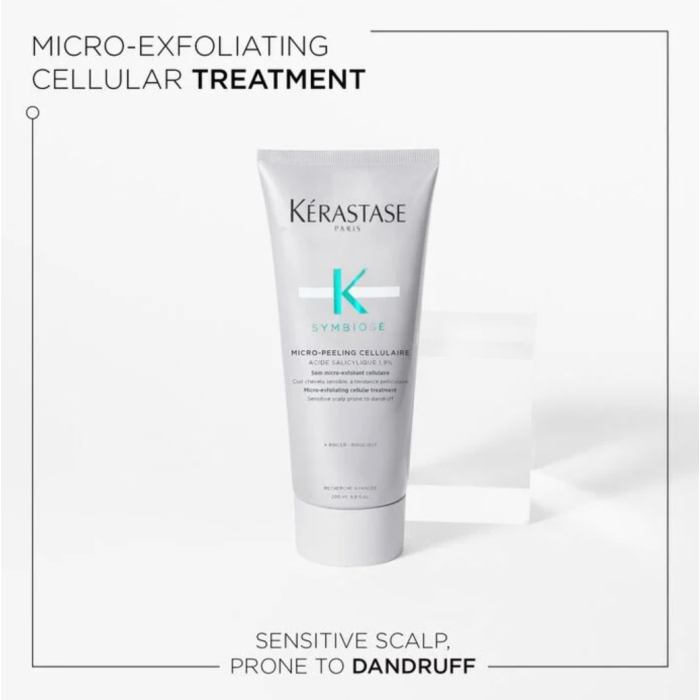


Symbiose Micro-Exfoliating Cellular Scalp Scrub for Dandruff Flakes

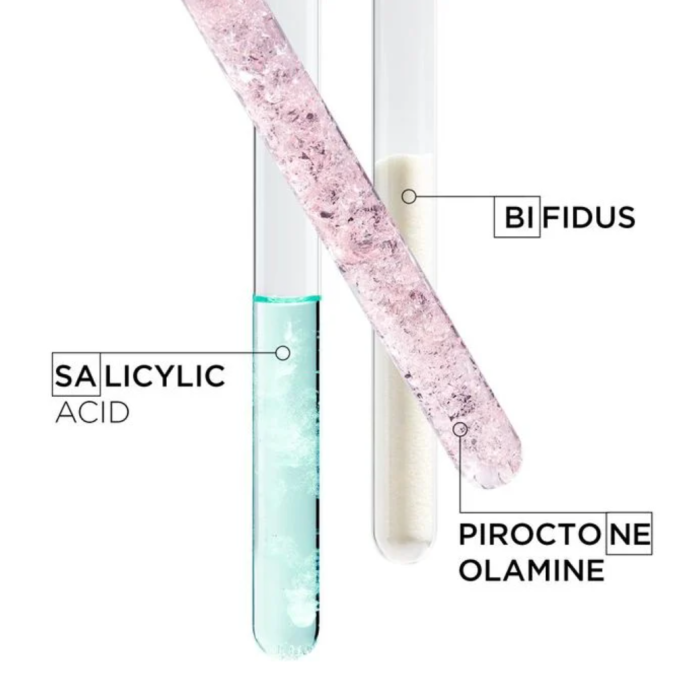
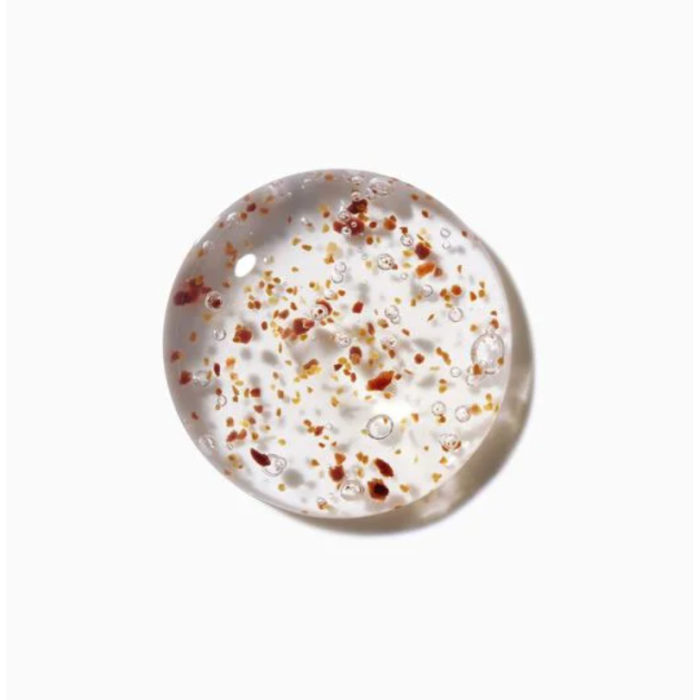
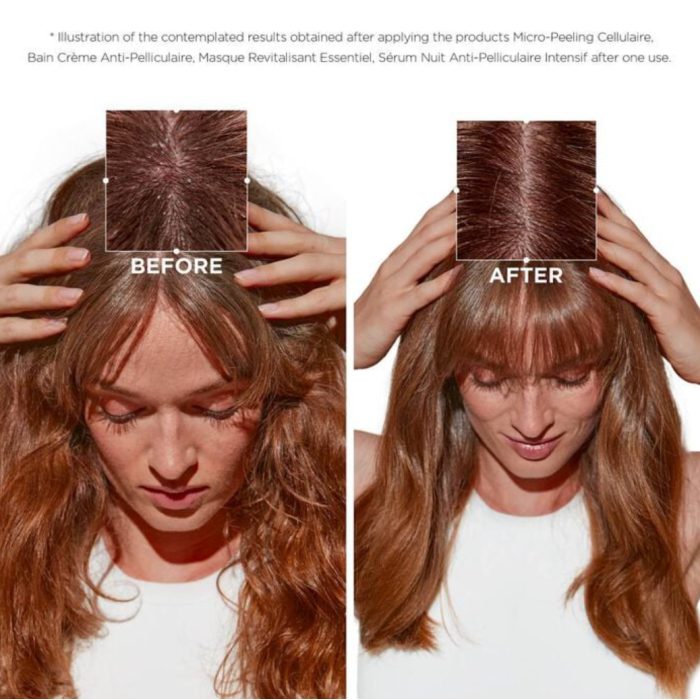
The Kerastase Symbiose Micro-Exfoliating Cellular Scalp Scrub is a specialised scalp care treatment, meticulously crafted to target dandruff flakes at a cellular level. This scrub is an essential addition to the hair care routine for individuals dealing with dandruff and scalp discomfort. Powered by three active ingredients, this treatment works in harmony with your scalp, ensuring effective exfoliation of dead skin cells and dandruff flakes, whilst maintaining scalp health. The inclusion of micro-peeling acid and plant-based beads in the formula enables the scrub to gently yet thoroughly exfoliate the scalp, leading to immediate removal of visible flakes.
The scrub not only purifies the scalp but also soothes any discomfort, making it a comforting experience. Its formulation is designed to prepare the hair for subsequent shampooing, allowing for deeper cleansing and better absorption of hair care products. After use, users can expect a scalp that feels purified and breathable, without any sensation of being stripped of natural oils.
How To Use Kerastase Symbiose Micro-Exfoliating Cellular Scalp Scrub for Dandruff Flakes
Step 1: Take a small amount of the scalp exfoliator in your hand.
Step 2: Massage generously into your scalp. Then, rinse thoroughly.
Step 3: Follow with an anti-dandruff shampoo like the Bain Pureté Anti-Pelliculaire or Bain Crème Anti-Pelliculaire.
Kerastase Symbiose Micro-Exfoliating Cellular Scalp Scrub for Dandruff Flakes Ingredients
Aqua / Water / Eau • Sodium Laureth Sulfate • Sodium Lauryl Sulfate • Glycerin • Cocamide Mea • Salicylic Acid • Coco-Betaine • Laureth-5 Carboxylic Acid • Acrylates Copolymer • Cocamide Mipa • Sodium Hydroxide • Citric Acid • Sodium Benzoate • Argania Spinosa Shell Powder • Prunus Armeniaca Seed Powder / Apricot Seed Powder • Hexylene Glycol • Sodium Chloride • Menthol • Polyquaternium-10 • Isopropyl Myristate • Peg-55 Propylene Glycol Oleate • Propylene Glycol • Limonene • Squalane • Capryloyl Salicylic Acid • Benzyl Salicylate • Benzyl Alcohol • Linalool • Citronellol • Citral • Geraniol • Artemisia Umbelliformis Flower Extract • Potassium Sorbate • Parfum / Fragrance • Sodium Laureth Sulfate • Sodium Lauryl Sulfate • Glycerin • Cocamide Mea • Salicylic Acid • Coco-Betaine • Laureth-5 Carboxylic Acid • Acrylates Copolymer • Cocamide Mipa • Sodium Hydroxide • Citric Acid • Sodium Benzoate • Argania Spinosa Shell Powder • Prunus Armeniaca Seed Powder / Apricot Seed Powder • Hexylene Glycol • Sodium Chloride • Menthol • Polyquaternium-10 • Isopropyl Myristate • Peg-55 Propylene Glycol Oleate • Propylene Glycol • Limonene • Squalane • Capryloyl Salicylic Acid • Benzyl Salicylate • Benzyl Alcohol • Linalool • Citronellol • Citral • Geraniol • Artemisia Umbelliformis Flower Extract • Potassium Sorbate • Parfum / Fragrance
Occasionally, product packaging and ingredients are updated without notice. For the most accurate information please check the product packaging.
If you do happen to find an error, please let us know so we can update it immediately.
-
Sodium Laureth Sulfate Cleansers / surfactantsCleanser
Helps cleanse the hair and scalp by removing oil, sweat and product build-up.
May suitOily scalps, heavy product users and people who like a strong cleanse.
Worth knowingMay feel too cleansing for some dry, curly, colour-treated or sensitive hair types. This depends on the full formula and your hair needs.
-
Sodium Lauryl Sulfate Cleansers / surfactantsCleanser
A cleansing surfactant that removes oil and build-up from the hair and scalp.
May suitOily scalps and routines that need a strong, clarifying wash.
Worth knowingCan be more cleansing than gentler surfactants. Many people use it happily, while others prefer milder options for everyday washing.
-
Glycerin HumectantsHumectant
Attracts and holds water to help hair feel hydrated and soft.
May suitDry or dehydrated hair, and many curl and moisture routines.
Worth knowingA very common, well-tolerated humectant used across countless products.
-
Cocamide MEA Cleansers / surfactantsFoam booster / co-surfactant
Helps boost lather and support cleansing performance in shampoos.
May suitThose who prefer shampoos with a richer, creamier foam.
Worth knowingIt is made from fatty acids derived from coconut oil and monoethanolamine and is commonly used to stabilise foam and improve texture. It can also help thicken surfactant-based formulas.
-
Salicylic Acid Exfoliating acidsScalp exfoliant
Helps dissolve dead skin buildup on the scalp and supports a clearer, fresher surface.
May suitPeople dealing with flaky scalps, congestion or product buildup.
Worth knowingIt is widely used in scalp-care formulas because it breaks down excess oils and debris without needing physical scrubbing. Often found in dandruff-control products.
-
Coco-Betaine Cleansers / surfactantsMild surfactant
A mild, coconut-derived surfactant that helps cleanse and create a soft lather.
May suitPeople looking for gentle cleansing that doesn't feel stripping.
Worth knowingIt is often used alongside other surfactants to improve foam quality and overall mildness. Common in shampoos designed for frequent use.
-
Laureth-5 Carboxylic Acid Cleansers / surfactantsMild surfactant
A gentle cleansing agent that helps lift away oil and buildup.
May suitThose seeking a milder alternative to stronger cleansing surfactants.
Worth knowingIt is often used to create gentle, low-foaming formulas that cleanse without excessive stripping. It can also help improve product texture and rinseability.
-
Acrylates Copolymer Thickeners and stabilisersFilm-forming polymer
Acrylates Copolymer helps form a lightweight film that supports hold, texture and product stability.
May suitPeople looking for enhanced styling hold or frizz control.
Worth knowingIt is widely used in styling products to help shape and set the hair without feeling heavy. It also contributes to product consistency and spreadability.
-
Cocamide MIPA Cleansers / surfactantsFoaming surfactant
A coconut-derived surfactant that helps boost foam and improve the cleansing performance of shampoos.
May suitPeople who like a rich, stable lather in their cleansing products.
Worth knowingIt is often used alongside primary surfactants to enhance texture and mildness. Its viscosity‑boosting effect can also improve the feel of rinse‑off formulas.
-
Sodium Hydroxide pH adjusterspH adjuster
Helps control and stabilise the pH of haircare formulations.
May suitThose interested in how product pH affects scalp comfort or hair cuticle behaviour.
Worth knowingIt is used in very small amounts to bring a formula to the desired pH range. Once adjusted, it does not act as a strong alkaline agent in the finished product.
-
Citric Acid pH adjusterspH adjuster
Fine-tunes the product pH, which can help the hair surface feel smooth.
May suitMost hair types as part of a balanced formula.
Worth knowingUsually present in small amounts to balance the formula.
-
Sodium Benzoate PreservativesPreservative
Helps protect water-based products from spoilage so they stay usable.
May suitAll products that need a preservative system.
Worth knowingOften paired with other preservatives for broad protection.
-
Hexylene Glycol SolventsSolvent and texture enhancer
Hexylene Glycol helps dissolve other ingredients and improves the spreadability of haircare formulations.
May suitThose using stylers, treatments or serums that rely on smooth, even application.
Worth knowingIt is commonly used in both leave-in and rinse-off products to support stable, easy-to-apply textures. It can also assist with product absorption and consistency.
-
Sodium Chloride Thickeners and stabilisersViscosity adjuster
Sodium Chloride is used to adjust the thickness of shampoos and other cleansing formulas.
May suitThose interested in how a product’s texture and lather are achieved.
Worth knowingIt is a simple mineral salt that helps create a familiar shampoo feel and can influence how a cleanser spreads through the hair.
-
Menthol Anti-dandruff / scalp careCooling and soothing agent
Provides a cooling sensation and helps refresh the scalp.
May suitPeople who enjoy a cooling effect or want products that help soothe a tired or congested scalp.
Worth knowingMenthol is often included in shampoos and scalp treatments for its sensory feel and refreshing aroma. It can enhance the perception of cleanliness and comfort during use.
-
Polyquaternium-10 Conditioning agentsConditioning agent
A conditioning polymer that smooths the hair surface and helps with detangling and feel.
May suitMost hair types wanting smoother, easier-to-manage hair.
Worth knowingWidely used in shampoos and conditioners for slip and softness.
-
Isopropyl Myristate Conditioning agentsEmollient and texture enhancer
Helps soften hair and improve slip by adding light, non-greasy conditioning.
May suitThose looking for smoother-feeling hair or products that apply and spread easily.
Worth knowingIt is a lightweight ester often used to reduce greasiness and enhance the feel of conditioning formulas. It can also support fragrance and oil distribution within a product.
-
PEG-55 Propylene Glycol Oleate Cleansers / surfactantsSolubiliser / mild surfactant
Helps solubilise oils and distribute ingredients evenly in haircare formulas.
May suitThose using products that blend oils with water-based formulas, such as lightweight cleansers or treatment sprays.
Worth knowingIt is often used to help create stable, uniform textures and to support gentle cleansing or dispersion of conditioning oils. Its PEG content also helps products rinse easily.
-
Propylene Glycol HumectantsHumectant
Helps hold moisture and carry other ingredients through the formula.
May suitMost hair types as part of a moisturising formula.
Worth knowingA widely used humectant and carrier ingredient.
-
Limonene Fragrance ingredientsFragrance component
A fragrance component that also occurs naturally in many citrus and plant oils.
Worth knowingA fragrance component that must be listed separately on labels because a minority of people can be sensitive to it. Its presence is normal, required disclosure and is not a quality signal.
-
Squalane Oils and buttersLightweight emollient
Squalane is a lightweight emollient that helps smooth and soften the hair.
May suitThose seeking added softness, shine and frizz control without a heavy or greasy feel.
Worth knowingIt is often derived from plant sources such as sugarcane and is valued for its stability and non-greasy texture. It is suitable for most hair types, including fine hair, due to its lightness.
-
Benzyl Salicylate Fragrance ingredientsFragrance component
Benzyl Salicylate is a fragrance ingredient used to add a sweet, floral aroma to haircare products.
May suitThose who enjoy subtly floral-scented haircare or are monitoring specific fragrance allergens.
Worth knowingIt is one of the fragrance allergens that must be listed individually on product labels when present above certain levels. Its presence does not indicate product strength or quality, only that it contributes to the overall scent profile.
-
Benzyl Alcohol PreservativesPreservative
Helps preserve formulations and can also act as a solvent or light fragrance component.
May suitThose interested in understanding preservative systems or identifying potential fragrance allergens.
Worth knowingBenzyl Alcohol is commonly used in professional haircare to support product stability and texture. It can also naturally occur in some essential oils.
-
Linalool Fragrance ingredientsFragrance component
A fragrance component found naturally in many flowers and spices.
Worth knowingA fragrance component that must be listed separately on labels because a minority of people can be sensitive to it. Its presence is normal, required disclosure and is not a quality signal.
-
Citronellol Fragrance ingredientsFragrance component
A fragrance component with a soft floral, rose-like character.
Worth knowingA fragrance component that must be listed separately on labels because a minority of people can be sensitive to it. Its presence is normal, required disclosure and is not a quality signal.
-
Citral Fragrance ingredientsFragrance component
Citral is a fragrance ingredient used to provide a fresh, citrus-like scent.
May suitThose who enjoy citrus-style fragrances or want products with a fresh aromatic profile.
Worth knowingCitral is naturally present in several essential oils and is listed on labels because it is a recognised fragrance allergen. Only small amounts are typically used to adjust or enhance a product’s scent.
-
Geraniol Fragrance ingredientsFragrance component
Geraniol is a fragrant compound that adds a light floral note to haircare products.
May suitThose who enjoy floral-scented hair products or are checking for specific fragrance components.
Worth knowingIt is naturally found in essential oils such as rose and geranium and is commonly used to enhance scent profiles. It must be listed on labels when present above certain trace levels.
-
Potassium Sorbate PreservativesPreservative
Helps keep haircare formulas stable by preventing the growth of microbes.
May suitAnyone who uses water-based products that benefit from reliable preservation.
Worth knowingIt is commonly used alongside other preservation systems to maintain product freshness and extend shelf life. It is generally well tolerated in rinse-off and leave-in products.
-
Sodium Laureth Sulfate Cleansers / surfactantsCleanser
Helps cleanse the hair and scalp by removing oil, sweat and product build-up.
May suitOily scalps, heavy product users and people who like a strong cleanse.
Worth knowingMay feel too cleansing for some dry, curly, colour-treated or sensitive hair types. This depends on the full formula and your hair needs.
-
Sodium Lauryl Sulfate Cleansers / surfactantsCleanser
A cleansing surfactant that removes oil and build-up from the hair and scalp.
May suitOily scalps and routines that need a strong, clarifying wash.
Worth knowingCan be more cleansing than gentler surfactants. Many people use it happily, while others prefer milder options for everyday washing.
-
Glycerin HumectantsHumectant
Attracts and holds water to help hair feel hydrated and soft.
May suitDry or dehydrated hair, and many curl and moisture routines.
Worth knowingA very common, well-tolerated humectant used across countless products.
-
Cocamide MEA Cleansers / surfactantsFoam booster / co-surfactant
Helps boost lather and support cleansing performance in shampoos.
May suitThose who prefer shampoos with a richer, creamier foam.
Worth knowingIt is made from fatty acids derived from coconut oil and monoethanolamine and is commonly used to stabilise foam and improve texture. It can also help thicken surfactant-based formulas.
-
Salicylic Acid Exfoliating acidsScalp exfoliant
Helps dissolve dead skin buildup on the scalp and supports a clearer, fresher surface.
May suitPeople dealing with flaky scalps, congestion or product buildup.
Worth knowingIt is widely used in scalp-care formulas because it breaks down excess oils and debris without needing physical scrubbing. Often found in dandruff-control products.
-
Coco-Betaine Cleansers / surfactantsMild surfactant
A mild, coconut-derived surfactant that helps cleanse and create a soft lather.
May suitPeople looking for gentle cleansing that doesn't feel stripping.
Worth knowingIt is often used alongside other surfactants to improve foam quality and overall mildness. Common in shampoos designed for frequent use.
-
Laureth-5 Carboxylic Acid Cleansers / surfactantsMild surfactant
A gentle cleansing agent that helps lift away oil and buildup.
May suitThose seeking a milder alternative to stronger cleansing surfactants.
Worth knowingIt is often used to create gentle, low-foaming formulas that cleanse without excessive stripping. It can also help improve product texture and rinseability.
-
Acrylates Copolymer Thickeners and stabilisersFilm-forming polymer
Acrylates Copolymer helps form a lightweight film that supports hold, texture and product stability.
May suitPeople looking for enhanced styling hold or frizz control.
Worth knowingIt is widely used in styling products to help shape and set the hair without feeling heavy. It also contributes to product consistency and spreadability.
-
Cocamide MIPA Cleansers / surfactantsFoaming surfactant
A coconut-derived surfactant that helps boost foam and improve the cleansing performance of shampoos.
May suitPeople who like a rich, stable lather in their cleansing products.
Worth knowingIt is often used alongside primary surfactants to enhance texture and mildness. Its viscosity‑boosting effect can also improve the feel of rinse‑off formulas.
-
Sodium Hydroxide pH adjusterspH adjuster
Helps control and stabilise the pH of haircare formulations.
May suitThose interested in how product pH affects scalp comfort or hair cuticle behaviour.
Worth knowingIt is used in very small amounts to bring a formula to the desired pH range. Once adjusted, it does not act as a strong alkaline agent in the finished product.
-
Citric Acid pH adjusterspH adjuster
Fine-tunes the product pH, which can help the hair surface feel smooth.
May suitMost hair types as part of a balanced formula.
Worth knowingUsually present in small amounts to balance the formula.
-
Sodium Benzoate PreservativesPreservative
Helps protect water-based products from spoilage so they stay usable.
May suitAll products that need a preservative system.
Worth knowingOften paired with other preservatives for broad protection.
-
Hexylene Glycol SolventsSolvent and texture enhancer
Hexylene Glycol helps dissolve other ingredients and improves the spreadability of haircare formulations.
May suitThose using stylers, treatments or serums that rely on smooth, even application.
Worth knowingIt is commonly used in both leave-in and rinse-off products to support stable, easy-to-apply textures. It can also assist with product absorption and consistency.
-
Sodium Chloride Thickeners and stabilisersViscosity adjuster
Sodium Chloride is used to adjust the thickness of shampoos and other cleansing formulas.
May suitThose interested in how a product’s texture and lather are achieved.
Worth knowingIt is a simple mineral salt that helps create a familiar shampoo feel and can influence how a cleanser spreads through the hair.
-
Menthol Anti-dandruff / scalp careCooling and soothing agent
Provides a cooling sensation and helps refresh the scalp.
May suitPeople who enjoy a cooling effect or want products that help soothe a tired or congested scalp.
Worth knowingMenthol is often included in shampoos and scalp treatments for its sensory feel and refreshing aroma. It can enhance the perception of cleanliness and comfort during use.
-
Polyquaternium-10 Conditioning agentsConditioning agent
A conditioning polymer that smooths the hair surface and helps with detangling and feel.
May suitMost hair types wanting smoother, easier-to-manage hair.
Worth knowingWidely used in shampoos and conditioners for slip and softness.
-
Isopropyl Myristate Conditioning agentsEmollient and texture enhancer
Helps soften hair and improve slip by adding light, non-greasy conditioning.
May suitThose looking for smoother-feeling hair or products that apply and spread easily.
Worth knowingIt is a lightweight ester often used to reduce greasiness and enhance the feel of conditioning formulas. It can also support fragrance and oil distribution within a product.
-
PEG-55 Propylene Glycol Oleate Cleansers / surfactantsSolubiliser / mild surfactant
Helps solubilise oils and distribute ingredients evenly in haircare formulas.
May suitThose using products that blend oils with water-based formulas, such as lightweight cleansers or treatment sprays.
Worth knowingIt is often used to help create stable, uniform textures and to support gentle cleansing or dispersion of conditioning oils. Its PEG content also helps products rinse easily.
-
Propylene Glycol HumectantsHumectant
Helps hold moisture and carry other ingredients through the formula.
May suitMost hair types as part of a moisturising formula.
Worth knowingA widely used humectant and carrier ingredient.
-
Limonene Fragrance ingredientsFragrance component
A fragrance component that also occurs naturally in many citrus and plant oils.
Worth knowingA fragrance component that must be listed separately on labels because a minority of people can be sensitive to it. Its presence is normal, required disclosure and is not a quality signal.
-
Squalane Oils and buttersLightweight emollient
Squalane is a lightweight emollient that helps smooth and soften the hair.
May suitThose seeking added softness, shine and frizz control without a heavy or greasy feel.
Worth knowingIt is often derived from plant sources such as sugarcane and is valued for its stability and non-greasy texture. It is suitable for most hair types, including fine hair, due to its lightness.
-
Benzyl Salicylate Fragrance ingredientsFragrance component
Benzyl Salicylate is a fragrance ingredient used to add a sweet, floral aroma to haircare products.
May suitThose who enjoy subtly floral-scented haircare or are monitoring specific fragrance allergens.
Worth knowingIt is one of the fragrance allergens that must be listed individually on product labels when present above certain levels. Its presence does not indicate product strength or quality, only that it contributes to the overall scent profile.
-
Benzyl Alcohol PreservativesPreservative
Helps preserve formulations and can also act as a solvent or light fragrance component.
May suitThose interested in understanding preservative systems or identifying potential fragrance allergens.
Worth knowingBenzyl Alcohol is commonly used in professional haircare to support product stability and texture. It can also naturally occur in some essential oils.
-
Linalool Fragrance ingredientsFragrance component
A fragrance component found naturally in many flowers and spices.
Worth knowingA fragrance component that must be listed separately on labels because a minority of people can be sensitive to it. Its presence is normal, required disclosure and is not a quality signal.
-
Citronellol Fragrance ingredientsFragrance component
A fragrance component with a soft floral, rose-like character.
Worth knowingA fragrance component that must be listed separately on labels because a minority of people can be sensitive to it. Its presence is normal, required disclosure and is not a quality signal.
-
Citral Fragrance ingredientsFragrance component
Citral is a fragrance ingredient used to provide a fresh, citrus-like scent.
May suitThose who enjoy citrus-style fragrances or want products with a fresh aromatic profile.
Worth knowingCitral is naturally present in several essential oils and is listed on labels because it is a recognised fragrance allergen. Only small amounts are typically used to adjust or enhance a product’s scent.
-
Geraniol Fragrance ingredientsFragrance component
Geraniol is a fragrant compound that adds a light floral note to haircare products.
May suitThose who enjoy floral-scented hair products or are checking for specific fragrance components.
Worth knowingIt is naturally found in essential oils such as rose and geranium and is commonly used to enhance scent profiles. It must be listed on labels when present above certain trace levels.
-
Potassium Sorbate PreservativesPreservative
Helps keep haircare formulas stable by preventing the growth of microbes.
May suitAnyone who uses water-based products that benefit from reliable preservation.
Worth knowingIt is commonly used alongside other preservation systems to maintain product freshness and extend shelf life. It is generally well tolerated in rinse-off and leave-in products.