
-
Delivery
-
Click & Collect
Free Click and collect is available at checkout. Orders are ready within 1 hour during opening hours. Store Address: 56 Parer Rd, Airport West, VIC Australia 3042 Phone (03) 9999 5902
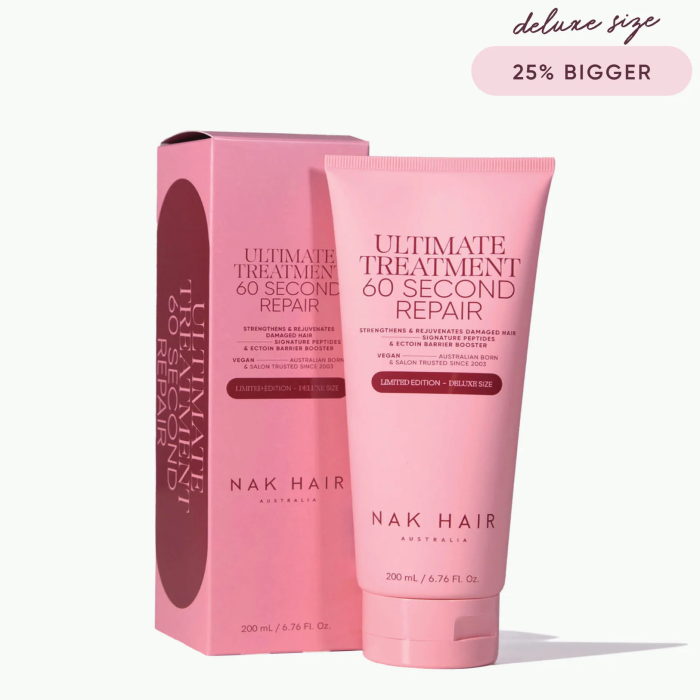
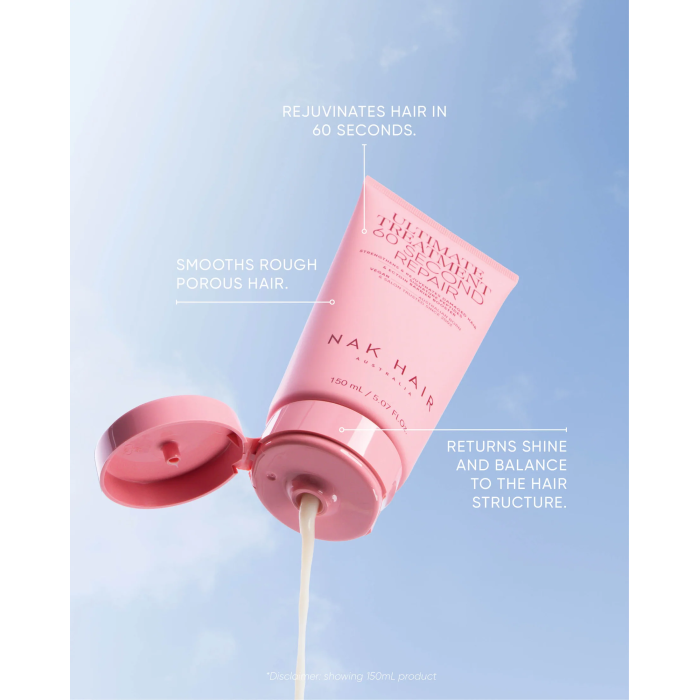
NAK Ultimate Treatment 60Sec Repair is a fast-acting hair mask that restores softness in just one minute.
This creamy, rich treatment works deep inside the hair to repair damage from heat styling, colouring and daily wear. In only 60 seconds, it smooths the cuticle, helping to reduce roughness, knots and frizz so hair feels easier to manage.
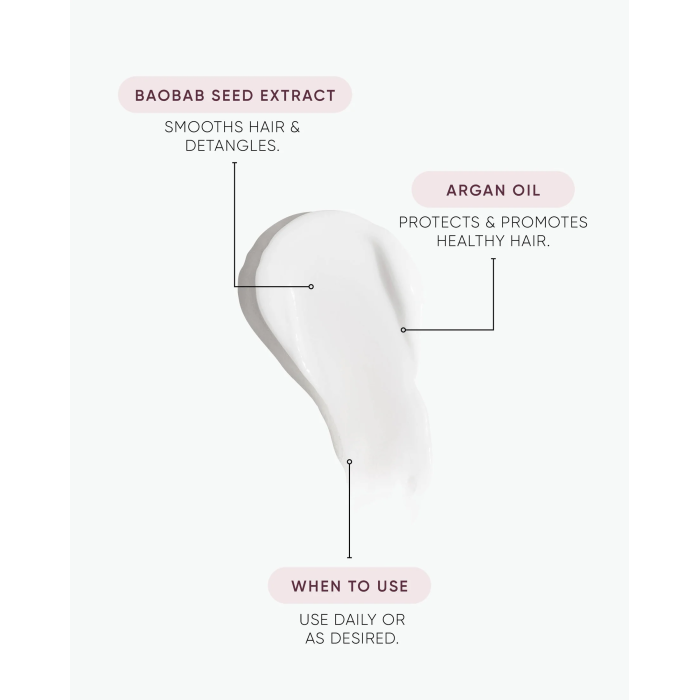
The texture is silky and melts through the hair, leaving it feeling cushioned but never heavy or greasy. Hair dries with a soft, satin finish and a light, salon-fresh scent that lingers gently.
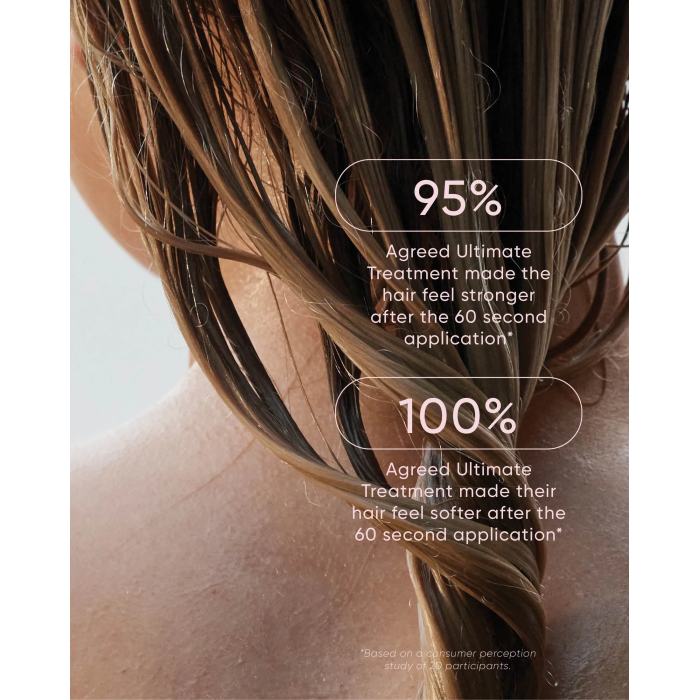
Perfect for dry, damaged or chemically treated hair, and ideal when you need quick results before work, school or a night out. Expect hair that feels stronger, smoother and more flexible, with a healthy-looking shine that’s easy to style.
How To Use NAK Ultimate Treatment 60Sec Repair 200ml Bonus Size
- Shampoo hair and rinse thoroughly.
- Gently squeeze out excess water.
- Apply a small amount from mid-lengths to ends.
- Comb through with fingers or a wide-tooth comb.
- Leave on for 60 seconds.
- Rinse well and style as usual.
- Use 1–3 times per week as needed.
NAK Ultimate Treatment 60Sec Repair 200ml Bonus Size Ingredients
Aqua (Water), Cetearyl Alcohol, Behentrimonium Chloride, Cetyl Alcohol, Glycerin, Amodimethicone, Trideceth-12, Cetrimonium Chloride, Hydrolyzed Wheat Protein, Hydrolyzed Soy Protein, Hydrolyzed Corn Protein, Panthenol (Pro-Vitamin B5), Tocopheryl Acetate (Vitamin E), Aloe Barbadensis Leaf Juice, Citric Acid, Disodium EDTA, Phenoxyethanol, Ethylhexylglycerin, Parfum (Fragrance), Linalool, Hexyl Cinnamal, Limonene.
Note: Please refer to bottle for full ingredients.
-
Aqua SolventsSolvent
The water base that carries and dissolves the other ingredients in most products.
May suitAll hair and skin types.
Worth knowingAlmost always the first ingredient listed in water-based products.
-
Cetearyl Alcohol Conditioning agentsFatty alcohol conditioner
A fatty alcohol that helps soften hair and improve the texture of formulations.
May suitPeople looking for smoother, more manageable hair or richer, creamier product textures.
Worth knowingDespite the name, fatty alcohols are moisturising and conditioning rather than drying. They also help stabilise and thicken many haircare formulas.
-
Behentrimonium Chloride Conditioning agentsConditioning agent
A conditioning agent that helps detangle and soften, reducing static and roughness.
May suitMost hair types, especially tangle-prone or coarse hair.
Worth knowingA common conditioner ingredient despite the chloride name, which simply describes its chemistry.
-
Cetyl Alcohol Conditioning agentsEmollient and texture enhancer
Cetyl Alcohol helps soften the hair and gives products a smooth, creamy texture.
May suitThose looking for conditioning, slip, or richer textures in their haircare products.
Worth knowingDespite the name, fatty alcohols like cetyl alcohol are non‑drying and are commonly used to add emollience and stability to formulations.
-
Glycerin HumectantsHumectant
Attracts and holds water to help hair feel hydrated and soft.
May suitDry or dehydrated hair, and many curl and moisture routines.
Worth knowingA very common, well-tolerated humectant used across countless products.
-
Amodimethicone SiliconesConditioning silicone
A conditioning silicone that targets rougher areas of the hair to smooth and protect.
May suitDamaged, frizz-prone or colour-treated hair wanting targeted smoothing.
Worth knowingDesigned to deposit where hair needs it most. Some prefer silicone-free formulas by choice.
-
Trideceth-12 Cleansers / surfactantsNonionic surfactant and solubiliser
Helps blend oil‑based and water‑based ingredients and provides gentle cleansing action.
May suitThose using products that need light cleansing or stable blends of oils, silicones, or fragrances.
Worth knowingIt is commonly used to solubilise fragrance or silicone ingredients in shampoos and treatments. Its mild, nonionic nature means it typically works well alongside other surfactants.
-
Cetrimonium Chloride Conditioning agentsConditioning agent
A conditioning agent that helps smooth and soften the hair while reducing static and tangles.
May suitPeople looking for improved manageability, detangling and smoother-feeling hair.
Worth knowingIt is a commonly used quaternary ammonium compound that helps conditioners spread easily through the hair. It is effective even at low levels, which is why it appears frequently in rinse-off products.
-
Hydrolyzed Wheat Protein Proteins and amino acidsProtein
A plant-derived protein that helps smooth and support the hair surface.
May suitHair wanting added body, smoothness or temporary strength.
Worth knowingA common protein in repair and volumising formulas.
-
Panthenol Conditioning agentsConditioning agent
Helps condition, soften and add a smooth, healthy feel to the hair.
May suitMost hair types, especially dry or dull hair.
Worth knowingA versatile, well-tolerated conditioning ingredient.
-
Tocopheryl Acetate Conditioning agentsAntioxidant and conditioning support
A stable form of vitamin E used to help condition hair and support product stability.
May suitThose looking for added conditioning support or antioxidant benefits in their haircare.
Worth knowingIt is commonly used because it is more stable than pure vitamin E while still offering similar benefits. It appears in many leave-in and rinse-off formulations.
-
Aloe Barbadensis Leaf Juice Botanical extractsBotanical extract
An aloe-derived ingredient added for a soothing, conditioning feel.
May suitMost hair and scalp types, including those wanting a gentle feel.
Worth knowingA popular botanical used across many gentle and moisturising products.
-
Citric Acid pH adjusterspH adjuster
Fine-tunes the product pH, which can help the hair surface feel smooth.
May suitMost hair types as part of a balanced formula.
Worth knowingUsually present in small amounts to balance the formula.
-
Disodium EDTA Chelating agentsChelating agent
Binds to minerals from hard water so the product works consistently and stays stable.
May suitAll products, especially in hard-water areas.
Worth knowingUsed in tiny amounts to keep formulas performing reliably.
-
Phenoxyethanol PreservativesPreservative
Helps keep the product stable and pleasant to use after opening.
May suitAll products that need protecting from spoilage.
Worth knowingA very common, well-studied preservative used at low levels.
-
Ethylhexylglycerin PreservativesPreservative booster
Helps support the preservation system and can provide mild skin-conditioning benefits.
May suitThose interested in gentle preservation systems or sensitive scalps may find it relevant.
Worth knowingIt is often paired with other preservatives to improve their effectiveness while allowing for lower usage levels. It also has light moisturising and conditioning properties.
-
Parfum Fragrance ingredientsFragrance
Gives the product its scent.
May suitPeople who enjoy a scented product.
Worth knowingFragrance preference is personal. Some people prefer fragrance-free formulas by choice.
-
Linalool Fragrance ingredientsFragrance component
A fragrance component found naturally in many flowers and spices.
Worth knowingA fragrance component that must be listed separately on labels because a minority of people can be sensitive to it. Its presence is normal, required disclosure and is not a quality signal.
-
Hexyl Cinnamal Fragrance ingredientsFragrance component
A fragrance ingredient used to give products a light, floral scent.
May suitThose who enjoy subtly scented haircare products.
Worth knowingIt is one of the fragrance components that must be listed separately when present above certain levels. People with known fragrance sensitivities may choose to monitor for it.
-
Limonene Fragrance ingredientsFragrance component
A fragrance component that also occurs naturally in many citrus and plant oils.
Worth knowingA fragrance component that must be listed separately on labels because a minority of people can be sensitive to it. Its presence is normal, required disclosure and is not a quality signal.