
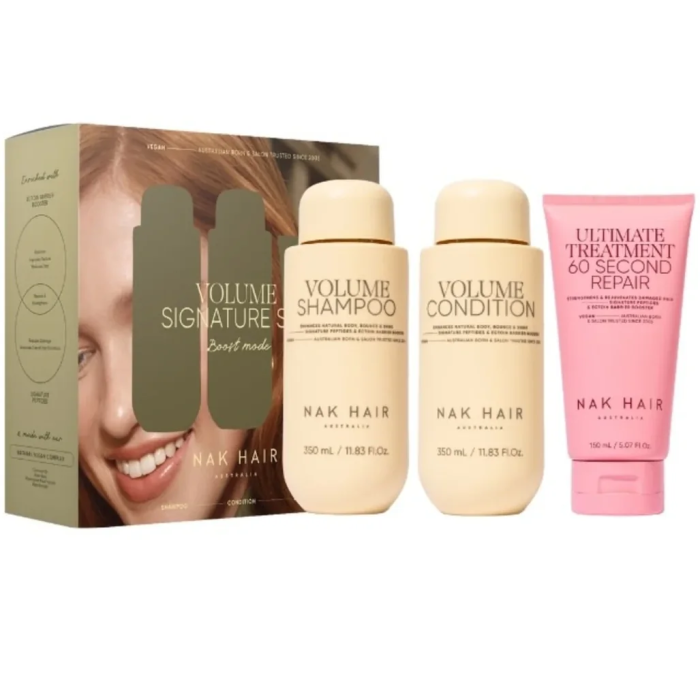
Volume Trio with Ultimate Treatment
- Delivery
- Click & Collect
Free Click and collect is available at checkout. Orders are ready within 1 hour during opening hours. Store Address: 56 Parer Rd, Airport West, VIC Australia 3042 Phone (03) 9999 5902






- Flat, fine hair looks fuller, lighter and lifted in just one wash.
- Gently cleanses while building airy root lift and body.
- Conditioner detangles without weight for soft, swishy movement.
- 60-second treatment smooths damaged ends for a silkier finish.
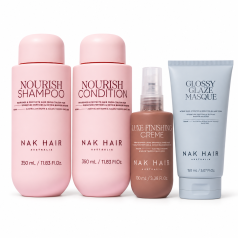
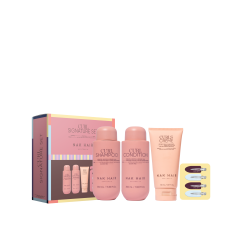
Nak Volume Trio with Ultimate Treatment is a lightweight volumising haircare set that boosts body and strength. The Signature Volume Shampoo gently cleanses fine, limp hair while adding lift at the roots and a fuller feel from lengths to ends.
Pack Includes:
- Nak Signature Volume Shampoo 350ml
- Nak Signature Volume Condition 350ml
- Nak Ultimate Repair 60 Second Treatment 150ml
Signature Volume Conditioner detangles without heaviness, leaving hair soft, silky and easy to style with light movement. Ultimate Repair 60 Second Treatment delivers an express conditioning boost, smoothing and strengthening stressed or fragile strands in under a minute. Hair feels clean, airy and lightly conditioned with a soft, fresh salon-style scent. Ideal for fine to medium hair that falls flat, or hair that needs body without extra weight. Use daily or as needed, with the treatment 1–2 times a week for added care.
How To Use NAK Volume Trio with Ultimate Treatment
- Apply Signature Volume Shampoo to wet hair, massage into scalp and roots, then rinse thoroughly.
NAK Volume Trio with Ultimate Treatment Ingredients
SIGNATURE VOLUME SHAMPOO: Aqua (Water), Sodium Lauroyl Sarcosinate, Cocamidopropyl Betaine, Sodium Lauroyl Methyl Isethionate, Sodium Chloride, PEG-120 Methyl Glucose Dioleate, Cocamide MIPA, Polyquaternium-10, Hydrolyzed Rice Protein, Panthenol, PEG-7 Glyceryl Cocoate, Glycerin, Citric Acid, Tetrasodium EDTA, Sodium Benzoate, Potassium Sorbate, Phenoxyethanol, Parfum (Fragrance), Linalool, Hexyl Cinnamal, Limonene. SIGNATURE VOLUME CONDITIONER: Aqua (Water), Cetearyl Alcohol, Behentrimonium Chloride, Cetyl Alcohol, Stearamidopropyl Dimethylamine, Hydrolyzed Rice Protein, Panthenol, Glycerin, Amodimethicone, Trideceth-12, Cetrimonium Chloride, Lactic Acid, Disodium EDTA, Phenoxyethanol, Ethylhexylglycerin, Parfum (Fragrance), Linalool, Hexyl Cinnamal, Limonene. ULTIMATE REPAIR 60 SECOND TREATMENT: Aqua (Water), Cetearyl Alcohol, Behentrimonium Chloride, Cetyl Alcohol, Stearamidopropyl Dimethylamine, Hydrolyzed Wheat Protein, Hydrolyzed Keratin, Panthenol, Glycerin, Amodimethicone, Trideceth-12, Cetrimonium Chloride, Lactic Acid, Disodium EDTA, Phenoxyethanol, Ethylhexylglycerin, Parfum (Fragrance), Linalool, Hexyl Cinnamal, Limonene.-
Aqua SolventsSolvent
The water base that carries and dissolves the other ingredients in most products.
May suitAll hair and skin types.
Worth knowingAlmost always the first ingredient listed in water-based products.
-
Sodium Lauroyl Sarcosinate Cleansers / surfactantsMild surfactant
A gentle cleansing agent that helps lift away oils and impurities.
May suitPeople looking for mild, low-foaming cleansers that are generally considered suitable for sensitive or dry hair types.
Worth knowingIt is often used as an alternative to stronger surfactants to create a softer, more conditioning lather. It can also support formula stability and mildness in blended surfactant systems.
-
Cocamidopropyl Betaine Cleansers / surfactantsCleanser / foam booster
A milder co-surfactant that helps cleanse, boost foam and soften the feel of stronger cleansers.
May suitMost hair types, including those wanting a gentler wash.
Worth knowingOften paired with other surfactants to make a formula feel milder.
-
Sodium Lauroyl Methyl Isethionate Cleansers / surfactantsGentle cleansing surfactant
A mild, sulphate-free surfactant that helps cleanse hair and scalp while creating a soft, creamy lather.
May suitPeople looking for a gentle, low-irritation cleansing option or those using sulphate-free shampoos.
Worth knowingIt is known for being milder than many traditional surfactants and is often used in formulas designed to maintain softness after washing.
-
Sodium Chloride Thickeners and stabilisersViscosity adjuster
Sodium Chloride is used to adjust the thickness of shampoos and other cleansing formulas.
May suitThose interested in how a product’s texture and lather are achieved.
Worth knowingIt is a simple mineral salt that helps create a familiar shampoo feel and can influence how a cleanser spreads through the hair.
-
PEG-120 Methyl Glucose Dioleate Thickeners and stabilisersThickener and mild surfactant
Helps thicken and stabilise formulations while adding mild cleansing action.
May suitThose using shampoos or washes that benefit from a richer, more stable texture.
Worth knowingIt is a nonionic surfactant derived from glucose and is commonly used to improve viscosity in gentle cleansing products. It is well tolerated in most haircare formulas.
-
Cocamide MIPA Cleansers / surfactantsFoaming surfactant
A coconut-derived surfactant that helps boost foam and improve the cleansing performance of shampoos.
May suitPeople who like a rich, stable lather in their cleansing products.
Worth knowingIt is often used alongside primary surfactants to enhance texture and mildness. Its viscosity‑boosting effect can also improve the feel of rinse‑off formulas.
-
Polyquaternium-10 Conditioning agentsConditioning agent
A conditioning polymer that smooths the hair surface and helps with detangling and feel.
May suitMost hair types wanting smoother, easier-to-manage hair.
Worth knowingWidely used in shampoos and conditioners for slip and softness.
-
Hydrolysed Rice Protein Proteins and amino acidsStrengthening protein
A plant-derived protein that helps reinforce and condition the hair.
May suitPeople looking to support hair strength, smoothness or light-volume effects.
Worth knowingIt can help improve the feel of damaged or fine hair without the weight of some heavier proteins.
-
Panthenol Conditioning agentsConditioning agent
Helps condition, soften and add a smooth, healthy feel to the hair.
May suitMost hair types, especially dry or dull hair.
Worth knowingA versatile, well-tolerated conditioning ingredient.
-
PEG-7 Glyceryl Cocoate Cleansers / surfactantsMild surfactant and emollient
A gentle, non-ionic surfactant that also adds light softness and slip to hair.
May suitThose looking for mild cleansing with a smoother, less stripped feel.
Worth knowingIt is often included to make cleansing formulas feel more conditioning and to help solubilise oils or fragrances. It pairs well with stronger surfactants to create a more balanced wash.
-
Glycerin HumectantsHumectant
Attracts and holds water to help hair feel hydrated and soft.
May suitDry or dehydrated hair, and many curl and moisture routines.
Worth knowingA very common, well-tolerated humectant used across countless products.
-
Citric Acid pH adjusterspH adjuster
Fine-tunes the product pH, which can help the hair surface feel smooth.
May suitMost hair types as part of a balanced formula.
Worth knowingUsually present in small amounts to balance the formula.
-
Tetrasodium EDTA Chelating agentsChelating agent
Helps bind metal ions in water to improve product stability and performance.
May suitThose in hard-water areas who want shampoos and conditioners to rinse more cleanly.
Worth knowingChelating agents can support formula consistency and help prevent minerals from depositing on the hair or interfering with product texture. They are widely used in many rinse-off and leave-in formulations.
-
Sodium Benzoate PreservativesPreservative
Helps protect water-based products from spoilage so they stay usable.
May suitAll products that need a preservative system.
Worth knowingOften paired with other preservatives for broad protection.
-
Potassium Sorbate PreservativesPreservative
Helps keep haircare formulas stable by preventing the growth of microbes.
May suitAnyone who uses water-based products that benefit from reliable preservation.
Worth knowingIt is commonly used alongside other preservation systems to maintain product freshness and extend shelf life. It is generally well tolerated in rinse-off and leave-in products.
-
Phenoxyethanol PreservativesPreservative
Helps keep the product stable and pleasant to use after opening.
May suitAll products that need protecting from spoilage.
Worth knowingA very common, well-studied preservative used at low levels.
-
Parfum Fragrance ingredientsFragrance
Gives the product its scent.
May suitPeople who enjoy a scented product.
Worth knowingFragrance preference is personal. Some people prefer fragrance-free formulas by choice.
-
Linalool Fragrance ingredientsFragrance component
A fragrance component found naturally in many flowers and spices.
Worth knowingA fragrance component that must be listed separately on labels because a minority of people can be sensitive to it. Its presence is normal, required disclosure and is not a quality signal.
-
Hexyl Cinnamal Fragrance ingredientsFragrance component
A fragrance ingredient used to give products a light, floral scent.
May suitThose who enjoy subtly scented haircare products.
Worth knowingIt is one of the fragrance components that must be listed separately when present above certain levels. People with known fragrance sensitivities may choose to monitor for it.
-
Limonene Fragrance ingredientsFragrance component
A fragrance component that also occurs naturally in many citrus and plant oils.
Worth knowingA fragrance component that must be listed separately on labels because a minority of people can be sensitive to it. Its presence is normal, required disclosure and is not a quality signal.
-
Aqua SolventsSolvent
The water base that carries and dissolves the other ingredients in most products.
May suitAll hair and skin types.
Worth knowingAlmost always the first ingredient listed in water-based products.
-
Cetearyl Alcohol Conditioning agentsFatty alcohol conditioner
A fatty alcohol that helps soften hair and improve the texture of formulations.
May suitPeople looking for smoother, more manageable hair or richer, creamier product textures.
Worth knowingDespite the name, fatty alcohols are moisturising and conditioning rather than drying. They also help stabilise and thicken many haircare formulas.
-
Behentrimonium Chloride Conditioning agentsConditioning agent
A conditioning agent that helps detangle and soften, reducing static and roughness.
May suitMost hair types, especially tangle-prone or coarse hair.
Worth knowingA common conditioner ingredient despite the chloride name, which simply describes its chemistry.
-
Cetyl Alcohol Conditioning agentsEmollient and texture enhancer
Cetyl Alcohol helps soften the hair and gives products a smooth, creamy texture.
May suitThose looking for conditioning, slip, or richer textures in their haircare products.
Worth knowingDespite the name, fatty alcohols like cetyl alcohol are non‑drying and are commonly used to add emollience and stability to formulations.
-
Stearamidopropyl Dimethylamine Conditioning agentsHair conditioning agent
A conditioning agent that helps smooth and soften the hair.
May suitThose looking for improved slip, manageability and reduced static, especially in dry or textured hair.
Worth knowingIt is often paired with fatty acids to enhance conditioning performance and provide a softer feel. It also helps detangle without weighing hair down.
-
Hydrolysed Rice Protein Proteins and amino acidsStrengthening protein
A plant-derived protein that helps reinforce and condition the hair.
May suitPeople looking to support hair strength, smoothness or light-volume effects.
Worth knowingIt can help improve the feel of damaged or fine hair without the weight of some heavier proteins.
-
Panthenol Conditioning agentsConditioning agent
Helps condition, soften and add a smooth, healthy feel to the hair.
May suitMost hair types, especially dry or dull hair.
Worth knowingA versatile, well-tolerated conditioning ingredient.
-
Glycerin HumectantsHumectant
Attracts and holds water to help hair feel hydrated and soft.
May suitDry or dehydrated hair, and many curl and moisture routines.
Worth knowingA very common, well-tolerated humectant used across countless products.
-
Amodimethicone SiliconesConditioning silicone
A conditioning silicone that targets rougher areas of the hair to smooth and protect.
May suitDamaged, frizz-prone or colour-treated hair wanting targeted smoothing.
Worth knowingDesigned to deposit where hair needs it most. Some prefer silicone-free formulas by choice.
-
Trideceth-12 Cleansers / surfactantsNonionic surfactant and solubiliser
Helps blend oil‑based and water‑based ingredients and provides gentle cleansing action.
May suitThose using products that need light cleansing or stable blends of oils, silicones, or fragrances.
Worth knowingIt is commonly used to solubilise fragrance or silicone ingredients in shampoos and treatments. Its mild, nonionic nature means it typically works well alongside other surfactants.
-
Cetrimonium Chloride Conditioning agentsConditioning agent
A conditioning agent that helps smooth and soften the hair while reducing static and tangles.
May suitPeople looking for improved manageability, detangling and smoother-feeling hair.
Worth knowingIt is a commonly used quaternary ammonium compound that helps conditioners spread easily through the hair. It is effective even at low levels, which is why it appears frequently in rinse-off products.
-
Lactic Acid pH adjusterspH adjuster
Helps adjust and maintain the product’s pH for optimal performance.
May suitThose looking for formulas that help smooth the cuticle or gently refine the scalp surface.
Worth knowingLactic Acid can also provide mild hydrating and smoothing benefits in haircare. Its pH-balancing role helps support product stability and performance.
-
Disodium EDTA Chelating agentsChelating agent
Binds to minerals from hard water so the product works consistently and stays stable.
May suitAll products, especially in hard-water areas.
Worth knowingUsed in tiny amounts to keep formulas performing reliably.
-
Phenoxyethanol PreservativesPreservative
Helps keep the product stable and pleasant to use after opening.
May suitAll products that need protecting from spoilage.
Worth knowingA very common, well-studied preservative used at low levels.
-
Ethylhexylglycerin PreservativesPreservative booster
Helps support the preservation system and can provide mild skin-conditioning benefits.
May suitThose interested in gentle preservation systems or sensitive scalps may find it relevant.
Worth knowingIt is often paired with other preservatives to improve their effectiveness while allowing for lower usage levels. It also has light moisturising and conditioning properties.
-
Parfum Fragrance ingredientsFragrance
Gives the product its scent.
May suitPeople who enjoy a scented product.
Worth knowingFragrance preference is personal. Some people prefer fragrance-free formulas by choice.
-
Linalool Fragrance ingredientsFragrance component
A fragrance component found naturally in many flowers and spices.
Worth knowingA fragrance component that must be listed separately on labels because a minority of people can be sensitive to it. Its presence is normal, required disclosure and is not a quality signal.
-
Hexyl Cinnamal Fragrance ingredientsFragrance component
A fragrance ingredient used to give products a light, floral scent.
May suitThose who enjoy subtly scented haircare products.
Worth knowingIt is one of the fragrance components that must be listed separately when present above certain levels. People with known fragrance sensitivities may choose to monitor for it.
-
Limonene Fragrance ingredientsFragrance component
A fragrance component that also occurs naturally in many citrus and plant oils.
Worth knowingA fragrance component that must be listed separately on labels because a minority of people can be sensitive to it. Its presence is normal, required disclosure and is not a quality signal.
-
Aqua SolventsSolvent
The water base that carries and dissolves the other ingredients in most products.
May suitAll hair and skin types.
Worth knowingAlmost always the first ingredient listed in water-based products.
-
Cetearyl Alcohol Conditioning agentsFatty alcohol conditioner
A fatty alcohol that helps soften hair and improve the texture of formulations.
May suitPeople looking for smoother, more manageable hair or richer, creamier product textures.
Worth knowingDespite the name, fatty alcohols are moisturising and conditioning rather than drying. They also help stabilise and thicken many haircare formulas.
-
Behentrimonium Chloride Conditioning agentsConditioning agent
A conditioning agent that helps detangle and soften, reducing static and roughness.
May suitMost hair types, especially tangle-prone or coarse hair.
Worth knowingA common conditioner ingredient despite the chloride name, which simply describes its chemistry.
-
Cetyl Alcohol Conditioning agentsEmollient and texture enhancer
Cetyl Alcohol helps soften the hair and gives products a smooth, creamy texture.
May suitThose looking for conditioning, slip, or richer textures in their haircare products.
Worth knowingDespite the name, fatty alcohols like cetyl alcohol are non‑drying and are commonly used to add emollience and stability to formulations.
-
Stearamidopropyl Dimethylamine Conditioning agentsHair conditioning agent
A conditioning agent that helps smooth and soften the hair.
May suitThose looking for improved slip, manageability and reduced static, especially in dry or textured hair.
Worth knowingIt is often paired with fatty acids to enhance conditioning performance and provide a softer feel. It also helps detangle without weighing hair down.
-
Hydrolyzed Wheat Protein Proteins and amino acidsProtein
A plant-derived protein that helps smooth and support the hair surface.
May suitHair wanting added body, smoothness or temporary strength.
Worth knowingA common protein in repair and volumising formulas.
-
Hydrolyzed Keratin Proteins and amino acidsProtein
Helps temporarily support and smooth the hair surface for a stronger feel.
May suitDamaged, chemically treated or fragile hair wanting reinforcement.
Worth knowingProtein routines suit some hair well, while very protein-sensitive hair may prefer balance with moisture.
-
Panthenol Conditioning agentsConditioning agent
Helps condition, soften and add a smooth, healthy feel to the hair.
May suitMost hair types, especially dry or dull hair.
Worth knowingA versatile, well-tolerated conditioning ingredient.
-
Glycerin HumectantsHumectant
Attracts and holds water to help hair feel hydrated and soft.
May suitDry or dehydrated hair, and many curl and moisture routines.
Worth knowingA very common, well-tolerated humectant used across countless products.
-
Amodimethicone SiliconesConditioning silicone
A conditioning silicone that targets rougher areas of the hair to smooth and protect.
May suitDamaged, frizz-prone or colour-treated hair wanting targeted smoothing.
Worth knowingDesigned to deposit where hair needs it most. Some prefer silicone-free formulas by choice.
-
Trideceth-12 Cleansers / surfactantsNonionic surfactant and solubiliser
Helps blend oil‑based and water‑based ingredients and provides gentle cleansing action.
May suitThose using products that need light cleansing or stable blends of oils, silicones, or fragrances.
Worth knowingIt is commonly used to solubilise fragrance or silicone ingredients in shampoos and treatments. Its mild, nonionic nature means it typically works well alongside other surfactants.
-
Cetrimonium Chloride Conditioning agentsConditioning agent
A conditioning agent that helps smooth and soften the hair while reducing static and tangles.
May suitPeople looking for improved manageability, detangling and smoother-feeling hair.
Worth knowingIt is a commonly used quaternary ammonium compound that helps conditioners spread easily through the hair. It is effective even at low levels, which is why it appears frequently in rinse-off products.
-
Lactic Acid pH adjusterspH adjuster
Helps adjust and maintain the product’s pH for optimal performance.
May suitThose looking for formulas that help smooth the cuticle or gently refine the scalp surface.
Worth knowingLactic Acid can also provide mild hydrating and smoothing benefits in haircare. Its pH-balancing role helps support product stability and performance.
-
Disodium EDTA Chelating agentsChelating agent
Binds to minerals from hard water so the product works consistently and stays stable.
May suitAll products, especially in hard-water areas.
Worth knowingUsed in tiny amounts to keep formulas performing reliably.
-
Phenoxyethanol PreservativesPreservative
Helps keep the product stable and pleasant to use after opening.
May suitAll products that need protecting from spoilage.
Worth knowingA very common, well-studied preservative used at low levels.
-
Ethylhexylglycerin PreservativesPreservative booster
Helps support the preservation system and can provide mild skin-conditioning benefits.
May suitThose interested in gentle preservation systems or sensitive scalps may find it relevant.
Worth knowingIt is often paired with other preservatives to improve their effectiveness while allowing for lower usage levels. It also has light moisturising and conditioning properties.
-
Parfum Fragrance ingredientsFragrance
Gives the product its scent.
May suitPeople who enjoy a scented product.
Worth knowingFragrance preference is personal. Some people prefer fragrance-free formulas by choice.
-
Linalool Fragrance ingredientsFragrance component
A fragrance component found naturally in many flowers and spices.
Worth knowingA fragrance component that must be listed separately on labels because a minority of people can be sensitive to it. Its presence is normal, required disclosure and is not a quality signal.
-
Hexyl Cinnamal Fragrance ingredientsFragrance component
A fragrance ingredient used to give products a light, floral scent.
May suitThose who enjoy subtly scented haircare products.
Worth knowingIt is one of the fragrance components that must be listed separately when present above certain levels. People with known fragrance sensitivities may choose to monitor for it.
-
Limonene Fragrance ingredientsFragrance component
A fragrance component that also occurs naturally in many citrus and plant oils.
Worth knowingA fragrance component that must be listed separately on labels because a minority of people can be sensitive to it. Its presence is normal, required disclosure and is not a quality signal.