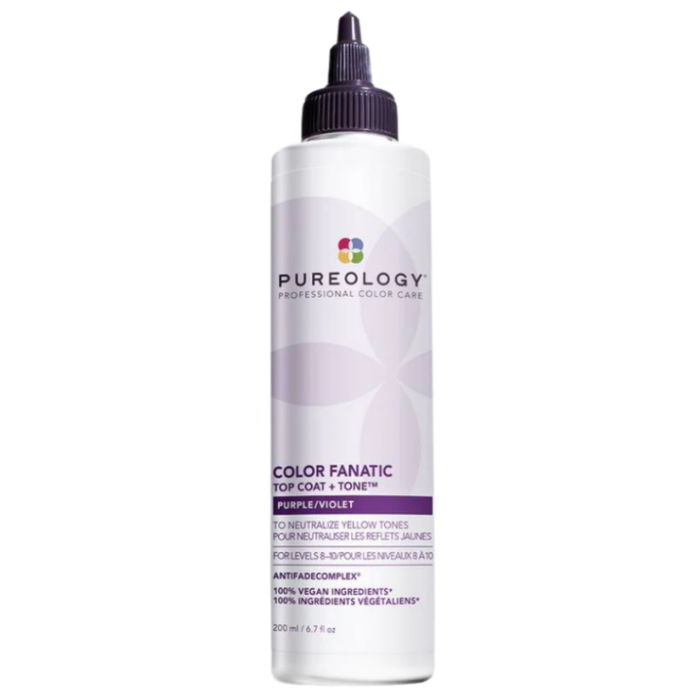
Color Fanatic Top Coat + Tone Purple/Violet
-
Delivery
-
Click & Collect
Free Click and collect is available at checkout. Orders are ready within 1 hour during opening hours. Store Address: 56 Parer Rd, Airport West, VIC Australia 3042 Phone (03) 9999 5902
Valued at $34.95.
Min spend $70. 1 per customer. Sets are 1 item.
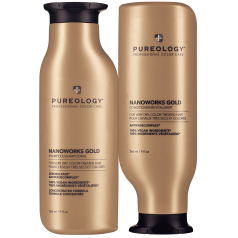
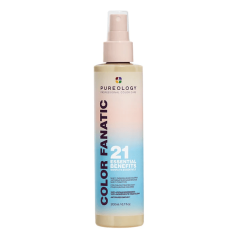
Pureology Color Fanatic Top Coat + Tone Purple/Violet is a shine-boosting gloss that neutralises brass in minutes.
This tinted top coat glides through damp hair like a lightweight gel, coating every strand with cool violet pigment to counter unwanted yellow and orange tones. As it works, the silky texture makes hair easy to comb, while the soft floral-fruity scent feels like a quick salon moment at home.
Hair is left looking brighter, cooler, and more reflective, with a smooth, glossy finish that catches the light. It’s ideal for blondes, highlighted brunettes, and grey hair whenever colour starts to look warm or dull.
Use it between salon visits to refresh tone, add slip, and keep your colour looking freshly done.
How To Use Pureology Color Fanatic Top Coat + Tone Purple/Violet
- Shampoo hair, then rinse thoroughly.
- Squeeze out excess water; leave hair damp, not dripping.
- Apply evenly from mid-lengths to ends; comb through.
- Leave on for 5–10 minutes, checking tone as you go.
- Rinse well until water runs clear; do not shampoo again.
- Use weekly or as needed when brassiness appears.
Pureology Color Fanatic Top Coat + Tone Purple/Violet Ingredients
Water/Aqua/Eau, Cetearyl Alcohol, Behentrimonium Chloride, Cetyl Esters, Stearamidopropyl Dimethylamine, Lactic Acid, Amodimethicone, Parfum/Fragrance, Hydroxyethylcellulose, Isopropyl Alcohol, Caprylyl Glycol, Phenoxyethanol, Trideceth-6, Cetrimonium Chloride, Hexyl Cinnamal, Limonene, Benzyl Salicylate, Benzyl Alcohol, Linalool, Citric Acid, Hydroxycitronellal, Tocopherol, Hydroxypropyl Guar Hydroxypropyltrimonium Chloride, Benzoic Acid, Aloe Barbadensis Leaf Juice Powder, Disodium Edta, Persea Gratissima (Avocado) Oil, Quaternium-87, PEG-14M, Basic Violet 2 (CI 42520), Basic Blue 99 (CI 56059), Basic Brown 16, Basic Red 51, Basic Yellow 87.
Note: Please refer to bottle for full ingredients.
-
Cetearyl Alcohol Conditioning agentsFatty alcohol conditioner
A fatty alcohol that helps soften hair and improve the texture of formulations.
May suitPeople looking for smoother, more manageable hair or richer, creamier product textures.
Worth knowingDespite the name, fatty alcohols are moisturising and conditioning rather than drying. They also help stabilise and thicken many haircare formulas.
-
Behentrimonium Chloride Conditioning agentsConditioning agent
A conditioning agent that helps detangle and soften, reducing static and roughness.
May suitMost hair types, especially tangle-prone or coarse hair.
Worth knowingA common conditioner ingredient despite the chloride name, which simply describes its chemistry.
-
Cetyl Esters Conditioning agentsEmollient / slip enhancer
Provides slip and softness while helping to smooth the hair’s surface.
May suitPeople looking for smoother, more manageable hair textures.
Worth knowingCetyl esters are wax‑like emollients that improve product spreadability and give a soft, conditioned feel. They are commonly used to enhance texture without heaviness.
-
Stearamidopropyl Dimethylamine Conditioning agentsHair conditioning agent
A conditioning agent that helps smooth and soften the hair.
May suitThose looking for improved slip, manageability and reduced static, especially in dry or textured hair.
Worth knowingIt is often paired with fatty acids to enhance conditioning performance and provide a softer feel. It also helps detangle without weighing hair down.
-
Lactic Acid pH adjusterspH adjuster
Helps adjust and maintain the product’s pH for optimal performance.
May suitThose looking for formulas that help smooth the cuticle or gently refine the scalp surface.
Worth knowingLactic Acid can also provide mild hydrating and smoothing benefits in haircare. Its pH-balancing role helps support product stability and performance.
-
Amodimethicone SiliconesConditioning silicone
A conditioning silicone that targets rougher areas of the hair to smooth and protect.
May suitDamaged, frizz-prone or colour-treated hair wanting targeted smoothing.
Worth knowingDesigned to deposit where hair needs it most. Some prefer silicone-free formulas by choice.
-
Hydroxyethylcellulose Thickeners and stabilisersThickener and stabiliser
A polymer that helps thicken and stabilise haircare formulas.
May suitThose who prefer products with a smooth, uniform texture or need easier application and distribution.
Worth knowingIt is derived from cellulose and is widely used because it provides viscosity without weighing hair down. It also helps improve the feel and spreadability of many water-based products.
-
Isopropyl Alcohol SolventsSolvent
Helps dissolve ingredients and supports quick-drying formulas.
May suitThose using styling products that benefit from fast evaporation, such as sprays.
Worth knowingIt is commonly used at low levels to improve texture and spreadability. It evaporates quickly, leaving minimal residue on the hair.
-
Caprylyl Glycol HumectantsHumectant
Helps attract and hold moisture in hair and scalp while supporting product stability.
May suitThose looking for added hydration or smoother-feeling hair.
Worth knowingIt is also commonly used as a preservative booster to help maintain formula freshness. It is well tolerated in most haircare products.
-
Phenoxyethanol PreservativesPreservative
Helps keep the product stable and pleasant to use after opening.
May suitAll products that need protecting from spoilage.
Worth knowingA very common, well-studied preservative used at low levels.
-
Trideceth-6 Cleansers / surfactantsSolubiliser / surfactant
A non-ionic surfactant that helps blend oil-soluble ingredients into water-based formulas.
May suitThose using products with oils or silicones who want them to rinse evenly without residue.
Worth knowingIt is commonly used in shampoos and styling products to support stable, uniform textures. Its mild nature makes it suitable for a wide range of formulations.
-
Cetrimonium Chloride Conditioning agentsConditioning agent
A conditioning agent that helps smooth and soften the hair while reducing static and tangles.
May suitPeople looking for improved manageability, detangling and smoother-feeling hair.
Worth knowingIt is a commonly used quaternary ammonium compound that helps conditioners spread easily through the hair. It is effective even at low levels, which is why it appears frequently in rinse-off products.
-
Hexyl Cinnamal Fragrance ingredientsFragrance component
A fragrance ingredient used to give products a light, floral scent.
May suitThose who enjoy subtly scented haircare products.
Worth knowingIt is one of the fragrance components that must be listed separately when present above certain levels. People with known fragrance sensitivities may choose to monitor for it.
-
Limonene Fragrance ingredientsFragrance component
A fragrance component that also occurs naturally in many citrus and plant oils.
Worth knowingA fragrance component that must be listed separately on labels because a minority of people can be sensitive to it. Its presence is normal, required disclosure and is not a quality signal.
-
Benzyl Salicylate Fragrance ingredientsFragrance component
Benzyl Salicylate is a fragrance ingredient used to add a sweet, floral aroma to haircare products.
May suitThose who enjoy subtly floral-scented haircare or are monitoring specific fragrance allergens.
Worth knowingIt is one of the fragrance allergens that must be listed individually on product labels when present above certain levels. Its presence does not indicate product strength or quality, only that it contributes to the overall scent profile.
-
Benzyl Alcohol PreservativesPreservative
Helps preserve formulations and can also act as a solvent or light fragrance component.
May suitThose interested in understanding preservative systems or identifying potential fragrance allergens.
Worth knowingBenzyl Alcohol is commonly used in professional haircare to support product stability and texture. It can also naturally occur in some essential oils.
-
Linalool Fragrance ingredientsFragrance component
A fragrance component found naturally in many flowers and spices.
Worth knowingA fragrance component that must be listed separately on labels because a minority of people can be sensitive to it. Its presence is normal, required disclosure and is not a quality signal.
-
Citric Acid pH adjusterspH adjuster
Fine-tunes the product pH, which can help the hair surface feel smooth.
May suitMost hair types as part of a balanced formula.
Worth knowingUsually present in small amounts to balance the formula.
-
Hydroxycitronellal Fragrance ingredientsFragrance component
Hydroxycitronellal is a fragrance ingredient used to give haircare products a fresh, floral scent.
May suitThose who enjoy scented hair products or want a light floral note in their routine.
Worth knowingIt is one of the fragrance allergens that must be listed on labels when present above certain thresholds. People who are monitoring fragrance components for sensitivity may find this information useful.
-
Tocopherol PreservativesAntioxidant
An antioxidant that helps support product stability and can provide conditioning benefits to hair.
May suitThose wanting added nourishment or antioxidant support in their haircare routine.
Worth knowingTocopherol is commonly included to help protect oils in a formula from oxidising and to offer light conditioning benefits. It is widely used in both skincare and haircare products.
-
Hydroxypropyl Guar Hydroxypropyltrimonium Chloride Conditioning agentsConditioning polymer
A cationic guar-derived polymer that conditions, softens and helps reduce static in the hair.
May suitPeople looking for smoother, easier-to-detangle hair, including those with dry, damaged or textured hair.
Worth knowingIt is commonly used in shampoos and conditioners to improve slip and manageability without adding heaviness. Its cationic nature helps it adhere lightly to the hair surface for a conditioning effect.
-
Benzoic Acid PreservativesPreservative
Helps protect haircare products by supporting the preservation system and maintaining formula stability.
May suitThose who want products that remain fresh and effective throughout their shelf life.
Worth knowingBenzoic Acid is often used alongside other preservatives to create a broad-spectrum system. It also plays a minor role in helping maintain a product’s pH balance.
-
Aloe Barbadensis Leaf Juice Powder Botanical extractsSoothing botanical extract
A powdered form of aloe that helps hydrate and soothe the hair and scalp.
May suitThose looking for gentle hydration or scalp comfort.
Worth knowingAloe extracts are widely used in haircare for their lightweight conditioning and calming feel. The powdered form is simply a concentrated version that is rehydrated during formulation.
-
Disodium EDTA Chelating agentsChelating agent
Binds to minerals from hard water so the product works consistently and stays stable.
May suitAll products, especially in hard-water areas.
Worth knowingUsed in tiny amounts to keep formulas performing reliably.
-
Persea Gratissima Oil Oils and buttersNourishing plant oil
A rich plant oil that helps condition and soften the hair.
May suitDry, coarse or damaged hair types that benefit from added softness and smoothness.
Worth knowingIt is valued for its emollient properties and is often included to support a smoother feel and appearance. It can also help enhance suppleness without weighing hair down when used in balanced formulations.
-
Quaternium-87 Conditioning agentsConditioning agent
A cationic conditioning agent that helps smooth, soften and detangle hair.
May suitUseful for dry, damaged or chemically treated hair needing extra manageability.
Worth knowingIt works by depositing a light conditioning layer on the hair fibre, improving slip and reducing static. Commonly used in conditioners and leave-in treatments.
-
PEG-14M Thickeners and stabilisersPolymer thickener
A water‑soluble polymer used to thicken and stabilise haircare formulas.
May suitPeople who prefer products with a smooth, uniform texture that spread easily through the hair.
Worth knowingIt helps improve the consistency and performance of shampoos, conditioners and styling products. It is commonly used because it remains stable and effective across a wide range of formulations.
-
Basic Violet 2 ColourantsColourant
A synthetic colourant used to impart bright purple or pink tones to haircare products.
May suitThose using vividly tinted shampoos, conditioners or direct dyes.
Worth knowingIt is primarily used for visual appeal or to support colour-depositing formulas. Only very small, regulated amounts are used in finished products.
-
Basic Blue 99 ColourantsHair dye colourant
A synthetic blue colourant used to create or adjust shade in hair dyes.
May suitPeople using oxidative or direct hair dyes who want specific blue or cool-toned results.
Worth knowingIt is commonly used in professional and consumer hair-colouring formulas to provide stable, predictable colour results. Its performance depends on the overall dye system and hair condition.
-
Basic Brown 16 ColourantsHair colourant
A synthetic dye used to add or adjust colour in hair products.
May suitPeople using permanent or semi‑permanent hair colouring products.
Worth knowingIt is one of many colourants used to achieve specific shades, particularly in brunette formulas. Its performance depends on the overall dye system and formulation.
-
Basic Red 51 ColourantsHair colourant
A synthetic red dye used to add or enhance colour in hair products.
May suitPeople using semi-permanent or temporary hair colour products.
Worth knowingIt is commonly used in toners and semi-permanent dyes to achieve vibrant red or warm tones. Its intensity can vary depending on the formula and hair condition.
-
Basic Yellow 87 ColourantsHair colourant
A synthetic yellow dye used to add or adjust colour in hair products.
May suitPeople using semi-permanent or temporary hair colour products.
Worth knowingIt is typically used in small amounts to fine‑tune shade results or create vivid tones. Direct dyes like this deposit colour without the need for oxidative processing.