Free Click and collect is available at checkout. Orders are ready within 1 hour during opening hours. Store Address: 56 Parer Rd, Airport West, VIC Australia 3042 Phone (03) 9999 5902
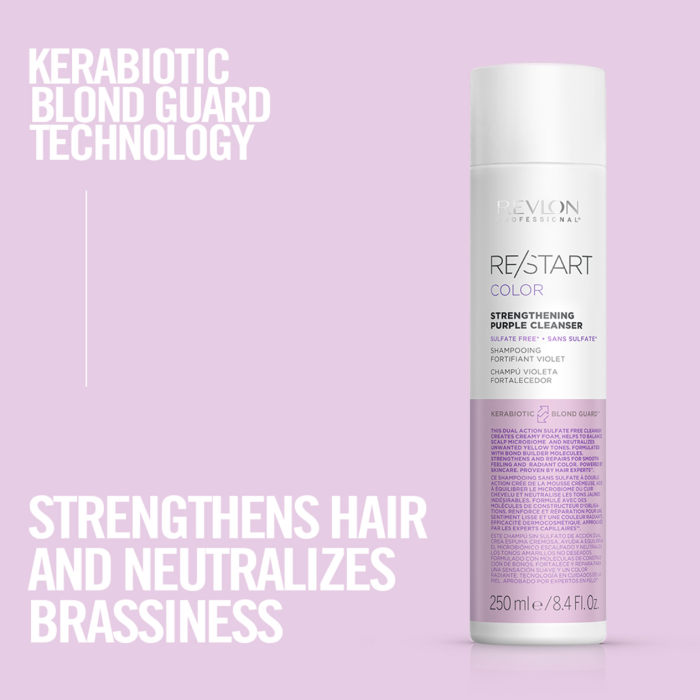
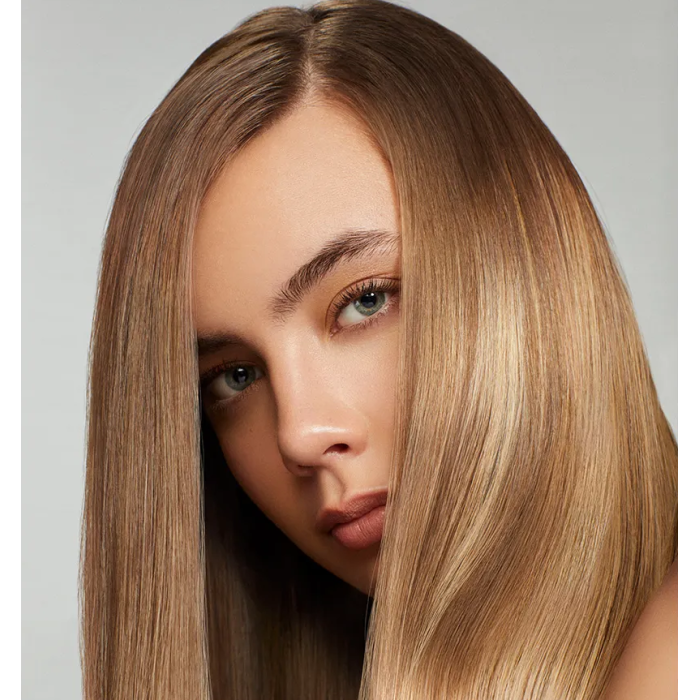
Keep brass at bay and your blonde looking salon-fresh for longer.
Cools yellow tones for cleaner, brighter blonde and grey shades.
Creamy lather leaves hair feeling soft, not dry or rough.
Strengthening care helps fragile, lightened strands feel smoother and easier to style.
Description
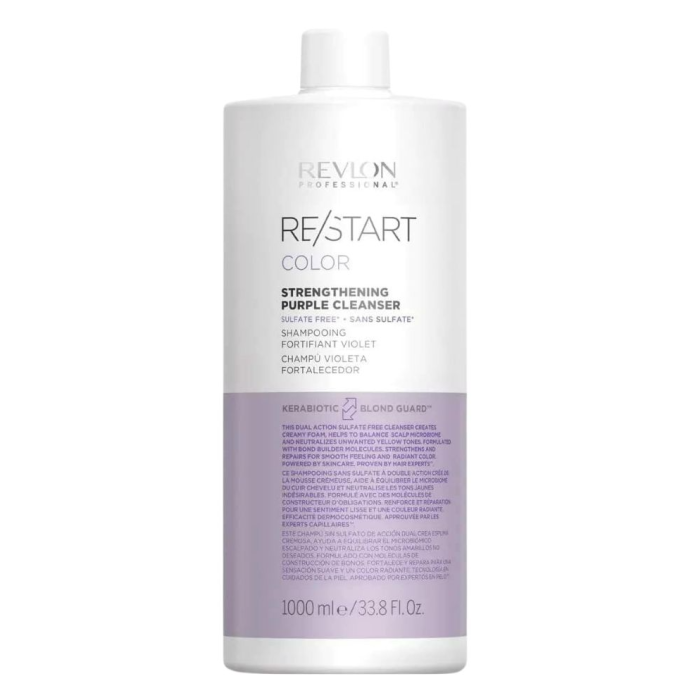
Revlon Professional RE/START Color Strengthening Purple Cleanser is a brightening shampoo that neutralises yellow tones in blonde and grey hair. This dual-action formula helps care for both scalp and hair fibre, gently cleansing while depositing violet pigments to counter warmth.
The creamy lather feels soft and cushioning, leaving hair refreshed rather than stripped. With regular use, blonde, highlighted and grey shades look cooler, clearer and more luminous. Strengthening ingredients help improve the feel of fragile, sensitised hair often caused by lightening and colouring. Hair feels smoother to the touch, easier to detangle and more manageable to style. Ideal as a weekly or twice-weekly toning step whenever your colour starts to look brassy.
How To Use Revlon Professional RE/START Color Strengthening Purple Cleanser 1 Litre
Apply the cleanser to wet hair, massage gently, and rinse thoroughly.
Reapply, leave on for 2 minutes, and rinse.
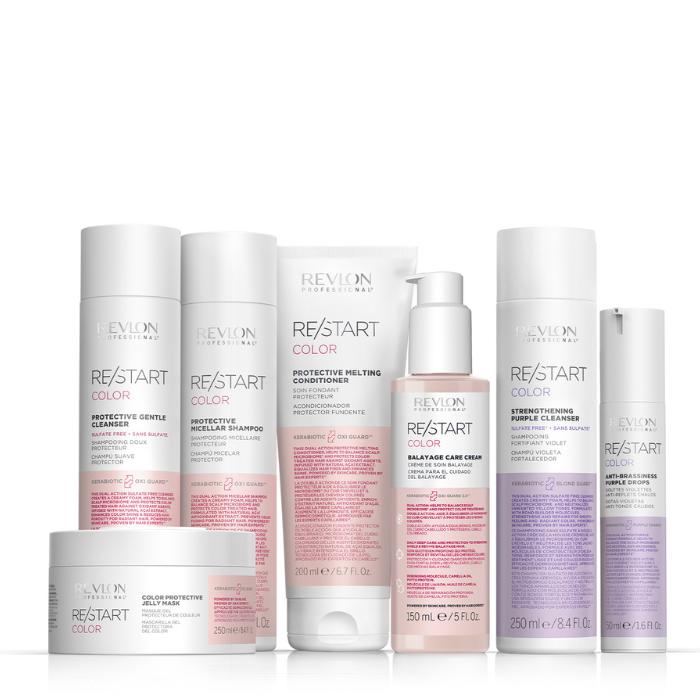
It can also be mixed with RE/START ANTI-BRASSINESS PURPLE DROPS for an intense neutralization.
Please follow the guide below to find out your ideal cleanser/drops ratio:
• For the lightest blonde, silver, very light blonde (Color Level 9) and greys: Mix 1-2 drops of RE/START Anti-Brassiness Purple Drops with 10g of Strengthening Purple Cleanser
• For light Blondes (Color Level 8) and medium Blondes (Color Level 7): Mix 2-3 drops of RE/START Anti-Brassiness Purple Drops with 10g of Strengthening Purple Cleanser
Ingredients
Revlon Professional RE/START Color Strengthening Purple Cleanser 1 Litre Ingredients
A mild, sulphate-free surfactant that helps cleanse hair and scalp while creating a soft, creamy lather.
May suit
People looking for a gentle, low-irritation cleansing option or those using sulphate-free shampoos.
Worth knowing
It is known for being milder than many traditional surfactants and is often used in formulas designed to maintain softness after washing.
Butylene GlycolHumectants
Humectant and solvent
Butylene Glycol helps attract and hold moisture while improving the spreadability of hair products.
May suit
Those looking for hydrated, smoother-feeling hair or lighter-feeling formulations.
Worth knowing
It is commonly used to help ingredients dissolve and to give formulas a soft, glide-on texture. It appears in many leave-in and rinse-off products due to its versatility.
Sodium CocoamphopropionateCleansers / surfactants
Mild cleansing surfactant
A gentle amphoteric surfactant that helps cleanse while supporting a soft, conditioned feel.
May suit
Those looking for mild, low‑foaming cleansing in shampoos or scalp-friendly formulas.
Worth knowing
It is commonly used in gentle or children’s shampoos because it helps reduce harshness in surfactant blends. It also works well alongside anionic surfactants to improve overall formula mildness.
ParfumFragrance ingredients
Fragrance
Gives the product its scent.
May suit
People who enjoy a scented product.
Worth knowing
Fragrance preference is personal. Some people prefer fragrance-free formulas by choice.
A gentle surfactant and thickener that helps stabilise and improve the texture of haircare formulas.
May suit
Those who prefer mild cleansing agents or enjoy richer, more stable product textures.
Worth knowing
It is commonly used to boost viscosity and support the overall feel of shampoos and cleansing conditioners. Its mild nature makes it compatible with many other surfactants.
Cocamidopropyl BetaineCleansers / surfactants
Cleanser / foam booster
A milder co-surfactant that helps cleanse, boost foam and soften the feel of stronger cleansers.
May suit
Most hair types, including those wanting a gentler wash.
Worth knowing
Often paired with other surfactants to make a formula feel milder.
Sodium Methyl IsethionateCleansers / surfactants
Mild cleansing surfactant
A gentle surfactant that helps cleanse the hair and scalp while creating a soft, creamy lather.
May suit
People looking for a mild, low-irritation cleanser in shampoos or co-washes.
Worth knowing
It is known for producing a rich lather even in sulphate-free formulas and is often used to create a smooth, conditioned feel after rinsing.
PEG-3 DistearateCleansers / surfactants
Emulsifier and surfactant
Helps blend oil- and water-based ingredients and can provide mild cleansing action.
May suit
Those looking for smooth, uniform product textures or gentle cleansing performance.
Worth knowing
It is commonly used to stabilise formulas and improve the spreadability of conditioners and shampoos. Its presence can also enhance the overall feel of a product.
Capryloyl GlycineAnti-dandruff / scalp care
Scalp-balancing agent
Helps support a balanced scalp environment by regulating sebum and discouraging microbial imbalance.
May suit
Those with oily, congested or imbalance‑prone scalps.
Worth knowing
It is an amino-acid derivative commonly used in scalp-care formulas for its gentle, supportive effect on the scalp barrier. It can also complement other soothing or clarifying ingredients in a routine.
Disodium EDTAChelating agents
Chelating agent
Binds to minerals from hard water so the product works consistently and stays stable.
May suit
All products, especially in hard-water areas.
Worth knowing
Used in tiny amounts to keep formulas performing reliably.
Euterpe Oleracea Fruit ExtractBotanical extracts
Botanical antioxidant extract
A plant extract used for its antioxidant and conditioning benefits in haircare.
May suit
People looking for botanical ingredients that help support hair softness and overall hair vitality.
Worth knowing
Açaí fruit extract is rich in naturally occurring antioxidants, which can complement other conditioning or protective ingredients in a formula. It is commonly included in treatments, shampoos, and masks to enhance the sensory feel of the product.
Hexylene GlycolSolvents
Solvent and texture enhancer
Hexylene Glycol helps dissolve other ingredients and improves the spreadability of haircare formulations.
May suit
Those using stylers, treatments or serums that rely on smooth, even application.
Worth knowing
It is commonly used in both leave-in and rinse-off products to support stable, easy-to-apply textures. It can also assist with product absorption and consistency.
HydroxyacetophenonePreservatives
Antioxidant and preservative booster
Helps support product freshness by boosting preservative performance and providing antioxidant benefits.
May suit
Those who prefer formulas designed to maintain stability with lower preservative loads.
Worth knowing
It is commonly used in modern formulations to enhance overall product stability and texture. It can also contribute mild soothing properties in some formulas.
A conditioning ingredient that helps smooth and soften the hair fibre.
May suit
Those looking for improved manageability, slip and a softer feel.
Worth knowing
It is often used in modern formulas to enhance conditioning without adding heaviness. It can also support moisture retention in the hair.
HydroxypropylgluconamideConditioning agents
Hair strengthening agent
A bonding-support ingredient that helps improve hair strength and resilience.
May suit
Those with weakened, chemically treated or breakage-prone hair.
Worth knowing
It works by supporting the internal structure of the hair fibre, complementing other conditioning or repair-focused ingredients.
Good to know
Often used alongside Hydroxypropyl Gluconate as part of a dual-action system aimed at reinforcing hair from within.
Lauric AcidConditioning agents
Emollient fatty acid
Lauric Acid is a saturated fatty acid that helps soften and smooth hair.
May suit
Those looking for conditioning support or richer, more emollient formulas.
Worth knowing
It is naturally found in coconut and palm-derived oils and is commonly used to enhance texture and conditioning performance in haircare products.
Lauryl Alcohol Diphosphonic AcidChelating agents
Chelating agent
Helps bind and control metal ions in a formula to support product stability and performance.
May suit
Those using haircare in hard-water areas or seeking formulas that resist mineral build-up.
Worth knowing
Chelating agents can help shampoos and treatments work more consistently by reducing the effect of minerals like calcium and magnesium. They are widely used to maintain clarity and stability in water-based formulas.
MaltodextrinHumectants
Humectant and film-former
Helps attract moisture and form a light film that can support hair smoothness and styling.
May suit
People seeking lightweight hydration or improved hold in styling products.
Worth knowing
It is a carbohydrate derived from starch and is commonly used to support texture and moisture balance in formulations.
PanthenolConditioning agents
Conditioning agent
Helps condition, soften and add a smooth, healthy feel to the hair.
May suit
Most hair types, especially dry or dull hair.
Worth knowing
A versatile, well-tolerated conditioning ingredient.
PEG-150 DistearateThickeners and stabilisers
Thickener and stabiliser
A thickening agent that helps stabilise and give texture to haircare formulas.
May suit
Those who prefer products with a smoother, creamier consistency.
Worth knowing
It is often used to create uniform, easy-to-spread formulations and can also contribute mild surfactant properties. It is commonly found in shampoos, conditioners and styling products.
PEG-150 Pentaerythrityl TetrastearateThickeners and stabilisers
Thickener and stabiliser
A thickening and stabilising ingredient that helps create a smooth, consistent texture in haircare formulas.
May suit
Anyone who prefers products with a richer, creamier feel or improved spreadability.
Worth knowing
It is often used in conditioners and styling products to enhance texture and keep formulas stable over time. It also helps emulsify oil and water components for an even finish.
Pentylene GlycolHumectants
Humectant and solvent
Helps attract and hold moisture while also improving the spreadability of a formula.
May suit
Those seeking lightweight hydration without heaviness.
Worth knowing
It also supports product texture and can enhance the performance of other ingredients in a formula.
Polyquaternium-10Conditioning agents
Conditioning agent
A conditioning polymer that smooths the hair surface and helps with detangling and feel.
May suit
Most hair types wanting smoother, easier-to-manage hair.
Worth knowing
Widely used in shampoos and conditioners for slip and softness.
PropanediolHumectants
Hydrating humectant
Helps attract and hold moisture in hair and supports a smooth, conditioned feel.
May suit
Those wanting lightweight hydration without heaviness.
Worth knowing
It is often used as a gentle alternative to glycol-based humectants and can also help improve product texture and absorption.
Sodium AcetatepH adjusters
pH adjuster
Helps maintain the desired pH level of a haircare formula.
May suit
Those interested in products formulated for pH balance or stability.
Worth knowing
It supports formula consistency and can enhance the performance of other ingredients by keeping the product within its optimal pH range.
Sodium ChlorideThickeners and stabilisers
Viscosity adjuster
Sodium Chloride is used to adjust the thickness of shampoos and other cleansing formulas.
May suit
Those interested in how a product’s texture and lather are achieved.
Worth knowing
It is a simple mineral salt that helps create a familiar shampoo feel and can influence how a cleanser spreads through the hair.
Tocopheryl AcetateConditioning agents
Antioxidant and conditioning support
A stable form of vitamin E used to help condition hair and support product stability.
May suit
Those looking for added conditioning support or antioxidant benefits in their haircare.
Worth knowing
It is commonly used because it is more stable than pure vitamin E while still offering similar benefits. It appears in many leave-in and rinse-off formulations.
Helps bind metal ions in formulas to improve product stability and performance.
May suit
People in hard‑water areas who want products that rinse cleanly and maintain consistent results.
Worth knowing
It supports formula stability and can help prevent mineral build‑up that may affect how products feel or work on the hair.
XylitylglucosideHumectants
Moisturising humectant
A sugar‑derived humectant that helps attract and retain moisture in the hair and scalp.
May suit
Those seeking improved hydration, softness or smoother hair feel.
Worth knowing
It is often used alongside other sugar-based moisturisers to support long‑lasting hydration. It is considered a gentle, conditioning ingredient suitable for most hair types.
Zinc LaurateAnti-dandruff / scalp care
Scalp-supporting ingredient
Zinc Laurate is a zinc salt of lauric acid used to help support a balanced, comfortable scalp.
May suit
People looking for products that target scalp freshness or mild scalp build-up.
Worth knowing
It offers both mild cleansing and antimicrobial benefits, which can contribute to a cleaner-feeling scalp. Its use varies by formula, so its role may range from supportive to functional depending on the product.
Alpha-Isomethyl IononeFragrance ingredients
Fragrance component
A fragrance component with a soft, violet-like character.
Worth knowing
A fragrance component that must be listed separately on labels because a minority of people can be sensitive to it. Its presence is normal, required disclosure and is not a quality signal.
Benzyl SalicylateFragrance ingredients
Fragrance component
Benzyl Salicylate is a fragrance ingredient used to add a sweet, floral aroma to haircare products.
May suit
Those who enjoy subtly floral-scented haircare or are monitoring specific fragrance allergens.
Worth knowing
It is one of the fragrance allergens that must be listed individually on product labels when present above certain levels. Its presence does not indicate product strength or quality, only that it contributes to the overall scent profile.
GeraniolFragrance ingredients
Fragrance component
Geraniol is a fragrant compound that adds a light floral note to haircare products.
May suit
Those who enjoy floral-scented hair products or are checking for specific fragrance components.
Worth knowing
It is naturally found in essential oils such as rose and geranium and is commonly used to enhance scent profiles. It must be listed on labels when present above certain trace levels.
Hexyl CinnamalFragrance ingredients
Fragrance component
A fragrance ingredient used to give products a light, floral scent.
May suit
Those who enjoy subtly scented haircare products.
Worth knowing
It is one of the fragrance components that must be listed separately when present above certain levels. People with known fragrance sensitivities may choose to monitor for it.
HydroxycitronellalFragrance ingredients
Fragrance component
Hydroxycitronellal is a fragrance ingredient used to give haircare products a fresh, floral scent.
May suit
Those who enjoy scented hair products or want a light floral note in their routine.
Worth knowing
It is one of the fragrance allergens that must be listed on labels when present above certain thresholds. People who are monitoring fragrance components for sensitivity may find this information useful.
LimoneneFragrance ingredients
Fragrance component
A fragrance component that also occurs naturally in many citrus and plant oils.
Worth knowing
A fragrance component that must be listed separately on labels because a minority of people can be sensitive to it. Its presence is normal, required disclosure and is not a quality signal.
LinaloolFragrance ingredients
Fragrance component
A fragrance component found naturally in many flowers and spices.
Worth knowing
A fragrance component that must be listed separately on labels because a minority of people can be sensitive to it. Its presence is normal, required disclosure and is not a quality signal.
Benzyl AlcoholPreservatives
Preservative
Helps preserve formulations and can also act as a solvent or light fragrance component.
May suit
Those interested in understanding preservative systems or identifying potential fragrance allergens.
Worth knowing
Benzyl Alcohol is commonly used in professional haircare to support product stability and texture. It can also naturally occur in some essential oils.