Free Click and collect is available at checkout. Orders are ready within 1 hour during opening hours. Store Address: 56 Parer Rd, Airport West, VIC Australia 3042 Phone (03) 9999 5902
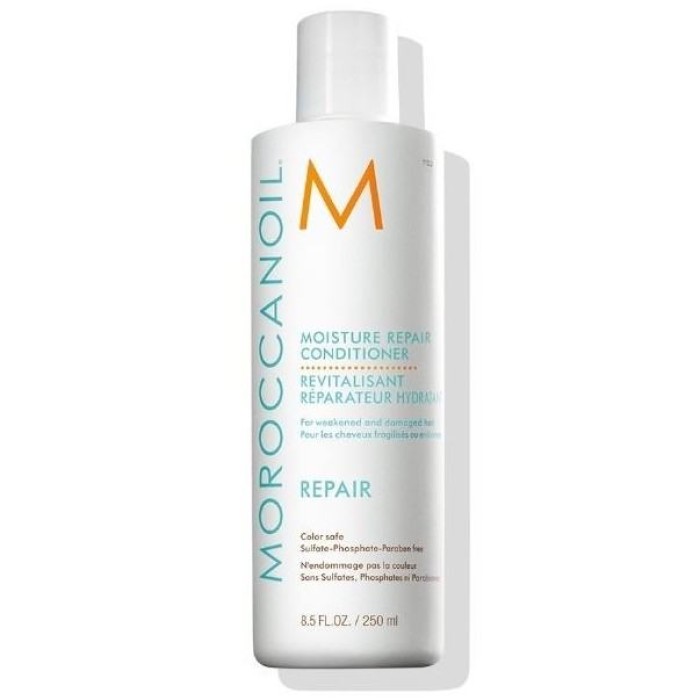
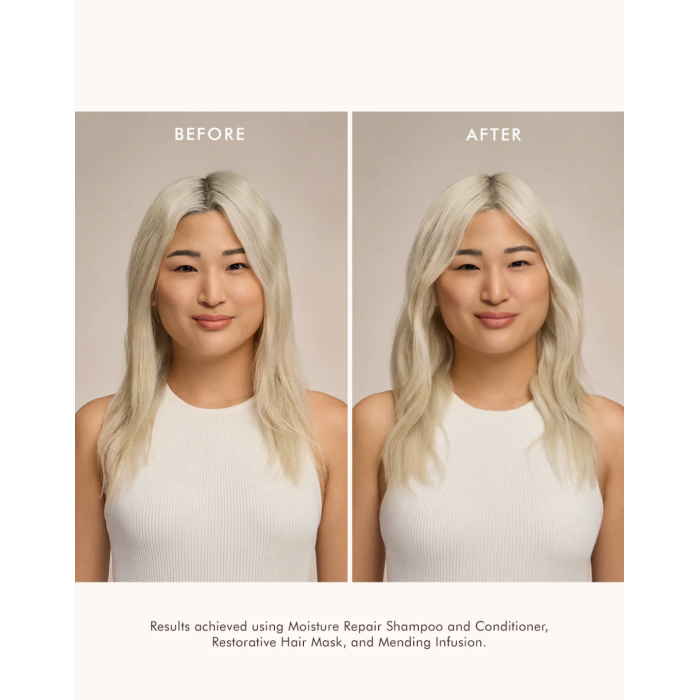
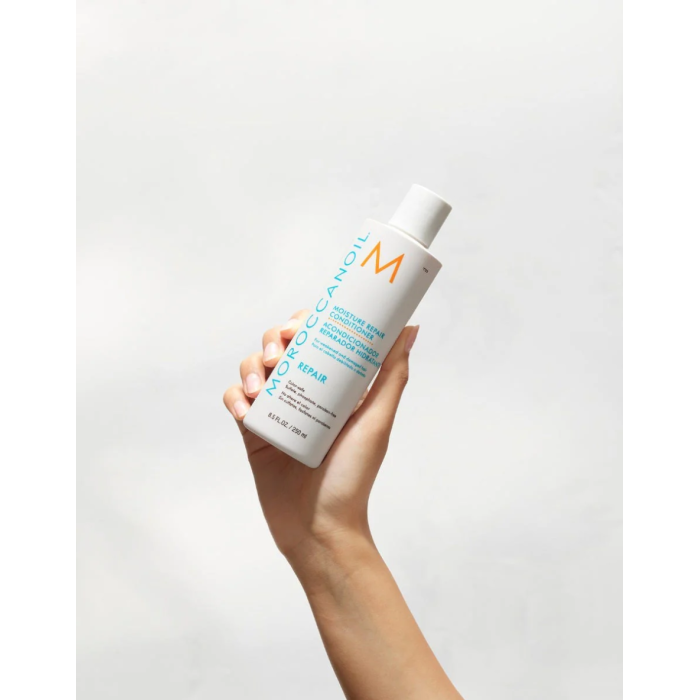
Moroccanoil Moisture Repair Conditioner is a deeply nourishing, Argan-infused conditioner to restore moisture and rebuild elasticity. It helps to repair and strengthen weakened and damaged hair.
Moroccanoil Moisture Repair Conditioner features a highly reparative formula that gently conditions and detangles weakened, damaged hair. Enriched with Vitamin E, fatty acids, and antioxidants, this argan oil-infused conditioner nourishes and restores fragile hair. Keratin helps rebuild and strengthen porous strands by mimicking the hair’s natural protein, while Cocamide MEA protects and revives them. Additionally, the conditioner is infused with lavender, rosemary, chamomile, and jojoba extracts, which enhance hair thickness and vitality, improving resistance to breakage. These ingredients penetrate deep into the hair cortex and moisturize the hair follicle, resulting in manageable, healthy-looking hair both inside and out.
Read more
Directions
How To Use Moroccanoil Moisture Repair Conditioner
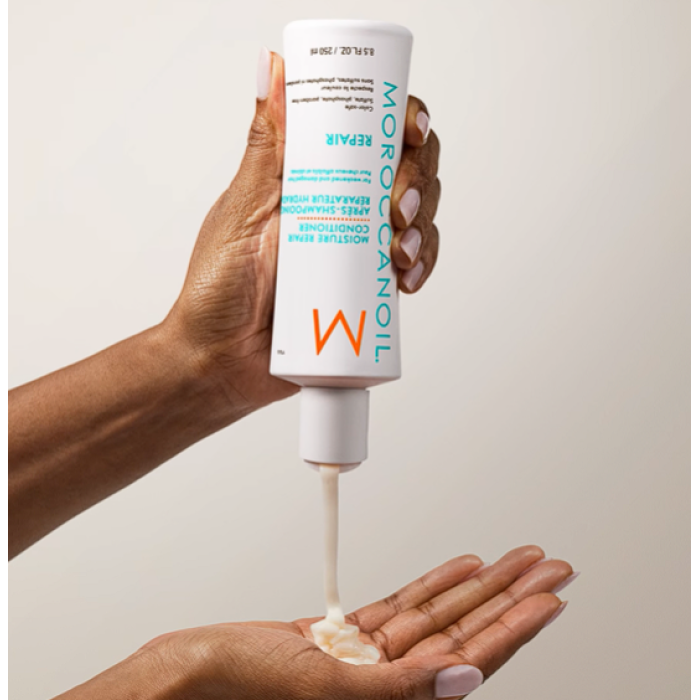
1. After shampooing, squeeze excess water and apply Moisture Repair Conditioner from mid-length to ends.
2. Leave on for 1-2 minutes and rinse well.
TIPS: Use regularly with Moisture Repair Shampoo for best results.
The water base that carries and dissolves the other ingredients in most products.
May suit
All hair and skin types.
Worth knowing
Almost always the first ingredient listed in water-based products.
Cetearyl AlcoholConditioning agents
Fatty alcohol conditioner
A fatty alcohol that helps soften hair and improve the texture of formulations.
May suit
People looking for smoother, more manageable hair or richer, creamier product textures.
Worth knowing
Despite the name, fatty alcohols are moisturising and conditioning rather than drying. They also help stabilise and thicken many haircare formulas.
Behentrimonium ChlorideConditioning agents
Conditioning agent
A conditioning agent that helps detangle and soften, reducing static and roughness.
May suit
Most hair types, especially tangle-prone or coarse hair.
Worth knowing
A common conditioner ingredient despite the chloride name, which simply describes its chemistry.
Stearamidopropyl DimethylamineConditioning agents
Hair conditioning agent
A conditioning agent that helps smooth and soften the hair.
May suit
Those looking for improved slip, manageability and reduced static, especially in dry or textured hair.
Worth knowing
It is often paired with fatty acids to enhance conditioning performance and provide a softer feel. It also helps detangle without weighing hair down.
PPG-3 Benzyl Ether MyristateConditioning agents
Emollient & conditioning agent
Helps soften the hair and improve slip for easier detangling and smoother feel.
May suit
People looking for smoother, more manageable hair or products with a lightweight, non-greasy emollient.
Worth knowing
This synthetic emollient is commonly used to add spreadability and a silky finish to haircare formulas. It also helps enhance the overall texture of creams and conditioners.
GlycerinHumectants
Humectant
Attracts and holds water to help hair feel hydrated and soft.
May suit
Dry or dehydrated hair, and many curl and moisture routines.
Worth knowing
A very common, well-tolerated humectant used across countless products.
AmodimethiconeSilicones
Conditioning silicone
A conditioning silicone that targets rougher areas of the hair to smooth and protect.
May suit
Damaged, frizz-prone or colour-treated hair wanting targeted smoothing.
Worth knowing
Designed to deposit where hair needs it most. Some prefer silicone-free formulas by choice.
Isopropyl AlcoholSolvents
Solvent
Helps dissolve ingredients and supports quick-drying formulas.
May suit
Those using styling products that benefit from fast evaporation, such as sprays.
Worth knowing
It is commonly used at low levels to improve texture and spreadability. It evaporates quickly, leaving minimal residue on the hair.
Argania Spinosa Kernel OilOils and butters
Conditioning oil
Softens and nourishes the hair, adding slip and a conditioned, glossy feel.
May suit
Dry, dull or frizz-prone hair.
Worth knowing
A popular conditioning oil used across many treatment and shine products.
Jojoba Seed OilOils and butters
Emollient oil
A lightweight plant oil that helps condition and soften the hair.
May suit
Those seeking smoother, more manageable hair or added moisture without heaviness.
Worth knowing
Jojoba oil is structurally similar to natural scalp oils, which makes it versatile in many haircare formulas. It is commonly used to enhance softness and shine.
Persea Gratissima OilOils and butters
Nourishing plant oil
A rich plant oil that helps condition and soften the hair.
May suit
Dry, coarse or damaged hair types that benefit from added softness and smoothness.
Worth knowing
It is valued for its emollient properties and is often included to support a smoother feel and appearance. It can also help enhance suppleness without weighing hair down when used in balanced formulations.
A plant-derived extract often used to support scalp comfort and provide antioxidant benefits.
May suit
Those interested in botanical ingredients or products aimed at maintaining a balanced, refreshed scalp.
Worth knowing
Rosemary leaf extract is widely used in haircare for its traditional association with invigorating and clarifying properties. It can be included in both everyday and specialised scalp-focused formulas.
A botanical extract used to help soothe and condition the scalp and hair.
May suit
Those looking for gentle plant-based ingredients that support scalp comfort.
Worth knowing
Lavender flower extracts are commonly included for their calming and conditioning properties in haircare formulas. They are typically used in small amounts as supportive ingredients rather than primary actives.
A plant extract used to help soothe and condition the scalp and hair.
May suit
Those seeking gentle, plant-derived ingredients for scalp comfort or lightweight conditioning benefits.
Worth knowing
Chamomile extracts are common in both skincare and haircare for their calming properties and light conditioning effect. They can also contribute to a soft, natural feel in formulations.
Hydrolyzed Vegetable Protein PG-Propyl SilanetriolConditioning agents
Strengthening conditioner
A protein-derived ingredient that helps condition and reinforce the hair fibre.
May suit
People looking to improve hair strength, smoothness or resistance to breakage.
Worth knowing
It forms a lightweight film on the hair to boost softness and resilience without heavy build-up. Often used in strengthening and smoothing formulas.
Hydrolyzed KeratinProteins and amino acids
Protein
Helps temporarily support and smooth the hair surface for a stronger feel.
May suit
Damaged, chemically treated or fragile hair wanting reinforcement.
Worth knowing
Protein routines suit some hair well, while very protein-sensitive hair may prefer balance with moisture.
Keratin Amino AcidsProteins and amino acids
Strengthening amino acids
Helps support the hair’s structure by replenishing amino acids related to keratin.
May suit
People looking to improve the feel of damaged, weakened or chemically treated hair.
Worth knowing
These amino acids are small enough to help condition the hair surface and enhance softness and manageability. They are commonly included in strengthening or repair-focused formulas.
Silk Amino AcidsProteins and amino acids
Hair-conditioning protein
Silk amino acids help condition and strengthen hair by supporting moisture retention and improving softness.
May suit
Those looking to enhance smoothness, reduce frizz or add lightweight strength to hair.
Worth knowing
These low‑molecular‑weight proteins can penetrate the hair more easily than larger proteins, offering a light, silky feel. They are commonly used in both rinse‑off and leave‑in formulas.
Citric AcidpH adjusters
pH adjuster
Fine-tunes the product pH, which can help the hair surface feel smooth.
May suit
Most hair types as part of a balanced formula.
Worth knowing
Usually present in small amounts to balance the formula.
EthylhexylglycerinPreservatives
Preservative booster
Helps support the preservation system and can provide mild skin-conditioning benefits.
May suit
Those interested in gentle preservation systems or sensitive scalps may find it relevant.
Worth knowing
It is often paired with other preservatives to improve their effectiveness while allowing for lower usage levels. It also has light moisturising and conditioning properties.
PanthenolConditioning agents
Conditioning agent
Helps condition, soften and add a smooth, healthy feel to the hair.
May suit
Most hair types, especially dry or dull hair.
Worth knowing
A versatile, well-tolerated conditioning ingredient.
Laureth-9Cleansers / surfactants
Surfactant and emulsifier
Laureth-9 helps blend oil and water components and provides light cleansing or solubilising action.
May suit
Those looking for products that spread evenly or contain stable blends of oils and water-based ingredients.
Worth knowing
It is a versatile non-ionic surfactant often used at low levels to support product texture and stability. It can also assist with foaming and rinse-off performance.
C11-15 Pareth-7Cleansers / surfactants
Non-ionic surfactant
A non-ionic surfactant that helps cleanse and allows oil and water to mix evenly.
May suit
Those looking for effective yet mild cleansing or improved product spreadability.
Worth knowing
It is commonly used in shampoos and styling products to support gentle cleansing and stable formulations. Non-ionic surfactants like this are valued for being versatile in different formula types.
Trideceth-12Cleansers / surfactants
Nonionic surfactant and solubiliser
Helps blend oil‑based and water‑based ingredients and provides gentle cleansing action.
May suit
Those using products that need light cleansing or stable blends of oils, silicones, or fragrances.
Worth knowing
It is commonly used to solubilise fragrance or silicone ingredients in shampoos and treatments. Its mild, nonionic nature means it typically works well alongside other surfactants.
PPG-1 Trideceth-6Cleansers / surfactants
Solubiliser / surfactant
A solubilising surfactant that helps blend oily and watery ingredients into a uniform formula.
May suit
Those looking for products with stable, evenly blended textures or clear formulations.
Worth knowing
It is commonly used in both haircare and skincare to help disperse fragrance oils or conditioning agents evenly. It also supports the overall texture and consistency of a formula.
Sodium PCAHumectants
Moisture-binding humectant
Sodium PCA helps attract and hold moisture in the hair and scalp.
May suit
Those looking to improve hair hydration, softness, or manageability.
Worth knowing
It is a component of the skin and scalp’s natural moisturising factors and is well tolerated in most formulations.
Polyquaternium-37Conditioning agents
Film-forming conditioner
A conditioning polymer that helps smooth the hair and improve manageability.
May suit
Those looking for softer, more manageable hair or extra slip in styling products.
Worth knowing
It forms a lightweight film on the hair to reduce static and enhance glide without leaving heavy residue. It is commonly used in both rinse-off and leave-in formulas.
Propylene GlycolHumectants
Humectant
Helps hold moisture and carry other ingredients through the formula.
May suit
Most hair types as part of a moisturising formula.
Worth knowing
A widely used humectant and carrier ingredient.
Propylene Glycol Dicaprylate/DicaprateOils and butters
Lightweight emollient
A light, fast‑absorbing emollient ester that helps soften hair and improve slip.
May suit
Those wanting a non-greasy conditioning feel or improved spreadability in styling products.
Worth knowing
It is commonly used to give formulas a smooth, silky texture without heaviness. Often found in conditioners, serums and creams where a lightweight finish is desired.
Disodium EDTAChelating agents
Chelating agent
Binds to minerals from hard water so the product works consistently and stays stable.
May suit
All products, especially in hard-water areas.
Worth knowing
Used in tiny amounts to keep formulas performing reliably.
A conditioning polymer that helps smooth hair and improve slip.
May suit
Those looking for softer, easier-to-detangle hair.
Worth knowing
It is derived from guar gum and is commonly used to enhance conditioning in shampoos and conditioners. It can also reduce static and improve manageability.
Cinnamidopropyltrimonium ChlorideUV filters
Hair UV protector
A conditioning UV filter that helps protect hair from sun-related colour fade and dryness.
May suit
Those with colour-treated or sun-exposed hair who want extra protection from UV damage.
Worth knowing
It offers both light conditioning and photoprotection, making it useful in leave-in and styling products. It is commonly paired with other UV filters for broader coverage.
Cetrimonium ChlorideConditioning agents
Conditioning agent
A conditioning agent that helps smooth and soften the hair while reducing static and tangles.
May suit
People looking for improved manageability, detangling and smoother-feeling hair.
Worth knowing
It is a commonly used quaternary ammonium compound that helps conditioners spread easily through the hair. It is effective even at low levels, which is why it appears frequently in rinse-off products.
Sodium BenzoatePreservatives
Preservative
Helps protect water-based products from spoilage so they stay usable.
May suit
All products that need a preservative system.
Worth knowing
Often paired with other preservatives for broad protection.
PhenoxyethanolPreservatives
Preservative
Helps keep the product stable and pleasant to use after opening.
May suit
All products that need protecting from spoilage.
Worth knowing
A very common, well-studied preservative used at low levels.
CI 19140Colourants
Colourant
A synthetic yellow colourant used to give products a bright, consistent hue.
May suit
Those interested in the appearance of their haircare products or checking for specific colour additives.
Worth knowing
CI 19140 is widely used in cosmetics and personal care for its vibrant and stable colour. Its presence does not affect the performance of the haircare formula.
CI 17200Colourants
Colourant
A synthetic red colourant used to give haircare products a vibrant hue.
May suit
Those who prefer products with visually appealing colours.
Worth knowing
It is used at low levels to enhance the look of a formula without affecting hair performance. Colourants like this are common in shampoos, conditioners and styling products.
Butylphenyl MethylpropionalFragrance ingredients
Fragrance component
A synthetic fragrance ingredient used to add a floral scent to haircare products.
May suit
Those who enjoy distinctly floral-scented products.
Worth knowing
It is a recognised fragrance allergen, so people with known fragrance sensitivities may prefer to patch test. Regulations and usage vary by region, and it may be phased out in some markets.
LinaloolFragrance ingredients
Fragrance component
A fragrance component found naturally in many flowers and spices.
Worth knowing
A fragrance component that must be listed separately on labels because a minority of people can be sensitive to it. Its presence is normal, required disclosure and is not a quality signal.
Alpha-Isomethyl IononeFragrance ingredients
Fragrance component
A fragrance component with a soft, violet-like character.
Worth knowing
A fragrance component that must be listed separately on labels because a minority of people can be sensitive to it. Its presence is normal, required disclosure and is not a quality signal.
Customers say this conditioner leaves hair soft, shiny, silky and more manageable, with many loving the smell and noting a little goes a long way. A few find it underwhelming, saying it doesn’t add enough moisture or can leave hair dry, frizzy or greasy.
Generated by AI from customer reviews
Select to see reviews that mention it
Most helpful review
Melain
Verified purchase
Purchased: 250ml
24 Mar 2020
I like because:
Fragrance
Moisturises my fine, dry hair
Reviewers can enter our monthly $50 draw, whatever their rating.
Sonya
Verified purchase
Purchased: 250ml
30 Aug 2019
Love this
Angelika
Verified purchase
Purchased: 250ml
Repairing
12 May 2014
This conditioner makes my hair feel silky, smooth, revived. Really works on dry, damaged, coloured hair. Lovely fragrance an a little goes a long way. Highly recommended.
Sarah
Verified purchase
Purchased: 250ml
Moroccanoil: Moisture Repair Conditioner
25 Sep 2013
This is almost as good as the matching shampoo. Doesnt aggravate my sensitive scalp either.
Justine
Verified purchase
Purchased: 250ml
My Cant live without product.
24 Jul 2013
I have only used this product twice but the results have been dramatic and instant. It does live up to its claims and delivers more than expected. I no longer look washed out as a result of my unhealthy, dry and lifeless hair and have so much more confidence as a result. My hair looks healthy, shiny and well cared for. Rather than looking like I had just climbed out of bed, it now looks as if I have just come from a hair salon. Winner!!!
Lyndsay
Verified purchase
Purchased: 250ml
Luxury in a bottle.
16 Jul 2013
The Moisture repair conditioner, along with The moisture repair shampoo and The Moroccan oil treatment have together completely transformed my hair. From very brittle, dry broken hair to soft, shiny hair that looks like actual hair again.